These days, the 2026 Best Lab Gl45 Reagent Bottle is turning into a pretty practical talking point for labs, distributors, and chemical makers around the world. Buyers aren’t just looking for clear glass and a cap that fits anymore. They want traceability, chemical resistance, closure performance they can trust, and, honestly, a supply chain that won’t keep them guessing.
Grand View Research points to continued growth in the global Lab Equipment market, fueled by pharma research, biotech, diagnostics, and academic testing. Their industry analysis also notes stronger demand for durable, reusable lab products. On top of that, ISO 4796-1 lays out the basics for lab glass bottles—dimensional accuracy, thermal performance, and resistance to hydrolytic attack. For buyers, these standards are a helpful place to start.
A solid Lab Gl45 Reagent Bottle should be made with the right borosilicate glass, a secure GL45 thread, and a liner that plays nicely with the chemicals involved. Amber glass can help with light-sensitive reagents, while clear glass makes visual checks easier. And yes, the small stuff matters—especially the pouring ring and cap seal.
Dr. Ulrich Scherbel, CEO of SCHOTT Pharma, put it this way: “Glass packaging remains a trusted solution for protecting sensitive pharmaceutical products.” His point speaks to a broader concern across the industry: container quality directly affects product stability and how confident labs feel using it.
That said, no single bottle works for every application. Some product pages make compatibility sound simpler than it really is. That’s worth being cautious about.
Buyers should compare ISO documentation, closure materials, extractables data, sterilization limits, and batch consistency. The World Health Organization also emphasizes documented quality systems for lab-related products and supplies. When buying globally, packaging strength, multilingual labeling, and transport testing matter just as much. The best choice isn’t always the cheapest bottle. It’s the one that behaves predictably after opening, washing, filling, shipping, and repeated use.
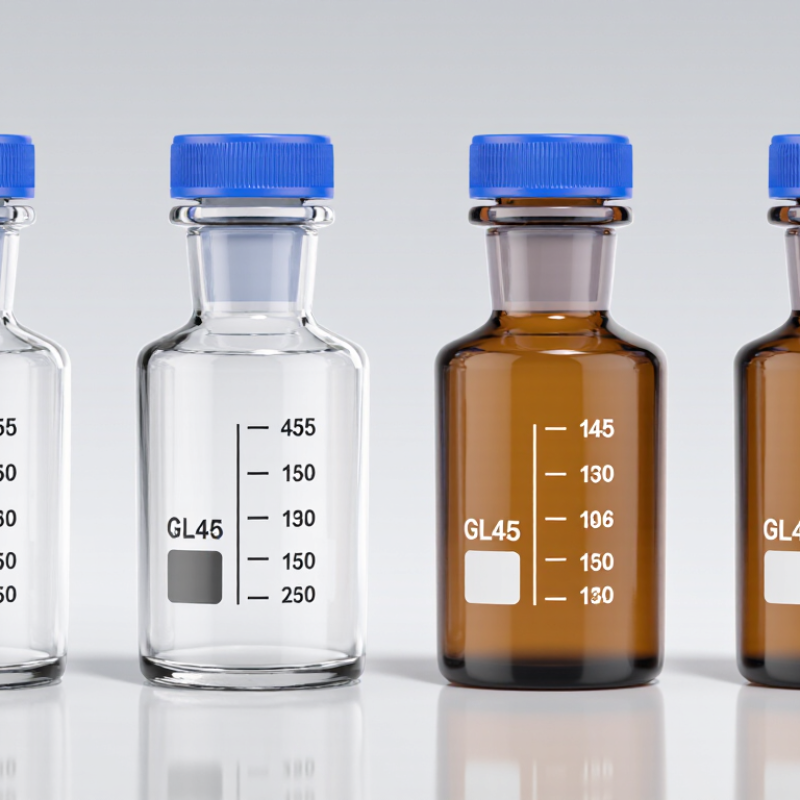
GL45 reagent bottles are laboratory containers fitted with a 45 mm screw neck and matching cap. They are commonly made from borosilicate glass, clear glass, or chemical-resistant plastic. The GL45 design usually includes a deep neck thread, an internal pouring ring, and a liner or sealing insert. This structure helps limit leakage, evaporation, and accidental contact during storage. Clear walls also let users inspect color, sediment, and remaining volume without opening the bottle. Not every closure works equally.
In daily laboratory practice, these bottles hold prepared solutions, buffers, stains, solvents, and general reagents. A Lab Clear Gl45 Reagent Bottle is useful when visual inspection matters, especially for light-sensitive workflows requiring external wrapping. Technicians should match the bottle material with the chemical, temperature, and exposure time. Glass often supports higher thermal stability, while plastic can reduce breakage during routine transport.
Before use, inspect the thread and liner for chips, distortion, or residue. A clean seal matters. Do not over-tighten the cap; excessive force can damage the liner or neck. Label the contents, concentration, preparation date, and responsible operator.
Selection still requires judgment. A bottle may look suitable yet fail after repeated heating, freezing, or contact with aggressive chemicals. For global purchasing, compare closure compatibility, traceability, cleaning instructions, and measured capacity rather than appearance alone. Manufacturing tolerances can vary, so test a small batch before wider adoption. It prevents surprises. Some laboratories also need amber glass, tamper evidence, or calibrated markings, depending on the application.
Choosing the right Gl45 Reagent Bottle starts with its material and intended use. Borosilicate glass suits laboratories handling solvents, acids, and repeated temperature changes. It offers strong chemical resistance and better thermal stability. Soda-lime glass can work for routine, low-stress storage. However, it may be less suitable for sudden heating or cooling. Check the closure liner too. The GL45 thread should fit securely, while the liner must resist the stored liquid. A poor liner can cause leaks or contamination.
Capacity should match daily handling, not only purchasing targets. A 100 mL bottle supports small samples and reduces unnecessary exposure. A 500 mL bottle fits regular preparation work. Larger 1,000 mL sizes help with bulk solutions, but they require more storage space and careful lifting. Leave modest headspace when liquids may expand. Amber glass helps protect light-sensitive materials. Clear glass makes inspection easier. I have seen buyers choose the largest size and regret the wasted space. Bigger is not always better.
Tips: Confirm chemical compatibility before ordering. Inspect the cap, liner, and pouring area. Consider autoclave requirements, transport conditions, and shelf height. Ask for dimensional drawings and test samples when specifications are unclear. A bottle that looks suitable may still fail in practice. Recheck every detail.
Borosilicate glass offers the broadest chemical and temperature resistance, making it suitable for strong solvents, acids, and heat-sensitive workflows. HDPE is a practical choice for many aqueous and corrosive solutions at lower temperatures, while polypropylene provides higher temperature resistance than HDPE but may be less suitable for some organic solvents. Common GL45 capacities include 100, 250, 500, 1,000, and 2,000 mL; select the smallest size that provides sufficient headspace and allows safe handling.
A reliable GL45 reagent bottle starts with controlled material quality, not attractive packaging. Borosilicate glass offers strong thermal resistance and low chemical interaction for many laboratory reagents. ISO 4796-1 defines requirements for laboratory glass bottles, including dimensions, performance, and closure compatibility. The neck finish must be precise. A loose cap can invite evaporation, contamination, or leakage during shipment.
Closure design matters just as much. A chemically resistant liner should sit evenly against the bottle lip. The cap should open smoothly while maintaining a dependable seal. USP highlights the importance of hydrolytic resistance for pharmaceutical glass containers. This supports careful glass selection, but it does not solve every storage problem. Some solvents still require compatibility testing. A perfect bottle does not exist. I would test the actual reagent before approving large-volume purchasing.
Tips: Check the GL45 thread with a sample cap. Inspect the sealing surface under bright light. Choose amber glass for light-sensitive contents. Confirm temperature limits before autoclaving. Also review the supplier’s batch records, leak-test method, and dimensional inspection data. Grand View Research’s laboratory glassware analysis indicates steady market growth through 2030, increasing pressure for consistent quality across international supply chains. A lower price may look efficient, yet uneven necks and damaged threads can create hidden laboratory costs.
Choosing a Clear Gl45 Reagent Bottle requires more than checking volume and appearance. GL45 closures usually use polypropylene caps, with liners selected for sealing and chemical resistance. PTFE-faced liners suit many solvents and aggressive reagents. Silicone liners offer flexibility, but compatibility must be checked carefully. Some liners swell, harden, or shed particles after repeated exposure.
USP General Chapter and ISO 4802 assess glass hydrolytic resistance by measuring released alkali. These standards support material evaluation, not complete reagent approval. Borosilicate glass is widely preferred for laboratory storage because it tolerates thermal change better than ordinary soda-lime glass. However, concentrated alkalis can attack glass over time. Fluoride-containing solutions also deserve special caution. A compatibility chart is only a starting point. Temperature, concentration, storage duration, and headspace can change results. I would not trust a “universal” liner claim without test evidence.
Tips: Match the liner to the chemical first. Check the closure thread for smooth engagement. Inspect the sealing surface under bright light. For volatile solvents, perform a small trial before full-scale storage. Record odor, swelling, leakage, and cap torque after exposure. This step feels slow, but it can reveal failures that a supplier table misses. Citation: USP–NF General Chapter ; ISO 4802-1 and ISO 4802-2.
Global buyers should treat standards as purchasing evidence, not decorative claims. A reliable GL45 reagent bottle should follow ISO 4796-1 for laboratory glass containers. The closure must fit consistently, resist chemical exposure, and maintain a dependable seal during transport. Borosilicate glass is often preferred because it tolerates thermal shock better than ordinary soda-lime glass. However, glass alone does not guarantee quality. Neck dimensions, thread accuracy, liner compatibility, and torque control also matter.
Certification strengthens supplier credibility. ISO/IEC 17025 testing can support measurable claims for chemical resistance, dimensional accuracy, and leakage performance. The 2023 ISO Survey recorded 1,265,216 ISO 9001 certificates worldwide, showing how widely documented quality systems are used. Yet certification scope must be checked carefully. A factory certificate may not cover bottle molding or closure assembly. That detail is easy to miss.
Tips: Request batch records, migration data, and a recent inspection report. Check the GL45 thread with a sample cap before ordering thousands. Inspect bottles under bright light. Tiny scratches around the shoulder can become failure points. Ask for packaging tests, especially when containers cross several climates. ASTM and ISTA-based transport testing can reveal vibration and drop risks, though these tests are not always identical. I would also compare actual tolerances with the supplier’s catalogue. Published values can look precise, but production variation still deserves attention.
Choosing a reliable Reagent Bottle supplier in 2026 requires more than comparing unit prices. Start with the glass specification. Ask whether the bottle uses laboratory-grade borosilicate glass and whether each batch has documented testing. Check the GL45 thread carefully. A loose cap can cause leakage during transport, especially when bottles move through changing temperatures.
Supplier experience becomes visible in small details. Request samples before placing a large order. Inspect the pouring ring, cap liner, label area, and bottle base. Fill one Reagent Bottle with water and store it overnight. Then test the closure again. This simple check may reveal uneven threads or weak sealing. I would also ask for dimensional drawings, material declarations, inspection records, and lot traceability. Clear documents matter when different laboratories need consistent replacement bottles.
Price comparisons should include packaging, breakage allowances, shipping terms, and production lead time. A low quotation may exclude protective dividers or export cartons. Ask how the supplier handles damaged goods and production changes. Response speed is useful evidence, but it is not enough. Some suppliers answer quickly and still provide vague records. I have seen buyers overlook cap compatibility, then discover problems after filling hundreds of bottles. That mistake is expensive. A written specification reduces confusion, although it cannot replace physical testing. Suppliers should welcome careful questions, even awkward ones.
Borosilicate glass suits solvents, acids, and repeated temperature changes. It handles thermal shock better. Soda-lime glass fits routine, low-stress storage.
Match capacity to daily handling, not bulk purchasing plans. A 100 mL bottle suits small samples. A 500 mL bottle supports regular preparation.
It suits bulk solutions and fewer refills. However, it needs more shelf space and careful lifting. Bigger is not always better.
Leave modest headspace when liquids may expand. Too little space increases pressure concerns during temperature changes. This detail is easy to overlook.
Amber glass helps protect light-sensitive contents. Clear glass supports quick visual inspection. Choose based on the liquid, not appearance alone.
Confirm the GL45 thread fits securely. The liner must resist the stored liquid. A poor liner may leak or cause contamination.
Request batch records, dimensional inspection data, and leak-test results. Ask for migration information when relevant. Certificates need careful scope checking.
Test the actual reagent with sample bottles and caps. Inspect threads, lips, and shoulders under bright light. I would not trust catalog dimensions alone.
Review packaging, vibration, drop, and climate conditions. Long shipments can expose bottles to rough handling. A safe-looking package may still fail.
Choosing the largest bottle can create wasted space and awkward lifting. I have made similar assumptions. Rechecking the real workflow is wiser.
This guide explains how to choose the best Lab Gl45 Reagent Bottle for laboratory, research, and industrial applications in 2026. It covers the bottle’s definition, structure, and common uses, while helping global buyers select suitable materials such as laboratory-grade glass or compatible plastics and the right capacity for storage, preparation, and transport. Key design considerations include chemical resistance, thermal stability, transparency, durability, leak prevention, labeling space, and ease of cleaning.
The guide also compares GL45 closure types, liner materials, sealing performance, and chemical compatibility to support safe and reliable storage. In addition, it highlights important global standards, certifications, traceability, packaging requirements, and quality-control practices. Buyers will learn how to evaluate suppliers based on product consistency, customization options, testing documentation, production capability, delivery reliability, and after-sales support, enabling them to make a practical and well-informed purchasing decision.