Leave Your Message
Honestly, picking the right PTFE tools in 2026 isn't just about glancing at material names or product photos. It really comes down to what kind of samples you're working with, how you'll be using the tool, and what your cleaning routine looks like. Sure, PTFE is loved for its chemical resistance and that nice low-friction surface—but at the end of the day, the design and grade are what actually make or break performance.
Ptfe Tweezers and a [PTFE sieve](https://www.xieyinglab.com/ptfe-sieve) aren't exactly the same kind of tool, but they each have their own job. Tweezers are for handling delicate samples without causing damage, while a sieve helps you separate particles by size. When you're comparing options, pay attention to tip shape, grip, mesh opening, frame construction, and the temperature limits they're rated for. Honestly, the small details make a big difference. A narrow tweezer tip, for instance, can reach a sample without brushing against nearby surfaces—but if the mesh isn't suitable, it might retain particles or slow your whole process down. Hey, before you get started, definitely check the manufacturer's specs — especially if you're dealing with reactive chemicals or high temps. It's easy to overlook, but trust me, you don't want to skip that step.
So, this guide walks you through the usual material types and what to actually look for when choosing one, whether you're in a lab or an industrial setting. We'll also get into where PTFE really shines—and where you might be better off with something else. Quick caveat though: product descriptions are a starting point, not a substitute for testing your specific application. It's easy to skip that step, honestly. So before you commit, double-check compatibility, cleaning procedures, and dimensional tolerances against solid technical documentation. Take a sieve’s nominal opening, for instance—it doesn’t always tell the whole story about what you can actually separate. No single tool is going to fit every workflow, and this guide sure can’t predict how every sample will behave. So treat its recommendations as a rough starting point, then test them under your own operating conditions.

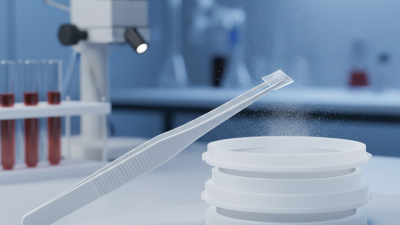
PTFE tweezers are lightweight tools made with polytetrafluoroethylene, a material known for low friction and resistance to many chemicals. Their smooth tips can help handle delicate samples without the metal contact that may introduce unwanted particles. They are useful when a sample could scratch easily or react with ordinary metal tools. They are not magic. PTFE can still wear, deform, or become contaminated, so inspect the tips before use.
A PTFE sieve separates particles by size. Material moves across a mesh with defined openings, while smaller particles pass through and larger ones remain above. In a Lab Test Sieve, the mesh opening and the way the sample is shaken affect the result. PTFE components can be useful when avoiding metal contact matters, but the mesh must suit the sample and the test method. A clogged opening changes what passes through.
These tools work best when their limits are considered. PTFE is not suitable for every temperature, chemical, or mechanical load; check the supplier’s specifications for the specific grade and construction. Clean tweezers and sieves using a method compatible with the sample, then let them dry fully. One detail is easy to miss: static can make fine particles cling to a PTFE surface. Record the sieve size and handling conditions, and repeat the procedure when results seem inconsistent.
| Tool Type | Construction and How It Works | Typical Features | Best Suited For | Important Limitations |
|---|---|---|---|---|
| Fine-point PTFE tweezers | Two flexible arms meet at narrow tips. Squeezing the arms closes the tips around a small object. | Nonmetallic, electrically insulating tips; low-friction surface; available with straight or angled points. | Handling small samples, delicate parts, or materials that should not contact metal. | PTFE is relatively soft compared with metal. Fine tips can deform under heavy pressure and are not suited to gripping hard objects forcefully. |
| Flat-tip PTFE tweezers | Broad, flat ends distribute contact over a larger area when the arms are pressed together. | Wider contact area than fine-point styles; helps reduce concentrated pressure on fragile samples. | Picking up thin films, small wafers, filter media, or other flat, delicate items. | Broad tips may be less effective for reaching into narrow openings or handling very small particles. |
| Curved-tip PTFE tweezers | Curved arms or tips provide access around the edge of a vessel or into a confined space. | Available in different curve angles and tip widths; retains PTFE’s nonmetallic, low-friction contact surface. | Manipulating samples inside Beakers, trays, or other containers where straight tweezers are awkward. | The curved geometry can reduce visibility or control in some setups. Check that the tip shape fits the vessel and sample. |
| Woven PTFE mesh sieve | PTFE filaments form a regular mesh. Particles smaller than the openings pass through, while larger particles are retained. | Opening size, mesh dimensions, and frame format can be specified for the application; the mesh is nonmetallic. | Size separation when metal contact is undesirable or a chemically resistant screening surface is needed. | PTFE mesh can stretch or deform under excessive tension, loading, or abrasion. Confirm the opening size and temperature rating with the supplier. |
| PTFE-coated sieve screen | A supporting screen is coated with PTFE to provide a low-friction contact surface while the underlying support provides structure. | Combines a coated contact surface with a supporting substrate; construction and coating thickness vary by design. | Screening applications that need a PTFE surface but also require more support than a free-standing polymer mesh. | The support material remains part of the assembly and may affect chemical compatibility. Inspect the coating for wear or damage. |
| PTFE sieve or mesh insert | A replaceable PTFE screen or mesh panel fits into a separate holder or frame, allowing the screening element to be changed. | Customizable opening sizes and panel dimensions; the frame and screen can be selected separately. | Lab setups that need a specific screen geometry or easy replacement of the screening surface. | Compatibility depends on both the PTFE insert and its holder. Frame dimensions and mesh openings should be verified before ordering. |
| Material and temperature guidance | PTFE is a fluoropolymer valued for broad chemical resistance, low friction, and electrical insulation. | Typical continuous-use temperature limits are often around 260 °C, while the melting point is about 327 °C; actual limits depend on design and load. | Choosing tools for compatible laboratory handling and screening conditions. | Do not treat the melting point as a working temperature. Check chemical compatibility and the manufacturer’s rated temperature; PTFE is not suitable for every chemical or mechanical condition. |
Match the jaw shape, tip alignment, and length to the sample. Test the grip on a low-risk sample. Small details matter.
No. Confirm the limits for the complete tool, including its frame and handle. PTFE resists many chemicals, but not every condition.
Compare the stated aperture with the particle size and batch volume. Fine mesh captures smaller particles but can clog with damp material. Coarser mesh may clean faster.
Not necessarily. Some designs use a separate screening layer. Check which parts contact the sample, especially when trace contamination matters.
Rinse promptly with warm water and mild laboratory detergent. Use a soft nylon brush, then rinse with purified water. Avoid abrasive pads.
Air-dry them on a clean, lint-free surface. Store sieves flat and keep tweezer tips away from sharp metal edges. No need to rush.
Check sieve openings for clogging or sagging, and inspect tweezer tips for chips or bends. A slight bend can affect results.
Avoid prolonged pressure. Their relatively soft jaws may deform under excess force. I have underestimated this during repeated handling.
This guide explains how PTFE tweezers and sieves work and what to consider when selecting them for laboratory use in 2026. Ptfe Tweezers. Ptfe Sieve options vary in shape, size, mesh configuration, and handling characteristics, so choosing the right design depends on the materials being handled, the required level of precision, and the task at hand. Common tweezer styles support different gripping needs, while sieve designs and mesh openings suit different separation and screening applications.
The guide also covers how to match these tools to laboratory tasks and how to keep them in good condition. Appropriate cleaning, careful handling, and regular inspection can help preserve their surfaces and performance. By weighing practical requirements against tool design, laboratory users can make informed choices and use PTFE tweezers and sieves more effectively.