In the fast-moving world of laboratory equipment, the Lab Ptfe Centrifugal Tubehas really become a go-to tool for researchers and scientists alike. Dr. Helen Zhang from ChemTech Innovations puts it nicely when she says, “The versatility of the Lab Ptfe Centrifugal Tube is pretty much unmatched, and it's a must-have for a bunch of different experiments.” Her comment really sheds light on how unique these tubes are and how broadly they’re used in scientific work.
Basically, these tubes are built tough—designed to handle harsh chemicals and extreme temperatures. That makes them perfect for things like centrifugation, storing samples, or working with chemical reactions. A lot of labs count on their durability and their resistance to contamination. But hey, not everything's perfect—if you don’t use them correctly, it can lead to inconsistent results or data errors. That’s an important issue, and it’s something the science community really needs to keep in mind.
On top of that, as everyone’s pushing for more efficient lab routines, really understanding how to properly use the Lab Ptfe Centrifugal Tube is becoming more and more important. There’s definitely a learning curve for newcomers, which raises questions about training and making sure everyone knows the right protocols. When used properly, these tools can seriously boost the quality of research and help push the boundaries of what's possible in science.

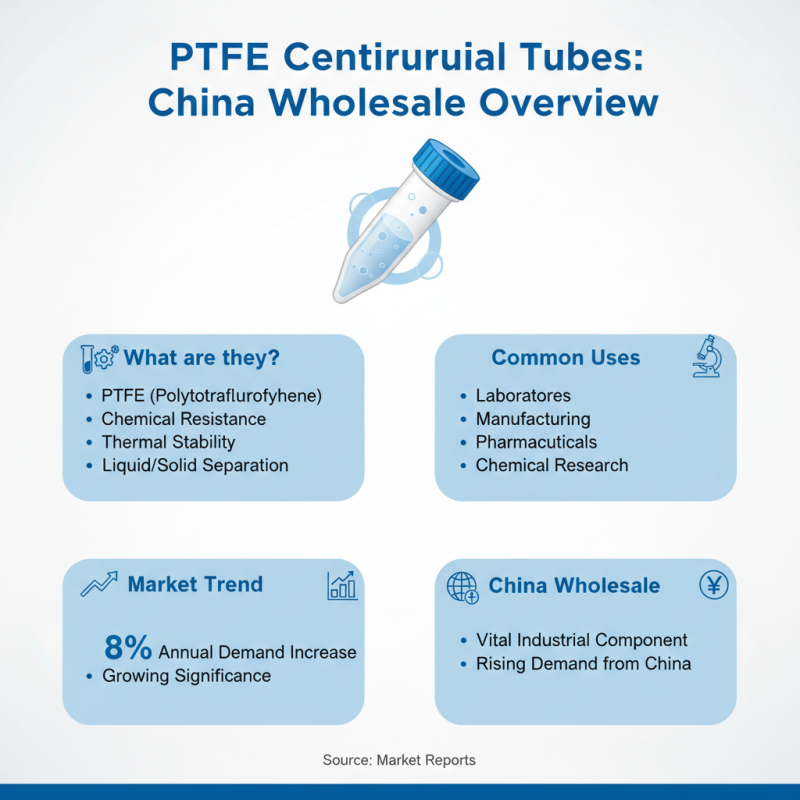
In the context of China wholesale, a PTFE (Polytetrafluoroethylene) centrifugal tube is a vital component in various industrial processes. These tubes are noted for their excellent chemical resistance and thermal stability. They are commonly used in laboratories and manufacturing settings for the separation of liquids and solids. According to market reports, the demand for Ptfe Tubes has risen by approximately 8% annually, reflecting their growing significance in sectors such as pharmaceuticals and chemical research.
PTFE tubes stand out due to their low friction and non-stick properties. This makes them ideal for applications that require the transfer and separation of viscous substances. Suppliers often offer these tubes in various sizes to accommodate diverse needs. However, buyers should be aware of the varying quality standards among manufacturers, which can affect performance. Engineers recommend investing in high-quality products to ensure operational efficiency.
Tips: Always check for certifications. Reliable suppliers should provide evidence of quality control measures. Additionally, consider the application requirements carefully. Not all PTFE tubes are suitable for every industrial process. Understanding the specifics can lead to better results and reduce costly errors.
PTFE, or polytetrafluoroethylene, is widely recognized for its unique properties, making it suitable for various industrial applications. In centrifugal tube operations, PTFE offers excellent chemical resistance. This is crucial when handling aggressive solvents or reactive materials. The non-stick surface of PTFE also prevents adhesion, ensuring smooth material flow.
The flexibility of PTFE is another significant factor. Even at high temperatures, it retains its shape without compromising its integrity. This thermal stability is essential in centrifugal tube applications where heat can impact performance. The lightweight nature of PTFE enhances operational efficiency, reducing the load on machinery.
Notably, while Ptfe Centrifugal Tubes present many advantages, certain challenges exist. The material can be more expensive compared to alternatives. Additionally, its handling requires careful consideration to avoid damage during installation. These aspects highlight the importance of experience and knowledge in selecting and using PTFE for specific applications.
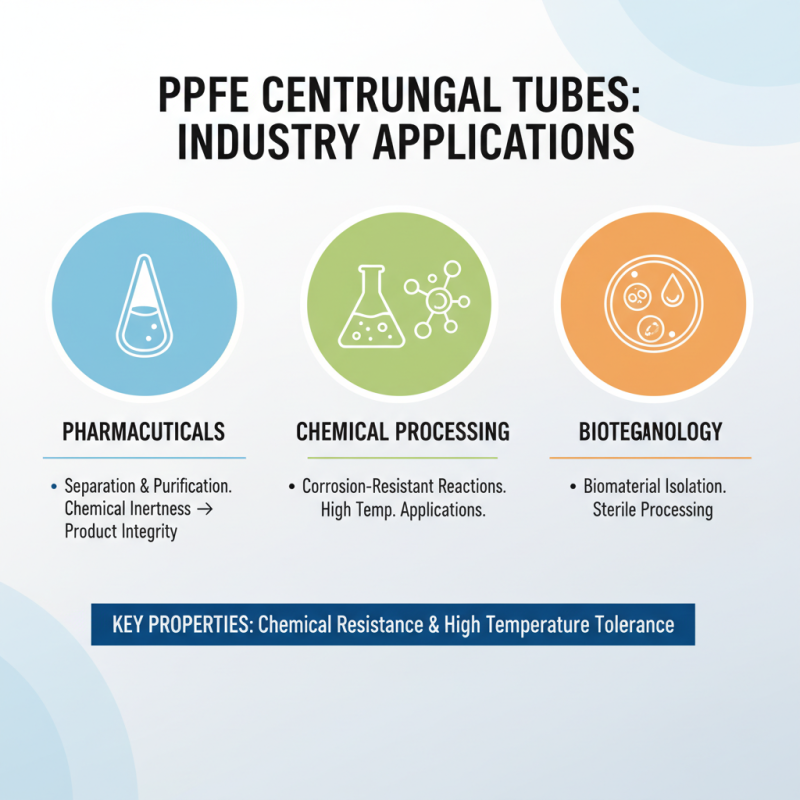
PTFE centrifugal tubes are vital in several industries due to their unique properties. These tubes, made from polytetrafluoroethylene, are resistant to chemicals and high temperatures. In pharmaceuticals, PTFE centrifugal tubes are often employed for separation and purification processes. Their chemical inertness prevents contamination, ensuring product integrity.
In the food processing industry, PTFE centrifugal tubes are important for safe handling of ingredients. They prevent chemical reactions that could compromise food safety. A study from the Food and Drug Administration highlights the need for materials like PTFE that do not leach harmful substances. The versatility of PTFE in various applications shows its growing demand.
Tips for using PTFE centrifugal tubes: always check compatibility with the material being processed. After each use, make sure to clean the tubes properly to maintain their performance. Although robust, PTFE tubes can be prone to scratches. Handle with care to avoid cross-contamination during storage or transport. Regular inspections can prevent unexpected failures during critical operations.
The use of PTFE in centrifugal tube manufacturing brings several advantages. PTFE, or polytetrafluoroethylene, is renowned for its chemical resistance. This makes it ideal for handling corrosive substances. Centrifugal tubes made of PTFE can withstand high temperatures without degrading. This durability is essential in laboratory settings.
Centrifugal tubes made from PTFE also provide excellent non-stick properties. Samples flow smoothly without clinging to the tube walls. This quality enhances sample recovery and minimizes waste. Additionally, Ptfe Test Tubes are easy to clean. Labs benefit from reduced downtime during cleaning processes.
When choosing PTFE centrifugal tubes, consider the quality of the material. Variations in purity can affect performance. Be mindful of the specifications required for your specific application. Always verify the compatibility of PTFE with chemicals you will use. For best results, refer to established protocols and guidelines.
| Dimension | Specification | Usage | Advantages |
|---|---|---|---|
| Outer Diameter | 10 mm - 50 mm | Fluid transfer in laboratories | Chemical resistance |
| Length | 300 mm - 1000 mm | Used in centrifuges for separating substances | High thermal stability |
| Wall Thickness | 1 mm - 4 mm | Sample storage | Non-stick surface |
| Temperature Range | -200°C to +260°C | Compatible with various chemicals | Durability |
| Certification | ISO 9001 | Laboratory applications | Safety in critical applications |
The China PTFE tube industry is witnessing remarkable growth. The increasing demand for high-performance materials drives this momentum. PTFE tubes are known for their exceptional chemical resistance and thermal stability. These properties make them essential in various applications, including automotive, aerospace, and pharmaceuticals.
Market trends indicate a surge in production capacities. Manufacturers are investing heavily in technology and innovation. This has led to improved efficiency and reduced costs. However, challenges remain. Quality control can be inconsistent across different suppliers. Not all manufacturers adhere to stringent standards. Buyers must do thorough research to ensure they choose reliable sources.
Sustainability is becoming an important factor in this industry. Many companies are looking for eco-friendly manufacturing processes. They aim to reduce waste and enhance recyclability. This shift is crucial for long-term growth. Consumers are increasingly aware of environmental issues. They often prefer suppliers who prioritize sustainability. The future of the China PTFE tube market seems promising, but companies must address these challenges to maintain their competitive edge.
PTFE centrifugal tubes are widely recognized for their unique chemical resistance and high-temperature tolerance. These tubes are essential in various industrial applications, particularly in processes involving corrosive substances. Understanding the technical specifications and standards is crucial for ensuring optimal performance in demanding environments.
These tubes typically comply with industry standards that dictate their dimensions, thickness, and material quality. For example, the ASTM and ISO standards provide guidelines on the manufacturing processes and acceptable tolerances. Manufacturers need to ensure their products meet these specifications for reliability and safety. Flaws in tube construction can lead to leaks or failures, which may have serious consequences.
The construction process of PTFE tubes necessitates precision and expertise. Factors such as wall thickness and surface finish significantly influence performance. Often, manufacturers face challenges in achieving uniform quality. An inconsistent surface finish may attract contaminates, impacting the tube's functionality. Therefore, attention to detail during the manufacturing stage is vital to ensure the tubes live up to their reputation. Continuous quality checks can help in minimizing defects and ensuring compliance with set standards.
When considering the wholesale market for PTFE tubes, pricing strategies are crucial. Various factors influence the cost of Centrifuge Tube With Screw Cap. Material quality is one key element. High-grade PTFE often comes at a premium price. Suppliers must balance quality and affordability to attract buyers.
Manufacturing processes also impact pricing. Tubes produced with advanced technology tend to be more expensive. However, they often offer better performance and longer life. Companies should analyze their target market to determine acceptable price points. Bulk purchasing can benefit both suppliers and buyers, presenting opportunities for discounts and negotiations.
Understanding market demand is essential. If a particular size or design of Centrifuge Tube With Screw Cap is in high demand, prices may rise. Conversely, oversupply can lead to price drops. It's important for suppliers to stay informed about trends while optimizing their pricing models. Ultimately, clear communication about product benefits and competitive pricing will help in making informed purchasing decisions.
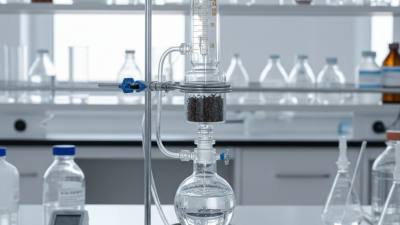
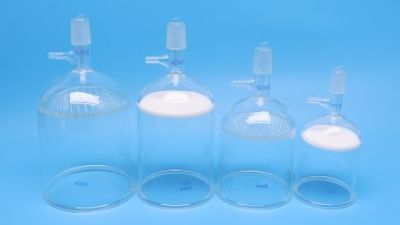
In modern laboratory settings, efficiency is paramount, and one of the critical tools that enhance productivity is the borosilicate glass Buchner filter funnel. This piece of equipment is specifically designed to facilitate the rapid separation of solids from liquids through the vacuum filtration process. Borosilicate glass, known for its exceptional thermal resistance and durability, ensures that the funnel can withstand various chemical environments without compromising its structural integrity.
According to industry reports, the use of high-quality filtration equipment can reduce processing time by up to 50%. In addition, the effective filtration provided by borosilicate glass funnels minimizes the risk of contamination, leading to purer sample results. This is particularly crucial in fields such as pharmaceuticals and biotechnology, where precision is essential. Furthermore, the smooth surface of borosilicate glass allows for easy cleaning and maintenance, contributing to improved lab workflows.
Investing in a borosilicate glass Buchner filter funnel not only optimizes the filtration process but also contributes to overall lab efficiency. Laboratories that adopt this equipment report time savings and improved accuracy in their experiments, enhancing both operational throughput and reproducibility. As researchers continuously strive for better results, the adoption of advanced filtration techniques becomes increasingly important, making these funnels a staple in every efficient laboratory.
: The growth is driven by the increasing demand for high-performance materials with exceptional chemical resistance and thermal stability.
Buyers may encounter inconsistent quality control and varying adherence to standards among suppliers. Research is essential.
Many companies are adopting eco-friendly manufacturing processes. They aim to reduce waste and improve recyclability.
Pricing is influenced by material quality and manufacturing processes. Higher-grade materials usually cost more.
Suppliers should balance quality and affordability. Bulk purchasing can also provide opportunities for discounts.
Prices can rise for high-demand sizes or designs, while oversupply may lead to drops. Staying informed is crucial.
Clear communication about product benefits and competitive pricing helps buyers make informed decisions. It builds trust.
Some manufacturers may not comply with stringent quality standards. This inconsistency can lead to buyer dissatisfaction.
The future looks promising, but addressing quality and sustainability challenges is vital for maintaining competitiveness.
Conducting thorough research on the supplier's reputation and quality control measures can help ensure reliability.
The article titled "What is China Wholesale Lab Ptfe Centrifugal Tube and How is it Used?" provides an insightful overview of the significance and utility of PTFE centrifugal tubes in various industries. It begins by defining PTFE centrifugal tubes within the context of wholesale markets in China, emphasizing the exceptional properties of PTFE, such as chemical resistance and thermal stability, which make it suitable for a wide range of applications.
The article further explores common uses across industries, highlighting advantages like durability and performance efficiency, as well as discussing the market trends and growth potential in the PTFE tube sector in China. Additionally, it covers the technical specifications and standards that govern PTFE centrifugal tubes, as well as factors influencing costs and pricing strategies in the wholesale market, providing a comprehensive understanding of this important industrial product.