contact us
Leave Your Message
0%

Picking the right Lab Conical Flask isn't just about grabbing the biggest one or the cheapest one. It needs to fit your experiment—the material, the temperature, and how you plan to mix things. A 100 mL flask might be perfect for a small culture, but if you're shaking it hard, a 2 L model gives you more headspace. And shape? Yeah, that matters too. A narrow neck? Yeah, it can help cut down on splashing. But honestly, it might make cleaning and pouring a bit of a pain.

You know how Dr. Peter Atkins—chemist and lab educator—once called chemistry 'the study of matter and its transformations'? That same mindset actually comes into play when you're picking out glassware. Take Lab Conical Flasks: each one has to fit the process it's used in. Go with borosilicate glass if heating is a big part of your work, while plastic versions can cut down on breakage during everyday handling. And as for brands, you've got options like DWK Life Sciences, Corning, and Thermo Fisher Scientific, each offering their own designs, graduations, closures, and levels of quality. You know, their products? They're worth taking a closer look at and comparing properly—not just judging by how they look.

When you're looking at reviews, a good one should cover the basics: how accurate the volume is, wall thickness, thermal resistance, how easy it is to clean, and whether it plays nicely with your Lab Equipment. Before you buy, check the base—it should sit firmly on the bench without wobbling. Also give the rim a look to make sure it's smooth. Trust me, small flaws like that get old fast when you're using it again and again. If you're doing microbiology, sterile packaging might be a big deal; for research workflows, an autoclavable design could matter just as much. And honestly? No checklist is going to eliminate every compromise. Some folks care most about durability. Others want something lightweight, or they need really tight dimensional tolerances. Honestly, the best lab conical flask is just the one that lets you work safely and repeatably—without making everyday tasks a pain. And here's something even seasoned buyers can miss: how the flask actually feels when you hold it, pour from it, wash it, and put it away day after day.
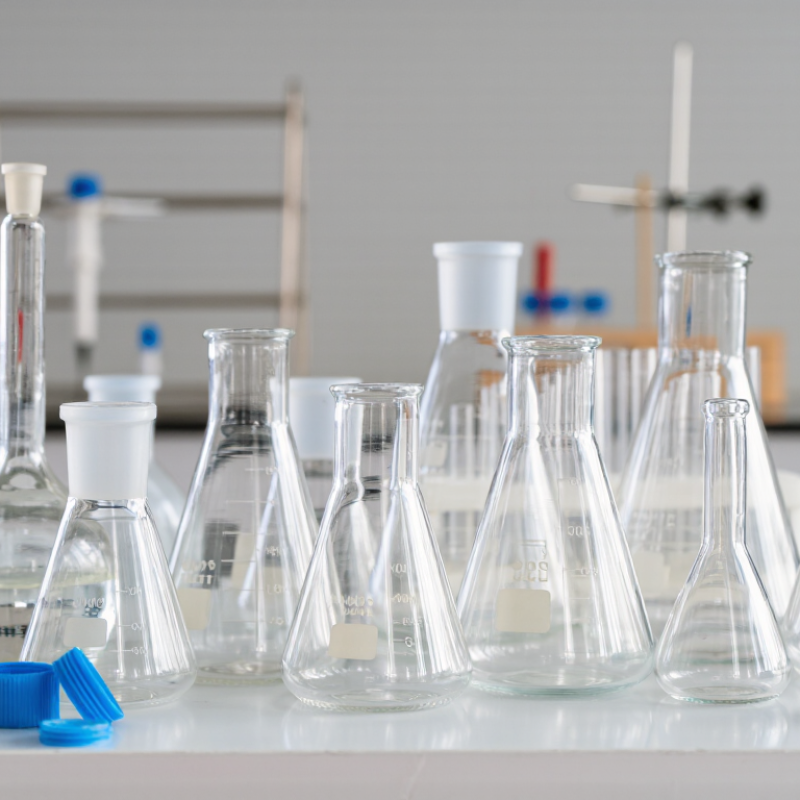
How to Choose the Best Lab Conical Flask?

Define the Application and Select a 25–5,000 mL Flask Capacity

The right lab conical flask begins with the application, not the catalog page.

Decide whether you need gentle mixing, vigorous shaking, heating, sampling, or temporary storage. A 25 mL flask suits small reactions and limited samples. It also reduces material waste during preliminary trials. For routine culture work or solution preparation, 100–500 mL sizes often provide practical handling and enough headspace.

Capacity should match the working volume, not the total volume.

Keep roughly 20–30% empty space for swirling, gas exchange, and foam control. A 250 mL flask filled to the shoulder may mix poorly. A 1,000 mL flask holding only 80 mL can also be awkward. The shape matters. A narrow neck helps reduce splashing, while a wider body supports easier stirring and cleaning. This is easy to overlook.

Larger applications may require 2,000, 3,000, or 5,000 mL flasks. Check bench space, shaker clearance, grip comfort, and heating equipment before choosing them.

Glass offers strong chemical resistance and clear visual inspection. Suitable laboratory plastics are lighter and less likely to break, but they may tolerate heat differently.

Confirm temperature limits, graduations, closure compatibility, and cleaning procedures.

In practice, capacity labels are not always precise enough for process control. Measure critical volumes separately. Mistakes happen.

Keep Working Volume at 50–70% to Reduce Splashing and Overflow

How to Choose the Best Lab Conical Flask?

In daily laboratory work, vessel size affects mixing, handling, and sample safety. A 500 mL Conical Flask should not always hold 500 mL. Keep the working volume between 50% and 70% of its capacity. This range leaves enough headspace for swirling, shaking, and small volume changes. It also reduces splashing and overflow when liquid moves against the flask wall.

Leave breathing room. A flask filled to the neck can spill during transport or agitation. On an orbital shaker, a 500 mL flask containing 250–350 mL often gives the liquid enough space to circulate. Foaming samples may need even more headspace. The best percentage depends on viscosity, shaking speed, and the shape of the flask. That rule is useful, not absolute.

Choose a flask with a stable base, a comfortable neck, and clear volume markings. Inspect the glass for chips, scratches, or cloudy areas before use. If accurate measurement matters, use a calibrated cylinder instead of relying on flask graduations. I once selected a smaller flask to save bench space, but the liquid climbed the sides during mixing. That choice was poor. A slightly larger flask would have controlled splashing better. Heat-resistant laboratory glass can support repeated heating, but sudden temperature changes still require caution. Watch the liquid movement during the first mixing cycle, then adjust the volume or vessel size when needed.

Choose Type I, Class A Borosilicate Glass Under ASTM E438

How to Choose the Best Lab Conical Flask?

Choose Type I, Class A Borosilicate Glass Under ASTM E438. This specification is a practical starting point for routine heating, mixing, and analytical preparation. Type I glass offers strong chemical resistance and low thermal expansion, commonly near 3.3 × 10⁻⁶ K⁻¹. That matters when a flask moves from a warm hotplate to a cooler bench. Thermal shock is rarely dramatic at first. Small scratches can make it worse.

Check the manufacturer’s certificate against ASTM E438, not only the printed label. USP General Chapter also evaluates glass containers through hydrolytic-resistance testing. For regulated work, ISO/IEC 17025:2017 supports documented equipment control and measurement traceability. These references do not confirm every flask automatically. Inspect the rim, neck, graduation area, and base under bright light. Reject cloudy glass, sharp chips, deep abrasions, or uneven walls.

Capacity accuracy deserves attention. A 250 mL flask may be suitable for mixing, but its marking is not automatically volumetric-grade. Confirm whether the flask is calibrated, and record its tolerance when preparing sensitive solutions. I would also review the heating method. Direct flame, rapid cooling, or a dry surface can defeat good glass selection. ASTM compliance helps, but handling still decides performance. That is the part many purchasing checklists miss.

Verify Borosilicate 3.3 Glass Compliance with ISO 3585

Choosing the best lab conical flask begins with glass compliance, not appearance. Borosilicate 3.3 glass should be verified against ISO 3585. This standard identifies a mean thermal expansion coefficient of approximately 3.3 × 10⁻⁶ K⁻¹ between 20°C and 300°C. Lower expansion helps the flask withstand repeated heating and cooling.

Ask for a material certificate, batch number, and test method. A reliable supplier should connect these records to the actual flask shipment. USP General Chapter also provides recognized testing guidance for glass containers, including hydrolytic resistance. These references matter more than a printed “heat resistant” claim. Inspect the neck and rim under bright light. Tiny chips can collect residue or create stress points.

A 100ml Conical Flask is useful for mixing, swirling, and short heating steps, but it is not a volumetric flask. Its graduation, if present, should not be treated as analytical calibration. I have seen users overlook this distinction. That mistake is easy to repeat. Check wall thickness, base stability, stopper fit, and clarity before use. ISO compliance alone cannot confirm every practical feature. The certificate may be genuine, yet the wrong size or poor finish can still disrupt a careful experiment.

Compare Neck Geometry, Baffles, and Closures for Mixing Efficiency

How to Choose the Best Lab Conical Flask?

Neck geometry directly affects filling, pouring, and oxygen transfer. A narrow neck limits evaporation and contamination during shaking. However, it can restrict powder addition and slow cleaning. A wide neck improves access and reduces residue near the shoulder. Published shaking-flask studies report that vessel diameter, fill volume, and orbit size can change oxygen transfer by more than twofold (Applied Microbiology and Biotechnology, 2021). Do not judge efficiency by volume alone.

Baffles create controlled turbulence. They usually increase gas-liquid contact and reduce stagnant zones. A 2022 review in Biochemical Engineering Journal reported kLa improvements of roughly 30% to 100% in baffled flasks, depending on speed and filling ratio. The trade-off is stronger shear, foaming, and sometimes lower cell viability.

Three or four internal baffles may work well for robust microbial cultures. Sensitive cells may need smoother walls. I once assumed more turbulence meant better mixing. That was too simple.

Closures also change performance. A loose sterile plug supports airflow but allows more evaporation. A vented cap offers controlled gas exchange and better handling. A sealed screw closure protects the sample, yet it can restrict oxygen and increase pressure concerns during agitation. ISO 24409 and laboratory quality guidance emphasize secure, compatible closures and traceable handling. Choose the closure after defining the process. Consider viscosity, culture sensitivity, working volume, and shaking speed. Test one real formulation. Small differences matter.

Check 121°C Autoclave Suitability and Chemical Compatibility

How to Choose the Best Lab Conical Flask?

A reliable conical flask must tolerate your actual workflow, not only look suitable on a product shelf. For a 250ml Conical Flask, check the material, wall thickness, neck design, and closure before purchase. Borosilicate glass usually handles repeated heating and cooling well. Plastic options may be lighter, but their temperature limits vary widely.

The 121°C autoclave cycle needs careful verification. Look for documented suitability at 121°C, the intended exposure time, and the correct pressure conditions. “Autoclavable” alone is not enough. Caps, seals, and printed graduations can fail before the flask body does. Keep the cap loose during sterilization when the procedure allows it. Never autoclave a tightly sealed vessel. A sudden temperature change can also cause glass to crack.

Chemical compatibility deserves equal attention. Review a current compatibility chart, then compare it with your solution’s concentration, temperature, and contact time. Glass resists many acids, bases, and solvents, but strong alkalis and fluoride-containing solutions can attack it. Some plastics tolerate impact better, yet solvents may cause swelling or stress cracking. Inspect the flask under bright light before each cycle. Small chips are easy to overlook. I would also record cycle counts, because repeated sterilization gradually changes the risk, even when the first tests look perfect. Rescue is not a quality-control strategy.

Confirm Dimensional Tolerances, Traceability, and Standard Compliance

How to Choose the Best Lab Conical Flask?

A reliable conical flask begins with controlled dimensions, not attractive photographs. Check nominal capacity, neck diameter, base width, wall thickness, and graduation tolerance. These details affect mixing, heating, pouring, and compatibility with stoppers or caps. A 250 mL flask should match the stated tolerance, rather than simply holding roughly 250 mL. Small differences matter during repeatable work.

Ask for traceability documents before placing an order. The supplier should identify the production batch, material type, inspection date, and applicable test records. For borosilicate glass, confirm the stated thermal and chemical resistance. Then compare the product with relevant ISO, ASTM, or laboratory specifications. Standards can vary by application. Read the exact revision. I have seen complete-looking paperwork that omitted this detail. That is an easy point to miss.

Tips: Measure the neck and base with calibrated tools. Check the flask against your stopper, clamp, and heating setup. If using a Lab Ptfe Stir Paddle/Lab Ptfe Stirring Paddle, confirm clearance through the neck and verify that the paddle will not scrape the glass. Inspect one sample before approving a larger batch. Record your measurements and photographs. A clean appearance is not proof of compliance. Recheck the label, lot number, and tolerance values against the certificate. Sometimes the certificate is correct, but the delivered item is not the same version.

How to Choose the Best Lab Conical Flask?

Confirm dimensional tolerances, traceability, and standard compliance before purchase.

Common conical flask sizes include 50, 100, 250, 500, and 1,000 mL. These are nominal capacities, not tolerance limits. Confirm the supplier’s dimensional tolerances, inspection method, lot traceability, and certificate details. For glass conical flasks, check the applicable requirements of ISO 1773 and request evidence of conformity to the stated standard.

FAQS

How do I choose the correct flask capacity?

Choose capacity from the working volume, not the flask’s maximum volume. Keep about 20–30% empty space for swirling and foam control. A 100–500 mL flask suits many routine preparations. Small trials may need only 25 mL. Larger processes may require 2,000–5,000 mL. Check bench space and equipment clearance.

Why should I leave empty space in the flask?

Empty space supports mixing, gas exchange, and foam control. A 250 mL flask filled near its shoulder may mix poorly. An 80 mL sample in a 1,000 mL flask may feel awkward. Capacity alone does not guarantee good handling.

Does flask shape affect laboratory work?

Yes. A narrow neck helps reduce splashing during shaking or pouring. A wider body supports easier stirring and cleaning. Neck size also affects stopper, cap, and stirring-paddle compatibility. This detail is easy to miss.

What glass type is suitable for heating and mixing?

Type I, Class A borosilicate glass is a practical choice for routine heating and mixing. It offers strong chemical resistance and low thermal expansion. Check the stated specification against ASTM E438. A label alone is not enough.

Can borosilicate glass withstand sudden temperature changes?

It handles temperature changes better than ordinary glass, but it is not immune to thermal shock. Small scratches can increase breakage risk. Avoid rapid cooling, direct flame, and uneven heating. Good glass still needs careful handling.

Are flask graduations accurate enough for sensitive solutions?

Not automatically. A 250 mL flask may support mixing without being volumetric-grade. Confirm whether it is calibrated. Record its tolerance for sensitive preparations. Measure critical volumes separately. Mistakes still happen.

What should I check before accepting a flask shipment?

Inspect the rim, neck, base, walls, and graduation area under bright light. Reject cloudy glass, sharp chips, deep abrasions, or uneven walls. Compare the lot number with the certificate. A clean appearance does not prove compliance.

Which documents and measurements should I request?

Request the material type, production batch, inspection date, test records, and applicable standards. Check nominal capacity, neck diameter, base width, wall thickness, and graduation tolerance. Measure one sample using calibrated tools. Then compare it with the stopper, clamp, and heating setup. Paperwork can look complete. Rechecking is worthwhile.

Conclusion

Choosing the right Lab Conical Flask begins with clearly defining the intended application, such as mixing, culturing, heating, or storage. Select a capacity between 25 and 5,000 mL, while keeping the working volume at approximately 50–70% of the flask’s total capacity to reduce splashing, foaming, and overflow. For demanding laboratory work, Type I, Class A borosilicate glass manufactured in accordance with ASTM E438 offers reliable thermal and chemical performance. Compliance with ISO 3585 can further confirm the quality of borosilicate 3.3 glass.

Before purchasing, compare neck geometry, baffle design, and closure options according to the required mixing efficiency and handling method. Confirm that the flask is suitable for repeated autoclave cycles at 121°C and verify its compatibility with the chemicals used in your process. Finally, review dimensional tolerances, identification and traceability information, and applicable standard certifications to ensure consistent performance, safe operation, and dependable results across laboratory applications.

Isabella

Isabella

Isabella is a dedicated marketing professional at Yancheng Xieying Machinery Manufacturing Co., Ltd., a reputable company established in 2017 that specializes in the research, production, sale, and service of laboratory equipment and consumables. With a strong background in the industry, Isabella......
Previous How to Choose the Best Lab Chromatography Chamber