contact us
Leave Your Message
0%

So what's the best type of Lab Tweezers? Honestly, it depends on what you're doing, the material you're handling, and how much control you need. In a busy lab, one pair might be used for delicate tissue, while another is grabbing a warm metal fragment or nudging a tiny component into place. Picking tweezers just by looks? That can backfire. The tips might slip, scratch something, or press harder than you meant.

Lab Tweezers are precision tools, not just accessories. Fine-point tips are great for small samples and detailed positioning. Rounded tips can be gentler on fragile materials. Serrated tips usually give a firmer grip, especially with smooth or wet stuff. Stainless steel is still a solid choice—it's strong, resists corrosion, and cleans up easily. That said, coated or non-magnetic options can work better in specialized settings.

There's no single best pair for everyone.

Experienced techs tend to check tip alignment, spring tension, grip comfort, and how easy they are to clean before buying. A well-made tweezer should close evenly, with no visible gaps under normal pressure. It should also keep its shape after repeated use. But even careful shopping has limits. A pair that feels perfect in a quick test might make your hand tired after a long session. That's why it helps to try several designs with real samples. Good suppliers should give you material info, dimensions, and care guidance. And users should inspect tools regularly and replace damaged tips. Even a tiny defect can throw off a precise procedure. The smart choice is about balancing control, durability, cleanliness, and comfort—not just paying for the most expensive model.
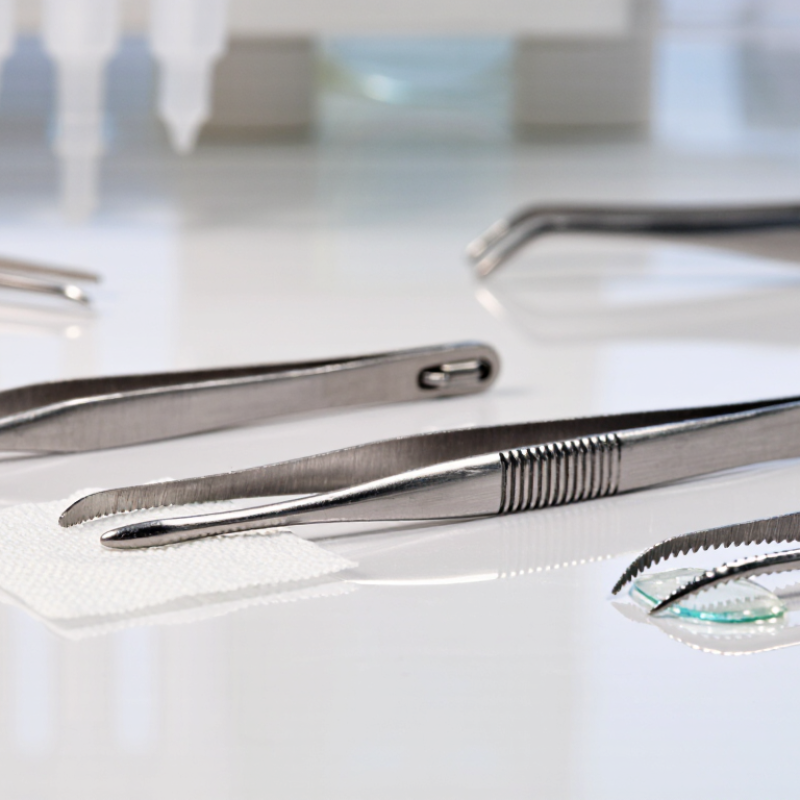
What Is the Best Type of Lab Tweezers?

Types of Laboratory Tweezers and Their Core Features

Laboratory tweezers differ in shape, tip design, and handling force. Straight-point tweezers offer direct control for routine sample placement. Fine-point tweezers reach narrow spaces and handle tiny components carefully. Curved tips improve visibility inside tubes, wells, and recessed equipment. Blunt tips reduce accidental punctures when precision is less important. Serrated tips provide a stronger grip on slippery materials.

Material also affects performance. Stainless steel resists corrosion and tolerates repeated cleaning. Ceramic tips can reduce heat transfer during delicate handling. Anti-static versions help protect sensitive electronic parts and dry specimens. Some Tweezers For Lab include broad, flat tips for lifting membranes or thin sheets. Others use narrow tips for separating fibers under magnification.

Fit matters more than appearance. A good pair should close evenly without excessive pressure. Test the tips against a clean surface before using them with valuable samples. Misaligned tips can crush soft tissue or leave scratches. That happened to me with an inexpensive pair. I noticed it late. Cleaning methods also require care, because harsh chemicals may damage coatings or weaken fine tips. Store tweezers in a dry case, and inspect the edges regularly. Selection should follow the sample, workspace, and cleaning process, not habit.

How Tweezer Materials Affect Laboratory Performance

The best lab tweezers depend on the material, not appearance. Material choice affects contamination, grip, heat resistance, and chemical stability. Stainless steel offers strong tips and reliable handling for routine sample preparation. Its magnetic behavior can matter near sensitive instruments. Ceramic tweezers resist many chemicals and remain nonmagnetic, but their tips may chip after a hard drop.

Ptfe Tweezers suit delicate surfaces and aggressive chemical environments. NIST Chemistry WebBook data places PTFE’s melting point near 327°C, yet practical continuous-use limits are commonly around 260°C. That difference matters. Short exposure to heat is not the same as repeated heating. ASTM material-testing principles also support checking actual operating conditions rather than trusting a single specification. In my lab experience, a smooth PTFE tip reduces scratching, but it can feel less precise than polished metal. That is a real trade-off. No material wins everywhere.

Tips: Match the tweezer material to the sample, solvent, and temperature. Check tip alignment under a bright lamp. Clean and inspect tweezers before every critical transfer. ISO/IEC 17025:2017 emphasizes traceability and controlled equipment, so record cleaning methods and replacement dates. Do not assume chemical resistance is permanent. Surface wear, residue, and repeated sterilization can change performance. A small test with an unused sample is often wiser than an expensive correction later.

Choosing Tweezer Tips for Different Laboratory Tasks

What Is the Best Type of Lab Tweezers?

Choosing Tweezer Tips for Different Laboratory Tasks

The best lab tweezers depend on the material, force, and contamination risk. I learned this after crushing fragile membrane samples with sharply pointed tips. Fine-point tweezers suit tiny components, fibers, and delicate specimens. Their narrow jaws improve access inside crowded vessels. However, they can puncture soft materials or scratch coated surfaces. Rounded tips provide gentler handling for filters, tissue sections, and sensitive films. Flat tips work better for lifting covers, transferring powders, or holding larger pieces securely.

Material also matters. Stainless steel supports routine cleaning and repeated handling. Anti-magnetic alloys help when nearby magnetic fields could disturb small parts. Ceramic tips resist heat and chemical attack, but they may chip after impact. The WHO Laboratory Biosafety Manual, fourth edition, stresses risk assessment and contamination control before selecting laboratory tools. ISO/IEC 17025:2017 also emphasizes suitable equipment, documented maintenance, and reliable measurement conditions. These principles apply even when tweezers seem insignificant.

Tips: Match the tip width to the object, not your fingers. Use blunt, smooth edges for fragile surfaces. Choose serrated jaws only when extra grip is essential. Inspect the tips under magnification before use. A tiny burr can carry residue or damage a sample. Clean tweezers according to the material and procedure. My own choice is sometimes too precise; ultra-fine tips can slow routine work and increase hand fatigue. Record the selected type when repeatability matters. That small note can reveal whether the tool, rather than the operator, caused variation.

Comparing Tweezers by Precision, Strength, and Durability

What Is the Best Type of Lab Tweezers?

The best lab tweezers balance precision, strength, and durability. Fine-point tweezers suit tiny components and delicate samples. Their tips should meet evenly without excessive pressure. In practical work, I test this by lifting a thin fiber from a clean surface. If the fiber slips, the alignment may be poor. Narrow tips improve control, but they can bend when used on rigid materials. Stronger, blunt-tip tweezers handle firm objects better. They are less suitable for detailed placement. Stainless construction usually resists repeated cleaning, while coated surfaces can protect sensitive materials. Still, no tool remains perfect forever.

Durability depends on more than material. Repeated force can distort the tips, especially when tweezers are used as levers. I have seen accurate tools lose precision after one careless adjustment. Storage also matters. Keep tweezers closed or protected, away from dust and abrasive trays. For work involving chemical contact, check resistance data rather than guessing. A Lab Ptfe Stir Paddle/Lab Ptfe Stirring Paddle may suit mixing tasks, but it cannot replace tweezers for controlled handling. Choosing the wrong tool creates avoidable errors.

Tips: Match the tip shape to the sample. Use fine points for placement and broad tips for support. Inspect alignment under magnification. Clean tools with a method compatible with their material. Do not force stubborn parts. Pause and reassess.

Selecting the Best Tweezers for Specific Laboratory Applications

What Is the Best Type of Lab Tweezers?

Selecting the best laboratory tweezers starts with the material being handled. In microscopy, fine-point stainless steel tweezers provide controlled placement for coverslips and thin sections. Ceramic or coated tips can reduce scratching when surfaces are delicate. For corrosive workflows, corrosion-resistant alloys offer better durability than ordinary steel. Grip matters. Serrated jaws help with wet samples, while smooth jaws protect fragile membranes and soft specimens.

A 2024 Grand View Research analysis projects the global laboratory equipment market to grow at roughly 7% annually through 2030. That expansion reflects stricter workflows, higher sample volumes, and greater demand for repeatable handling. Tweezers remain small tools, but poor tip alignment can cause sample loss and inconsistent results. ISO/IEC 17025 emphasizes reliable, controlled laboratory processes, so tool selection should match the test method, cleaning protocol, and operator technique. In my experience, an ergonomic handle matters most during repeated sorting tasks.

Keep them clean. Many laboratories use autoclaving, solvents, or dry heat, but not every tweezer survives all three. Check the manufacturer’s material data before sterilization. I have sometimes chosen ultra-fine tips for precision, then regretted their fragility during routine work. A slightly wider tip may perform better overall. Inspect the point under magnification, test the closing pressure, and record replacement intervals. The “best” tweezer is rarely universal; it is the one that preserves the sample without exhausting the operator.

Proper Cleaning, Handling, and Maintenance of Lab Tweezers

The best lab tweezers depend on the task, but clean handling matters just as much as tip design. Fine-point tweezers suit delicate particles, while rounded tips reduce scratching on fragile surfaces. Stainless steel is often practical because it tolerates repeated cleaning. However, material compatibility still matters.

Before use, inspect the tips under bright light. They should meet evenly, without gaps or bent edges. Wash tweezers with a mild laboratory detergent, then rinse thoroughly with purified water. Dry them with a lint-free wipe, or let them air-dry in a covered area. Avoid touching the tips with bare fingers. Small skin oils can affect sensitive samples.

For particle work, clean tweezers before and after transferring material from a Lab Test Sieve. Hold the tool near the middle, not directly on the tips. Place it on a clean tray between uses. Do not toss it into a drawer with forceps, spatulas, or glassware. That is how tips become misaligned. I once overlooked a tiny residue line near the hinge, and the next sample showed unexpected carryover. The mistake was simple, but the correction took longer than cleaning would have. Record unusual stains, looseness, or corrosion, and remove damaged tweezers from routine work. Follow your laboratory’s validated cleaning procedure, especially when heat or disinfectants are involved.

What Is the Best Type of Lab Tweezers? - Proper Cleaning, Handling, and Maintenance of Lab Tweezers

Tweezer Type Typical Material Best-Suited Applications Main Advantages Important Limitations Cleaning Compatibility Recommended Handling and Maintenance Overall Suitability
Straight-Point Tweezers Stainless steel or non-metallic polymer General laboratory handling, sample transfer, and picking up objects with accessible edges Simple design, easy to control, and suitable for many routine tasks Less effective in confined spaces or when precise access around a sample is required Usually compatible with detergent cleaning, alcohol wiping, and sterilization when permitted by the material Hold near the middle of the arms; avoid dropping the tips or using them as a scraper Excellent for general use
Fine-Point Tweezers Stainless steel, titanium, or ceramic-tipped construction Small particles, delicate specimens, microscopy, electronics, and fine assembly work High precision and access to very small areas Tips can bend, become misaligned, or damage soft samples if excessive force is applied Clean with a lint-free wipe and a compatible solvent; avoid abrasive pads that can change tip geometry Use light pressure, store with a protective cap, and inspect the tips under magnification when necessary Best for precision work
Blunt-Point Tweezers Stainless steel or plastic Handling membranes, filters, soft materials, and samples that could be punctured by sharp tips Lower risk of piercing or cutting delicate materials Less suitable for grasping very small objects or entering narrow gaps Generally easy to wash and disinfect, subject to the material and laboratory protocol Keep the gripping surfaces free from residue and do not force the tips together against hard objects Best for delicate materials
Angled-Point Tweezers Stainless steel, titanium, or ceramic-tipped construction Work in recessed areas, sample positioning, microscopy, and tasks requiring improved visibility Improves hand positioning and line of sight around a specimen The angled tip may be harder to align precisely and is vulnerable to side impacts Use a soft brush or lint-free wipe; rinse and dry thoroughly if wet cleaning is allowed Place on a flat surface with the tip supported; avoid twisting while gripping a sample Best for restricted access
Flat- or Paddle-Tip Tweezers Stainless steel, plastic, or ceramic Holding flat specimens, coverslips, films, wafers, and larger lightweight components Distributes contact pressure over a wider area and offers stable support Not designed for very small objects or narrow openings Clean broad surfaces with a lint-free cloth; remove particles before wiping to prevent scratches Use even pressure and keep the contact faces parallel to avoid sliding or bending specimens Best for flat samples
Self-Closing Tweezers Stainless steel or corrosion-resistant alloy Holding an item for extended periods, positioning components, and repetitive manipulation Reduces continuous finger pressure and can leave both hands available for other tasks Spring force may stress fragile samples or cause accidental release if the tool is not seated correctly Clean according to the material; keep the spring and hinge area free of residue and moisture Check spring action regularly and never use the tool to clamp objects beyond its intended capacity Best for prolonged holding
Ceramic-Tipped Tweezers Metal body with zirconia-based ceramic tips High-temperature handling, chemically demanding work, and applications requiring electrical insulation Tips resist many chemicals, tolerate elevated temperatures, and are nonconductive Ceramic tips are hard but brittle and may chip if dropped or struck Often compatible with solvent cleaning and heat-based processes, provided the complete tool is rated for them Inspect for chips before use, protect the tips during storage, and avoid impact against glass or metal Best for heat or insulation needs
Plastic or Polymer Tweezers Polymer such as nylon, polypropylene, or other laboratory-grade plastic Non-scratching handling of soft, coated, optical, or electrically sensitive components Lightweight, nonconductive, and less likely to scratch delicate surfaces Lower mechanical strength and limited resistance to heat or aggressive solvents Use only cleaning agents approved for the specific polymer; avoid uncontrolled heat exposure Replace if the tips become rough, discolored, warped, or chemically degraded Best for non-marring contact
General care rule: Select the tweezer material and tip style according to the sample, temperature, chemical exposure, required precision, and contamination-control procedure. Before cleaning, remove visible residue with a suitable lint-free wipe or soft brush. Follow the laboratory's validated procedure for detergent concentration, solvent compatibility, sterilization, drying, and storage.

Square Reagent Bottles with Screw Caps: Durable Glassware for Safe, Reliable Laboratory Storage

Square Reagent Bottles with screw caps provide a practical and dependable solution for laboratory storage. Made from durable laboratory-grade glass, their square shape helps save shelf space while keeping bottles stable during handling and transport. The screw caps create a secure closure that helps protect contents from dust, moisture, and accidental spills, making these bottles suitable for samples, reagents, solvents, and other general laboratory materials. Clear glass also allows users to inspect the contents and monitor volume without opening the container.

Reliable China-based suppliers and manufacturers offer these bottles in various capacities, neck sizes, cap materials, and closure options to meet different laboratory requirements. Experienced factory teams focus on precise molding, smooth surfaces, consistent dimensions, and careful quality inspection to support safe and efficient daily use. Customers can benefit from competitive pricing, flexible production arrangements, and dependable lead times when selecting a professional manufacturing partner. Custom packaging, labeling, and product specifications may also be available for laboratories, educational institutions, research facilities, and industrial testing environments.

FAQS

How does tweezer material affect laboratory performance?

Material influences contamination, grip, heat resistance, chemical stability, and tip durability. Appearance alone is not enough.

When are stainless steel tweezers suitable?

They work well for routine sample preparation and repeated cleaning. Their strong tips support firm handling. Magnetic behavior may matter near sensitive instruments.

What are the advantages of ceramic tweezers?

Ceramic tweezers resist many chemicals and remain nonmagnetic. Their tips can chip after a hard drop.

When should Ptfe Tweezers be considered?

They suit delicate surfaces and aggressive chemical environments. Smooth tips can reduce scratches, but precision may feel lower than polished metal.

Can PTFE tweezers handle high temperatures continuously?

A melting point near 327°C does not mean continuous use at that temperature. Practical repeated-use limits are commonly much lower.

How should I choose a tweezer tip shape?

Use fine points for tiny samples and detailed placement. Broad or blunt tips support firm objects better. Narrow tips may bend.

How can I check tweezer alignment?

Hold the tips under a bright lamp or magnification. They should meet evenly, without gaps, bent edges, or uneven pressure.

How should laboratory tweezers be cleaned?

Use a compatible mild detergent, purified water, and a lint-free wipe. Air-drying in a covered area also works. Avoid bare-finger contact.

How should tweezers be stored and inspected?

Keep them closed or protected on a clean tray. Record residue, looseness, corrosion, and replacement dates. Do not mix them loosely with glassware.

What mistakes can reduce tweezer accuracy?

Using tweezers as levers can distort the tips. A tiny residue line may cause sample carryover. I once missed one. Pause and reassess.

Conclusion

Choosing the best Lab Tweezers depends on the task, material, tip design, and required level of control. Laboratory tweezers may be straight, curved, pointed, blunt, serrated, or self-closing, with each style suited to different handling needs. Materials such as stainless steel, titanium, ceramic, and plastic influence chemical resistance, conductivity, flexibility, and durability. Fine pointed tips are useful for delicate components and precise placement, while broader or textured tips provide a stronger grip for larger or slippery objects. Comparing tweezers by precision, strength, and resistance to wear helps users select the most reliable tool for work involving samples, instruments, or sensitive materials.

The right tweezers should match the laboratory application, including microscopy, electronics, dissection, sample preparation, or general laboratory handling. Proper maintenance is equally important: clean tweezers after use with a suitable method, avoid damaging the tips, store them in a dry and protected location, and regularly check for misalignment, corrosion, or reduced grip. With appropriate selection and care, Lab Tweezers can deliver consistent performance, accuracy, and long-term usability.


Sophie

Sophie

Sophie is a dedicated marketing professional at Yancheng Xieying Machinery Manufacturing Co., Ltd., a reputable company established in 2017 that specializes in the research, production, sale, and service of laboratory equipment and consumables. With her extensive knowledge of the company’s products......
Previous What Is a PTFE Filter Holder and How Does It Work?