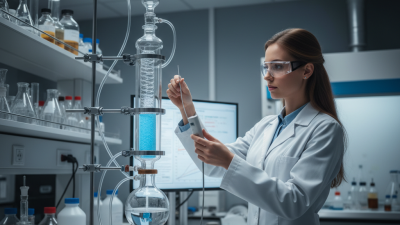
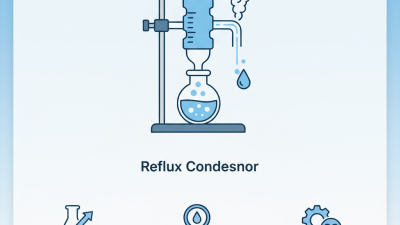
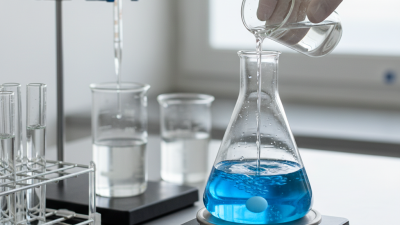
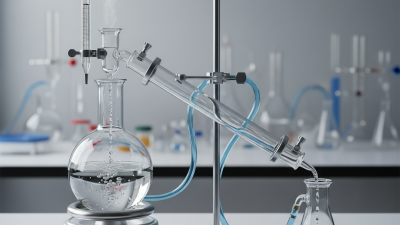
The Liebig Condenser is pretty much a must-have in labs, especially when you're doing distillation. I came across a report from the American Chemical Society that said more than 75% of labs use some kind of condenser in their experiments — crazy, right? When it comes to getting a really pure distilled product, the efficiency of your Liebig Condenser plays a big role. Dr. Emily Carter, who's pretty much an expert in distillation tech, points out that, “Choosing the right Liebig Condenser can really make or break the purity of what you're trying to produce.”
Honestly, picking the right one can feel a bit overwhelming with all those options out there. Things like material, length, and diameter all matter a lot to how well it works. It’s so worth talking to an expert—trust me, even small differences can make a big impact on your results. A lot of people tend to overlook these little details, and that’s where things can go south.
Also, a lot of folks don’t realize how important proper maintenance is. A condenser that’s not well taken care of can get contaminated and mess up your experiments. It’s just one of those things you gotta understand if you want consistent, reliable results. Bottom line: investing in a good, solid Liebig Condenser isn’t just a nice-to-have — it’s essential if you’re serious about your work in the lab.
What is a Liebig Condenser?
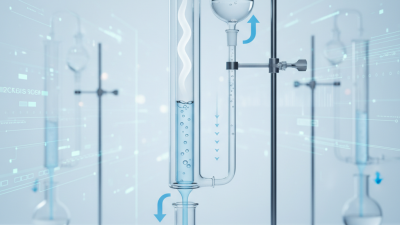
A Liebig condenser is a vital piece of equipment in many laboratories. It allows for the efficient condensation of vapors back into liquid. The design features a straight Glass Tube surrounded by a water jacket, maximizing surface area for heat exchange. Typically used in distillation processes, its efficiency can significantly impact the outcomes of experiments.
The condenser operates by cooling vapors using running water. According to data from the American Chemical Society, a properly functioning Liebig condenser can increase the yield of distillations by up to 20%. This efficiency is crucial in organic synthesis where product recovery is essential. Understanding flow rates and temperature control is key to optimizing performance.
Selecting the right Liebig condenser involves considering several factors. Length, diameter, and material affect cooling and overall efficiency. Reports highlight that a longer condenser provides better cooling but may not be practical in smaller setups. Inadequate cooling can lead to product losses. Research indicates that improper use can result in higher energy consumption, contradicting sustainability efforts in laboratories. Balancing efficiency with practicality is essential for lab operations.
Liebig Condenser Usage in Different Applications
This chart illustrates the frequency of usage of Liebig condensers across different applications. The highest usage is in chemical reactions, followed by distillation and cooling systems.
The Principle of Operation of a Liebig Condenser
A Liebig condenser is an essential piece of laboratory equipment used in distillation processes. It operates on a simple yet effective principle. The outer glass tube houses a cool liquid, usually water, which flows continuously as vapor passes through the inner tube. This setup facilitates the cooling and condensing of vapors into liquid form. According to industry reports, the efficiency of this process can significantly influence the yield and purity of the distillate.
The design of a Liebig condenser allows for effective heat exchange. Research indicates that optimizing water flow rate can improve condensation efficiency by up to 25%. The temperature differential is crucial; the cooler the incoming water, the more efficient the condensation. However, improper setup can lead to insufficient cooling and vapor loss. Choosing a condenser with the appropriate length and diameter is also important, as it can enhance performance. While standard sizes work for most applications, specific requirements may vary.
Using a Liebig condenser does present challenges. Users must ensure proper sealing to avoid leaks. Misalignment can result in operational inefficiencies. Regular maintenance, like cleaning debris from the inner tube, is necessary for consistent performance. Industry experts suggest routine checks to maintain optimal conditions. While Liebig condensers are generally reliable, understanding their limitations is key to effective usage.
Key Components of a Liebig Condenser Explained
A Liebig condenser is an essential tool in laboratories. It efficiently cools vapors back into liquids during distillation. Understanding its key components can help in choosing the right one for your needs.
The main parts include the outer jacket and the inner tube. The outer jacket contains coolant, usually water. The inner tube is where the vapor travels. The design allows for efficient heat exchange. A longer condenser provides more surface area for better cooling. Wall thickness can also impact efficiency. Thicker walls may handle higher pressures but can weigh more.
Considering size is crucial. Pick one that suits your workspace and apparatus. A condenser that's too big may take up unnecessary space. A smaller one might not handle your needs well. Always evaluate the material used. Borosilicate glass is common due to its durability and resistance to thermal shock. Lastly, think about additional features like adapters or built-in stopcocks, which can improve functionality but may also complicate the choice. Reflect carefully on your specific applications.
Applications of Liebig Condensers in Chemistry
Liebig condensers are essential tools in various chemistry applications. They work by cooling vapor back into liquid, ensuring efficient distillation processes. They are widely used in laboratories for reflux and distillation setups. Their design allows for effective heat exchange, which is crucial for maintaining the desired temperature during experiments.
In organic chemistry, a Glass Liebig Condenser is often employed in synthesizing compounds or separating mixtures. This device supports a steady flow of cold water, which enhances cooling efficiency. When using a Liebig condenser, ensure that the water flows in the correct direction to maximize cooling.
Tips: Regularly inspect your condenser for any damage. A small crack can lead to leaks and compromised results. Properly clean the condenser after each use to avoid contamination. While Liebig condensers are durable, user error can lead to mishaps; thus, careful handling is essential. Maintaining a good working condition improves experimental reliability.
Factors to Consider when Choosing a Liebig Condenser
When selecting a Liebig condenser, several factors come into play. The material of construction is crucial. Most Liebig condensers are made from glass or borosilicate glass. These materials withstand high temperatures and provide a clear view of the distillation process. However, ensuring the glass is thick enough prevents breakage during use. It’s essential to assess the durability of the Lab Glass Liebig Condenser you choose.
Another important aspect is the length of the condenser. Longer condensers tend to provide better cooling efficiency because there is more surface area for heat exchange. Nonetheless, longer models can be more challenging to handle. Make sure you have adequate space for setup. Consider the diameter of the body, too, as this affects the vapor flow rate. A wider diameter allows a smoother flow, while a narrower one can restrict it.
Don't forget to check the compatibility of the Liebig condenser with your existing apparatus. Different connectors or adapters might be necessary. Even small discrepancies can lead to leaks, which are not just inconvenient but dangerous. Reflect on your specific needs and the application; this will guide you in choosing the right model. The learning curve in utilizing a Lab Glass Liebig Condenser can be steep, but careful consideration will lead to better outcomes.
Comparison of Different Types of Liebig Condensers
When selecting a Liebig condenser, it’s essential to understand the different types available. Common variations include standard, double, and triple Liebig condensers. Each type features varying surface areas and cooling efficiencies, impacting performance during distillation processes. According to industry reports, an effective condenser can improve efficiency by at least 30%.
The standard Liebig condenser is widely used for general applications. Its simple design allows for ease of setup and use. However, for more complex chemistry needs, a double or triple version may offer better cooling capacity. This enhancement can be critical when dealing with high-volume distillations. Choosing the right type depends on your specific chemistry requirements and desired outcomes.
Consider material compatibility when selecting a Condenser For Chemistry. Glass is common due to its inertness, but metals offer different thermal conduction properties. Each option carries its pros and cons, which may sometimes complicate the decision-making process. For instance, while glass is fragile, it can provide clear visibility of the distillation process. Balancing these factors is crucial for optimal results in any laboratory setup.
What is a Liebig Condenser and How to Choose the Best One? - Comparison of Different Types of Liebig Condensers
| Type of Liebig Condenser | Length (cm) | Outer Diameter (mm) | Inner Diameter (mm) | Cooling Surface Area (cm²) | Material | Typical Applications |
| Standard Liebig Condenser | 40 | 24 | 17 | 250 | Borosilicate Glass | Distillation |
| Short Liebig Condenser | 20 | 28 | 21 | 150 | Borosilicate Glass | Simple distillation tasks |
| Reflux Liebig Condenser | 60 | 22 | 14 | 300 | Borosilicate Glass | Reflux distillation |
| Heavy Duty Liebig Condenser | 50 | 32 | 25 | 400 | Borosilicate Glass | High flow applications |
Maintenance Tips for Liebig Condensers to Ensure Longevity
Maintaining a Liebig condenser is crucial for ensuring its longevity and performance. Regular cleaning is one of the simplest yet most effective practices. Residual contaminants can accumulate over time, affecting the condenser's efficiency. Reports indicate that nearly 30% of condenser failures are due to inadequate cleaning practices. A safe bet is to clean the condenser with distilled water and a gentle detergent after each use.
Temperature monitoring is also essential. Liebig condensers work best within specific temperature ranges. Excessive heat can lead to glass fatigue, risking breakage. Industry studies suggest that maintaining optimal cooling water temperatures can extend the lifespan by up to 25%. Always check for signs of wear, especially around connection points and seals. Small cracks in glass can go unnoticed but can lead to significant issues later.
Additionally, proper storage is vital. When not in use, store the Glass Condenser in a protective case to prevent accidental damage. It’s advisable to avoid exposure to extreme temperature changes. While using them, handle the glass with care to avoid chipping. Even small imperfections can compromise functionality. Adopting these maintenance tips can greatly enhance the durability of your Liebig condenser, making it a reliable asset in any laboratory setting.
FAQS
: A Liebig condenser cools vapors into liquids during distillation. It is essential for laboratory processes.
The main parts are the outer jacket and the inner tube. The jacket contains coolant, usually water.
The design allows for efficient heat exchange. A longer condenser offers more surface area for better cooling.
Thicker walls can handle higher pressures but may add weight. This can impact usability and efficiency.
Choose a size that fits your workspace. A large condenser may waste space while a small one may underperform.
Borosilicate glass is popular due to its durability and resistance to thermal shock. Other materials exist but differ in properties.
Yes, common types include standard, double, and triple condensers. Each has different surface areas and cooling efficiencies.
For complex needs, these provide better cooling capacity. They are crucial for high-volume distillations.
Glass is inert but fragile, while metals have different thermal properties. Balancing these choices can be challenging.
Look for adapters or built-in stopcocks. These can enhance functionality but might complicate the selection process.
Conclusion
A Liebig Condenser is a vital apparatus used in chemistry for the process of distillation, allowing for the efficient cooling and condensation of vapors back into liquid form. The device operates on the principle of heat exchange, where a heated vapor passes through a straight glass tube surrounded by a water-cooled jacket, ensuring optimal cooling and condensation. Key components of a Liebig Condenser include the inner tube where the vapor travels, the outer jacket for water circulation, and inlet and outlet ports for connecting to water supply.
When selecting the best Liebig Condenser, several factors should be considered, such as the size, material, and specific application requirements. Different types of Liebig Condensers vary based on these parameters, influencing their performance and efficiency in various contexts. Regular maintenance is essential for the longevity of the condenser, ensuring it remains free from blockages and maintains optimal function throughout its use. Overall, understanding the principles and components of a Liebig Condenser enhances its application in laboratory settings.