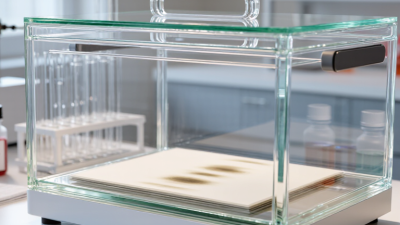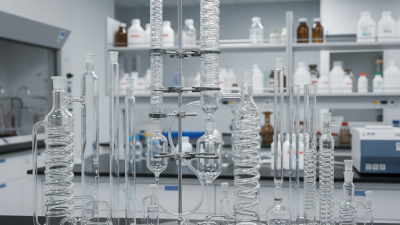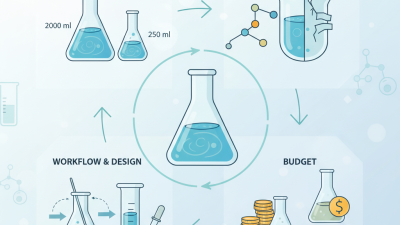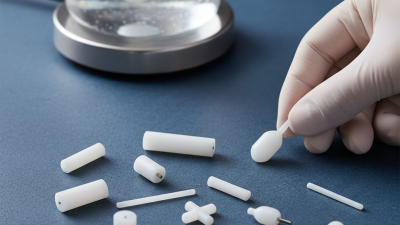
You know, picking the right Lab Chromatography Chamber isn't just about how fast those spots show up. It actually plays a big role in separation quality, how much solvent you're exposed to, and whether you can trust the results you record. So I've put together seven practical tips to help you choose one that really fits your lab's workflow, your methods, and your safety requirements.
First off, look at the chamber's usable dimensions – you want your plate to sit flat in there, not touching the walls or the solvent reservoir, you know? Then, check that the lid actually seals properly, especially if you're working with volatile solvents. That's a big deal. If the lid's even a bit loose, you'll end up with uneven vapor and those blurry bands that drive you crazy. Honestly, the little things make a huge difference – it's all about paying attention to the details.
When you're picking a material, you've got to think it through. Clear glass is nice for seeing what's inside, and if it's made to resist chemicals, you can scrub it over and over without worry. But also, take a peek at the base—any sharp edges, little nooks that trap gunk, or if it wobbles. Those things are easy to overlook, but they honestly make a big difference.
Alright, so when you're picking a chamber, think about capacity, how much cleaning it'll need, and how often you'll be handling it. If you're only testing occasionally, a compact one might do the job. But if you've got multiple plates to run, a bigger model could save you from constantly setting things up again. That said, bigger isn't always better—actually, too much space can just waste solvent and make it harder to control the saturation. So be honest about your real workload, not some perfect scenario.
Alright, let's talk about what makes a supplier actually trustworthy. They should give you precise dimensions, material details, how to use it, and be quick to help when you have issues. But don't just fall for fancy product claims—check if they've got real lab experience backing them up. Also, make sure their stuff works with your existing methods and safety rules. And here's the thing: no chamber is perfect, no matter what they say. You still need to track temperature, solvent depth, development time, and how you clean it. Those notes are gold—they'll tell you if the equipment is consistent over time. Let's face it – if you're doing careful work in the lab, the right chromatography chamber is a game changer. It makes things easier, safer, and honestly, a whole lot more repeatable. You'd think that's obvious, but you'd be surprised how often people get it wrong.
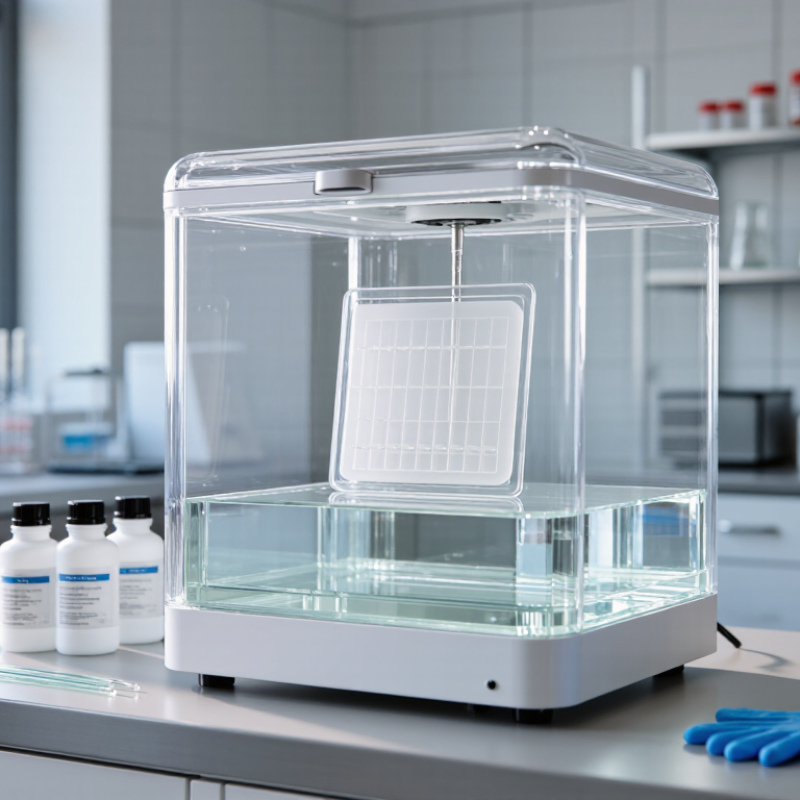
The right chamber begins with the test, not the catalog. In routine thin-layer chromatography, identify what you will separate, how often, and at what scale. A compact chamber may suit teaching, screening, or small plates. A larger model may support wider plates and controlled solvent development.
Application also determines construction. Solvent-resistant glass allows clear viewing and easy inspection of solvent movement. A tight lid can reduce evaporation and improve chamber saturation. However, sealing quality must be checked during real use, not assumed from appearance.
I have seen minor residue change later results.
Your workflow should guide the remaining choices. Consider sample numbers, development distance, cleaning frequency, and available bench space.
This supports repeatability and laboratory review. A practical choice is rarely perfect. Small compromises may still matter. Recheck them after several experiments.
Selecting the correct Chromatography Chamber begins with plate dimensions, not guesswork. Standard thin-layer chromatography plates commonly measure 5 × 10 cm or 10 × 10 cm. A chamber should provide enough space for the plate, solvent depth, and safe handling. Leave several millimeters around each side. Tight walls can cause uneven development and accidental scratching.
Sample capacity matters just as much. A single 10 × 10 cm plate may hold multiple lanes, but overloaded spotting creates broad, merged bands. The United States Pharmacopeia recommends controlled application and system suitability checks for reliable chromatographic results. ISO/IEC 17025:2017 also requires laboratories to verify equipment performance and maintain objective records. Record the number of samples, expected solvent volume, and plate size before purchasing.
Avoid choosing the largest chamber automatically. Larger internal airspace may require more solvent and longer saturation. A 2024 chromatography market report from MarketsandMarkets projects continued growth in chromatography testing, increasing pressure for efficient laboratory workflows. Yet bigger is not always better. I have seen unused chamber space complicate solvent equilibration. That detail is easy to overlook. For routine batches, select a chamber that fits the usual plate size with modest spare capacity. For variable workloads, a modular design can be more practical. Test it with real samples, because theoretical capacity may not match daily handling.
7 Tips for Choosing a Lab Chromatography Chamber
Material choice controls chemical resistance, visibility, and service life. Glass offers excellent solvent resistance and clear layer observation, but it can crack from impact or sudden temperature changes. Polypropylene handles many aqueous acids and bases well, while PTFE performs better against aggressive solvents. Check compatibility charts carefully. “Chemical resistant” is never universal. Tip one: match the material to every solvent used. Tip two: inspect seals, hinges, and edges, where vapor exposure often begins. Tip three: prefer thick, stable walls for repeated handling. The U.S. Department of Energy’s Labs21 benchmarking reports that laboratories may consume five to ten times more energy per square foot than offices, making durable, reusable equipment a sensible resource choice.
Tip four: evaluate transparency after prolonged solvent contact. Some plastics become cloudy or brittle. Tip five: confirm cleaning compatibility, especially with oxidizers. ASTM D543 assesses plastic resistance through changes in weight, dimensions, appearance, and strength; these criteria provide a useful testing framework. Tip six: consider corrosion-resistant hardware, not only the chamber body. Stainless steel can still suffer in chloride-rich environments. Tip seven: document exposure history and replace stressed components early. I once focused on wall material and overlooked the gasket. That was a preventable mistake. A chamber may survive the first month, yet fail after repeated solvent cycles. Select materials using real exposure time, temperature, concentration, and handling conditions.
| Tip | Selection Criterion | Material and Performance Comparison | Practical Recommendation | What to Verify |
|---|---|---|---|---|
| 1 | Match the chamber to the solvent system | Borosilicate glass offers broad compatibility with many common chromatography solvents, including aqueous mixtures, alcohols, hydrocarbons, and several chlorinated solvents. Polypropylene (PP) is generally suitable for many dilute acids, bases, and aqueous solutions, but its compatibility with strong oxidizers and some aromatic or chlorinated solvents is limited. PTFE has very broad chemical resistance, while stainless steel is durable but may be attacked by specific acids or halide-containing environments. | Select the material only after listing every solvent, reagent, stain, and cleaning chemical that will contact the chamber. For mixed or aggressive solvent systems, verify compatibility with a chemical-resistance chart and the supplier's technical data. | Solvent composition, concentration, exposure time, temperature, and mechanical stress. |
| 2 | Prioritize chemical resistance | PTFE is highly resistant to most laboratory chemicals and is often used for seals, liners, and fittings. Borosilicate glass is chemically stable for most routine thin-layer chromatography work, but concentrated hydrofluoric acid can attack it. PP resists many aqueous chemicals but may soften, swell, or become stressed by certain organic solvents. Acrylic and other clear plastics can craze or crack when exposed to solvents such as ketones, esters, or aromatic hydrocarbons. | Use glass or PTFE for broad solvent exposure, PP for compatible aqueous or mild chemical applications, and avoid acrylic when aggressive organic solvents are part of the method unless compatibility has been confirmed. | Chemical-resistance rating at the actual concentration and operating temperature. |
| 3 | Evaluate durability and breakage risk | Glass provides good dimensional stability and does not readily absorb most solvents, but it can chip or break under impact. PP is lightweight and impact-resistant, although it can deform under high heat or prolonged mechanical stress. PTFE is chemically durable but relatively soft and can scratch or deform under compression. Stainless steel has high mechanical strength but may dent, corrode, or show surface damage if poorly maintained. | Choose borosilicate glass for stable bench-top use when breakage can be managed. Choose PP for frequent handling or transport. Consider stainless steel for rugged industrial environments only when its corrosion compatibility is established. | Wall thickness, lid fit, impact exposure, stacking, and expected service life. |
| 4 | Check solvent-vapor containment | A well-fitted lid reduces evaporation and helps maintain a consistent vapor environment during chamber saturation. Glass lids and ground-glass surfaces can provide stable sealing when correctly matched. Polymer lids are lighter and less fragile, but their flexibility and solvent exposure may affect long-term sealing. PTFE gasket components generally provide strong chemical resistance. | Select a chamber with a close-fitting lid and, where applicable, a chemically resistant gasket. Avoid relying on loose covers when solvent vapor control is important for reproducible development. | Lid overlap, gasket material, vapor leakage, and ease of opening after saturation. |
| 5 | Consider temperature and dimensional stability | Borosilicate glass maintains its shape across normal laboratory temperature changes and has a lower thermal-expansion coefficient than many plastics. PP can be used at moderate laboratory temperatures but may deform as temperature increases. PTFE remains chemically stable over a broad temperature range, although its dimensional stability and creep under load should be considered. Stainless steel has good mechanical stability but may conduct heat rapidly. | For routine room-temperature chromatography, glass, PP, and PTFE may all be suitable when chemically compatible. For heated or temperature-controlled work, verify the manufacturer's maximum continuous-use temperature and thermal cycling limits. | Operating temperature, thermal cycling, heat source, and dimensional tolerance. |
| 6 | Assess cleaning and contamination control | Smooth glass surfaces are generally easy to inspect and clean, and they do not normally absorb solvents. PP is also easy to wash but can retain residues in scratches or stressed areas. PTFE has low surface energy and resists many deposits, although persistent contamination can still collect around seams and fittings. Stainless steel is cleanable and durable when its surface is intact, but corrosion or roughness can create retention sites. | Choose a chamber with smooth internal corners, minimal seams, and removable parts that can be cleaned without damaging the material. Use a cleaning procedure validated for the specific solvent and chamber material. | Internal surface finish, seams, dead spaces, cleaning agents, and inspection visibility. |
| 7 | Balance capacity, visibility, and total cost | Clear glass and transparent compatible plastics allow direct observation of solvent-front movement and plate position. Glass is often heavier and more fragile, while PP is lighter and commonly less expensive. PTFE components can increase purchase cost but may extend service life in highly corrosive applications. Stainless steel can offer long mechanical life but may reduce visual access unless a transparent window is included. | Select the smallest chamber that accommodates the plate size and solvent depth required by the method. Compare purchase price, replacement frequency, cleaning time, breakage risk, and chemical compatibility rather than evaluating price alone. | Plate dimensions, solvent volume, viewing area, replacement parts, and lifecycle cost. |
Material performance depends on chemical concentration, temperature, contact time, stress, and surface condition. Always confirm compatibility using current technical data before exposing a chromatography chamber to an unfamiliar solvent or reagent.
A reliable Thin Layer Chromatography Chamber should control solvent vapor consistently. Its seal affects development distance, spot shape, and result repeatability. Check the lid fit before use. A loose edge can let vapor escape, creating uneven solvent movement across the plate. Inspect the gasket for cracks, flattening, or chemical swelling. Even a clean-looking seal may perform poorly after repeated exposure.
Tip: Add a small amount of solvent and close the chamber briefly. Look for a stable vapor environment, not visible leakage. The interior should become evenly saturated before the plate enters. A liner or filter paper can support saturation by holding solvent against the chamber wall. Keep it flat and avoid covering the sample area. Small positioning errors can change results.
Tip: Compare chambers using the same plate, solvent volume, and development time. Measure the solvent front after drying. If one run travels farther, inspect sealing and chamber leveling before changing the solvent system. A flat base helps prevent uneven flow. Handle the lid gently; repeated pressure can distort the seal. I have found that “tight” does not always mean reliable. Material compatibility also deserves attention, because some solvents soften plastics or seals. Record observations, even when the result looks acceptable. A quiet chamber can still hide vapor loss.
A reliable laboratory chromatography chamber begins with plate compatibility. Check the plate size, coating type, backing material, and edge quality before selecting the chamber. A plate should stand securely without touching the walls. Even a slight lean can distort the solvent front.
The chamber must support uniform development across the entire plate. Look for enough internal space around the plate, especially near the solvent reservoir. A narrow gap may create uneven vapor saturation. In routine work, lining the chamber with clean filter paper can improve saturation. Keep the paper evenly wetted and below the sample line. Small details matter here.
A suitable Tlc Developing Chamber should have a level base and a close-fitting lid. Confirm that the lid reduces evaporation during the waiting period. Solvent depth also needs attention. Too much solvent may cover the applied spots, while too little can cause premature drying. Mark the solvent front immediately after removing the plate. Check whether the front rises straight and consistently. If one side travels faster, inspect the chamber floor, plate placement, and room airflow. I have seen apparently good results fail because the chamber was not level. That mistake is easy to repeat. Clean the chamber after each use, but avoid residues from detergents or previous solvents. A final visual check remains useful, even when the equipment seems dependable.
7 Tips for Choosing a Lab Chromatography Chamber?
Consider Cleaning, Maintenance, and Laboratory Safety
A suitable chamber should be easy to clean, inspect, and handle. Look for smooth glass surfaces without deep grooves or hidden corners. Residue can collect there. In routine laboratory work, I check the chamber immediately after removing the plate. Dried solvent marks often reveal poor cleaning habits, not poor equipment. A removable lid also helps limit vapor release and keeps the developing atmosphere stable.
Safety deserves equal attention. Choose a chamber that feels stable on a level bench. It should not wobble when a plate or Lab Glass Chromatography Column is nearby. Use compatible gloves and eye protection for every solvent procedure. Keep the chamber inside suitable ventilation, and label waste containers clearly. Never rely on a loose lid to control fumes. It is a weak safeguard.
Maintenance becomes easier when replacement parts are simple to inspect. Check seals, hinges, and glass edges before use. Small chips can cause cuts or sudden breakage. Clean with a method approved for the chamber material, then let every part dry fully. I once underestimated a faint solvent odor and delayed checking the lid seal. That was careless. A written inspection log may feel excessive, but it can reveal repeated leaks, cracked glass, or rushed cleaning. Choose equipment your team will actually maintain, not merely equipment that looks precise.
A chromatography chamber should protect product quality without quietly draining your budget. In practice, I have seen teams overbuy features and underbuy durability. Industry analysis from Fortune Business Insights valued the global chromatography market above USD 10 billion in 2023. That scale reflects intense demand for reliable separation tools, but not every laboratory needs the most expensive chamber.
Tip 1: Match the chamber size to your plate format. Extra space can waste solvent.
Tip 2: Check material resistance against your solvents, seals, and cleaning agents.
Tip 3: Prefer stable lids and even saturation. Small leaks can distort solvent fronts.
Tip 4: Inspect visibility, grip, and cleaning access before purchase. A difficult chamber becomes an ignored chamber.
Tip 5: Compare total cost, including replacement seals, training, solvent waste, and downtime. The cheapest unit may age badly.
Tip 6: Request dimensional and compatibility documents. Vague claims deserve caution.
Tip 7: Select suppliers offering calibration guidance and traceable documentation.
ISO/IEC 17025 emphasizes technically valid results, controlled conditions, and measurement traceability. Those principles matter even for basic chamber work. A suitable design should support repeatable development distance, controlled humidity, and clear records. Ask for evidence, not impressive language.
Budget pressure is real. Still, a low price can hide poor hinges, uneven seals, or fragile glass. I would also question unnecessary automation. It sounds efficient, but it may increase training demands. One imperfect choice is choosing solely by capacity. Smaller chambers often reduce solvent use, though this depends on workflow and plate size.
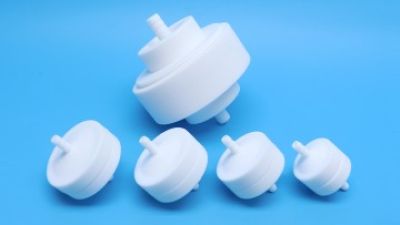
China PTFE syringe Filter Holders with barb tips provide a dependable solution for laboratory and medical filtration. Made from high-quality PTFE, these reusable holders offer excellent durability, chemical resistance, and reliable performance in demanding working conditions. Their classic white finish presents a clean, professional appearance, while the smooth surface and uniform material density support consistent filtration. Standard sizes include 13, 25, 37, 40, 47, 50, and 90 mm, with customization available for specific laboratory requirements.
Designed for use with compatible filter membranes, the holder features a practical barb-tip connection for secure tubing installation. Both inlet and outlet ports have an outer diameter of 7 mm and can be connected to 6 mm silicone tubing, helping create a stable seal during operation. The matching upper and lower covers fit precisely to reduce leakage and improve handling. PTFE construction withstands temperatures up to 280°C and retains moderate mechanical toughness at temperatures as low as -196°C. It also resists acidic and alkaline solutions, aging, and general wear. These factory supplies from China are suitable for filtering laboratory samples, medications, gases, and low-concentration particulate matter when used with the appropriate membrane.
Match the chamber dimensions to the plate size and solvent volume. A compact chamber suits small plates, teaching, and screening. Extra space can waste solvent.
A larger model may support wider plates and longer development distances. Confirm that the available bench space can accommodate it.
Choose materials compatible with mobile phases, seals, and cleaning agents. Solvent-resistant glass allows clear viewing. Compatibility documents are valuable.
A tight lid can reduce evaporation and support vapor saturation. Small leaks may distort solvent fronts. Appearance alone proves little.
Decide whether the method needs simple development or reproducible vapor saturation. Record saturation time in the method file. Recheck it after several experiments.
Check the lid, edges, and internal supports for trapped residue. Difficult cleaning encourages poor habits. Minor residue can change later results.
Keep the solvent volume and plate position consistent between runs. Plates should stand evenly. Small differences may affect the development distance.
Consider replacement seals, training, solvent waste, and downtime. A cheap unit may age badly. The lowest price is not always the lowest cost.
No. Unnecessary automation can increase training demands and maintenance. Simple designs may work better for routine testing. I would still question this choice after repeated use.
Record chamber dimensions, solvent volume, saturation time, and development conditions. Request dimensional and compatibility documents. Perfect repeatability is difficult, but better records reveal weak points.
Choosing the right Lab Chromatography Chamber is essential for obtaining consistent, reliable, and safe experimental results. Begin by defining the chamber’s intended laboratory application, such as routine separation, method development, or educational testing. Select a size that matches the number and dimensions of plates used, while providing enough space for solvent movement and sample capacity. Material selection is also important: durable, chemically resistant construction can improve service life and reduce the risk of damage from commonly used solvents.
A dependable chamber should provide effective sealing and help control solvent vapor during development. It should also support the plates being used and promote even solvent distribution for uniform results. Consider how easily the chamber can be cleaned, maintained, and handled safely in daily laboratory work. Finally, compare product quality, total cost, expected lifespan, and maintenance needs rather than focusing only on the initial purchase price. A well-balanced choice can deliver better performance, improved safety, and greater long-term value.