Leave Your Message
Looking into the top 10 Chinese manufacturers for the 25mm Filter Holders? That’s a question that definitely calls for more than just a simple supplier list. When you're choosing a reliable product, it’s really important to look at stuff like optical alignment, how tight the inner diameter tolerances are, what materials are used, surface finish quality, how stable the mount is, and whether production is consistent. These little details matter a lot—especially when a filter needs to fit perfectly inside a compact setup, whether it's for imaging, lab work, or photonics applications.
Dr. John E. Greivenkamp, an optical engineering expert, sums it up nicely with a rule of thumb: “Precision starts with knowing what needs to stay stable.” That’s exactly what guided this review. A solid 25mm filter holder should be tough enough to resist vibrations, stop unwanted movements, and still make it easy to swap filters when you need to. Aluminum holders are lightweight and easier to machine, which is a plus. On the other hand, stainless steel versions tend to be sturdier and offer more rigidity. A black anodized surface can help cut down stray reflections, but you really should check how good the coating quality actually is.
Sometimes, what you see online doesn’t tell the whole story. A slick product page can’t guarantee how well the holder will hold up over time. Some manufacturers provide detailed drawings, inspection reports, or even sample tests—these are gold. Others just put up nice photos, which doesn’t tell you much about durability or quality. That kind of difference is pretty important.
In this overview, I looked at ten Chinese makers in terms of their product variety, ability to customize, quality control, export experience, and customer service. Keep in mind, this isn’t a definitive ranking—different applications mean different priorities. For example, a holder that works fine on a simple optical bench in a classroom might not hold up in a high-vibration environment. So, it's really best to ask for detailed drawings, thread specs, samples, and testing results before you commit to a big order.
The truth is—small mistakes in specs or quality can turn into big headaches later on. That’s the tough part. You really need to verify what the suppliers claim, especially when tolerances, coatings, or delivery reliability aren’t clear. This guide aims to help you create a more practical shortlist, but it’s not meant to replace proper engineering checks. Better to be safe than sorry!
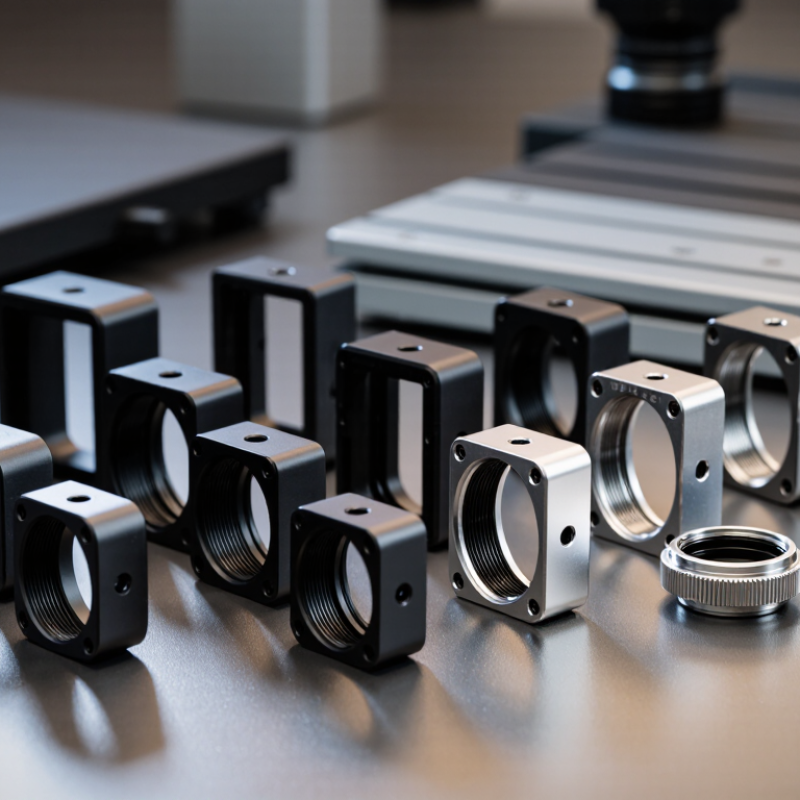
A 25mm filter holder is a mechanical frame designed to secure a round optical filter with a 25mm diameter. It keeps the filter aligned while allowing light to pass through a defined opening. The holder usually includes a body, mounting thread, and retaining ring. The ring applies gentle pressure around the filter edge. This prevents movement without pressing hard on the glass.
During operation, the holder attaches to an optical rail, lens tube, or laboratory fixture. The filter sits near the optical axis, where its center matches the light path. Rotation may be possible when polarization or angle adjustment matters. In practical optical work, a clean seating surface is essential. Dust can tilt the filter slightly. That small error matters.
I once treated the stated 25mm size as the usable opening. That assumption was wrong. The clear aperture is often smaller than the filter diameter. Buyers should check thread dimensions, edge thickness, and mounting depth. Metal holders usually provide stronger threads and better heat resistance. Polymer versions can reduce weight and accidental scratches. Neither option is perfect. A loose retaining ring may cause vibration, while excessive tightening can stress the filter. Use lint-free gloves, inspect the glass under angled light, and tighten only until movement stops. Reliable selection depends on measured dimensions, stable alignment, and repeatable handling.
| No. | Anonymous Supplier Profile | Typical Holder Material | Compatible Filter Diameter | Common Filtration Area | Typical Connections | Common Operating Pressure | Typical Temperature Range | Filter Media Compatibility | Typical Applications | Common Quality Documentation |
|---|---|---|---|---|---|---|---|---|---|---|
| 1 | Profile 01 Precision laboratory type | 316L stainless steel | 25 mm disc | Approximately 3.9 cm² | Luer lock, hose barb, or 1/4 in port | Up to approximately 0.69 MPa, depending on design | Typically 5–121°C | Membrane filters, glass-fiber discs, PTFE, PES, nylon, PVDF | Sample preparation, HPLC solvent clarification, microbiological testing | Material certificate, dimensional inspection report, pressure or leakage test record |
| 2 | Profile 02 Disposable plastic type | Polypropylene housing with elastomer gasket | 25 mm disc | Approximately 3.9 cm² | Luer slip, Luer lock, or stepped hose barb | Commonly 0.20–0.50 MPa at room temperature | Typically 5–60°C | PES, PVDF, nylon, PTFE, cellulose nitrate | Biological samples, aqueous solutions, low-volume clarification | Lot traceability, dimensional inspection, extractables information when applicable |
| 3 | Profile 03 High-chemical-resistance type | PTFE, PFA, or 316L stainless steel wetted path | 25 mm disc | Approximately 3.9 cm² | Luer lock or threaded laboratory port | Typically 0.20–0.69 MPa, subject to material and seal selection | Typically 5–121°C | PTFE, polypropylene, glass fiber, stainless steel mesh | Organic solvents, aggressive chemicals, gas and air sampling | Wetted-material declaration, chemical compatibility data, leak test record |
| 4 | Profile 04 Sterilization-compatible type | 316L stainless steel or autoclavable polypropylene | 25 mm disc | Approximately 3.9 cm² | Luer lock or sanitary small-bore connection | Typically up to 0.50 MPa during liquid filtration | Approximately 5–134°C, if validated for autoclaving | PES, PVDF, nylon, PTFE, cellulose-based membranes | Sterile filtration development, cell culture media, laboratory QC | Autoclave-cycle information, material certificate, batch inspection record |
| 5 | Profile 05 Vacuum filtration type | Polycarbonate, polypropylene, or anodized aluminum support | 25 mm disc | Approximately 3.9 cm² | Vacuum hose barb or Luer connection | Designed primarily for vacuum differential pressure | Typically 5–80°C | Membrane and glass-fiber filters for liquid or air samples | Environmental water testing, particle counting, sample concentration | Dimensional report, vacuum integrity check, material declaration |
| 6 | Profile 06 Gas and vent filtration type | 316L stainless steel, PTFE, or polypropylene | 25 mm disc | Approximately 3.9 cm² | Threaded port, Luer lock, or hose barb | Often 0.10–0.50 MPa, depending on gas-flow design | Typically 5–80°C | Hydrophobic PTFE, polypropylene, glass fiber | Air sampling, tank venting, gas protection, compressed-air testing | Airflow or pressure-drop data, leak test, wetted-material declaration |
| 7 | Profile 07 Inline liquid filtration type | Polypropylene or 316L stainless steel | 25 mm disc | Approximately 3.9 cm² | 1/8 in, 1/4 in, or hose-barb inlet and outlet | Typically 0.20–0.69 MPa at 20–25°C | Typically 5–80°C | PES, PVDF, nylon, PTFE, cellulose acetate | Reagent dispensing, ink and coating filtration, laboratory fluid lines | Flow-direction marking, pressure test record, dimensional inspection |
| 8 | Profile 08 Analytical test type | 316L stainless steel or glass-filled polymer | 25 mm disc | Approximately 3.9 cm² | Luer lock or laboratory threaded fitting | Typically up to 0.69 MPa, subject to filter and gasket limits | Typically 5–121°C | Membranes with pore sizes commonly from 0.10 to 5.0 µm | Particle analysis, gravimetric testing, microscopy, laboratory research | Flatness and dimensional report, surface-finish record, leak test |
| 9 | Profile 09 OEM customization type | PP, PVDF, POM, PTFE, or 316L stainless steel | 25 mm disc; custom interface options | Approximately 3.9 cm² | Custom hose barb, Luer, threaded, or molded port | Specified according to the final assembly and sealing method | Specified according to polymer, gasket, and sterilization requirements | Most standard 25mm membrane and prefilter materials | Instrument integration, private-label assemblies, prototype development | Drawing approval, first-article inspection, batch traceability, change-control record |
| 10 | Profile 10 Economical general-purpose type | Polypropylene housing with silicone, EPDM, or FKM seal | 25 mm disc | Approximately 3.9 cm² | Luer connection or standard hose barb | Commonly 0.10–0.30 MPa at room temperature | Typically 5–60°C | General-purpose aqueous and air-filtration membranes | Routine laboratory filtration, education, water and process sampling | Certificate of conformity, visual inspection, dimensional sampling report |
Request material certificates, dimensional tolerances, thread measurements, and sealing test records. Samples should fit without force or visible gaps.
One good sample may hide batch variation. Ask for inspection records from at least three batches.
Material grade, tooling, surface treatment, order volume, testing, and packaging can change the price. Compare identical specifications.
Confirm mold charges, minimum order quantities, replacement terms, payment conditions, and protective packaging. Low unit prices can exclude important services.
Review monthly output, available machines, operator experience, and backup component suppliers. Quoted capacity is not reserved capacity.
Request dates for sample approval, production, inspection, export preparation, and transport. Add a reasonable buffer.
Confirm dimensions, revisions, thread details, filter fit, and packaging in writing. A 0.2-millimeter difference can cause leakage.
Check machining areas, clean storage, packaging stations, testing equipment, and quality records. Video evidence helps, but independent inspection remains useful.
Not automatically. Cheaper parts may use weaker alloys, rough polishing, or unstable tolerances.
Place a small trial order first. Test pressure, temperature, cleaning conditions, sealing, and assembly fit.
Be cautious when polished documents replace evidence or recent defects remain unexplained. I would stay cautious, too.
Save photographs, inspection data, drawings, certificates, and approved revisions for every sample. Records prevent later confusion.
This article provides a practical guide to China’s top 10 25mm Filter Holder manufacturers, beginning with an explanation of what a 25mm Filter Holder is and how it supports, protects, and positions filter media in fluid or air-handling systems. It outlines key evaluation standards, including material quality, dimensional accuracy, sealing performance, production consistency, certifications, quality control, and after-sales support.
The comparison also examines common product types, materials, customization options, pricing, manufacturing capacity, lead times, and delivery reliability. Buyers will learn how to select a suitable Chinese manufacturer according to application requirements, filtration conditions, installation methods, order volume, and budget. The article further discusses typical industrial and laboratory applications, along with important purchasing considerations such as compatibility, durability, sample testing, packaging, communication, and long-term supply stability.