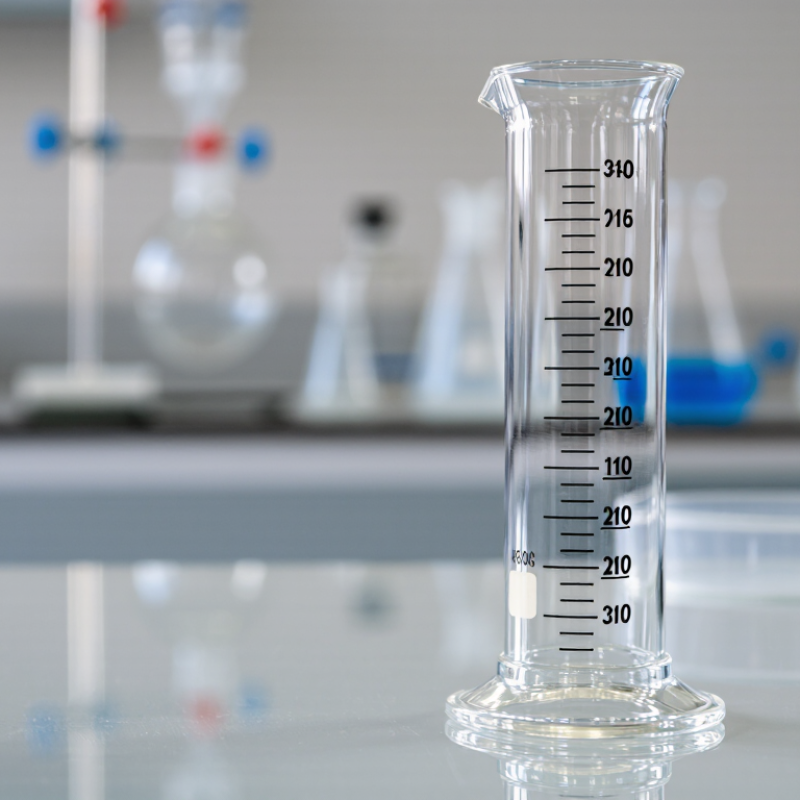
Picking out a Measuring Cylinder with a round base isn’t just about how it looks—there’s more to it. The design actually impacts how stable it is, how confident you feel reading measurements, and how easy it is to handle day-to-day. Imagine working on a busy lab bench: that rounded bottom really helps keep the cylinder steady while you're filling it or moving it around. That's a big deal when you’re in a rush or juggling multiple samples. Plus, a round base makes it simpler to lift, turn, or inspect without fuss. Of course, clear markings, chemical-resistant materials, and a smooth interior are just as important. But let’s be real—no matter how stable the base is, it won’t fix faulty calibration. Dr. Elena Morris from Precision Labware Consulting put it nicely: “A reliable cylinder begins with controlled reading conditions, not just good looks.” Her advice is rooted in real experience. So, remember, you want to view the meniscus at eye level, keep lighting steady, and try not to get your hands in the way of the scale. This kind of careful setup makes a difference. A measuring cylinder with a round base can be super useful in classrooms, quality control labs, or just routine prep work. It’s especially helpful for preventing accidental tipping, especially on smooth surfaces. But heads-up—store it carefully because narrow shelves or uneven benches can cause issues. That detail often gets overlooked. When it comes to materials, choose wisely. Borosilicate glass is great for handling heat, while polypropylene is more impact-resistant and lighter. Neither is perfect, so compare specs like capacity, tolerance, temperature limits, cleaning needs, and certifications before you buy. In the end, a good measuring cylinder with a round base will help you get consistent results. But, hey—technique still counts. That’s the real deal.
What Is a Lab Measuring Cylinder With a Round Base?
A Lab Measuring Cylinder with a round base is a graduated container designed to measure liquid volume. Its cylindrical body has clear scale markings, while the circular base supports the vessel on a flat laboratory surface. Unlike a flask, it is intended for approximate or routine volume measurement, not highly precise preparation.
The round base distributes weight evenly around the cylinder. This can reduce wobbling when the vessel holds water, solvents, or prepared solutions. In daily laboratory work, I find the shape easy to position and clean. However, stability still depends on the bench being level and the base being undamaged. A wider Measuring Cylinder With Hexagonal Base may offer greater resistance to tipping, so the base shape should match the task. That detail is easy to overlook.
Tips: Place the cylinder at eye level before reading. Check the bottom of the meniscus, and avoid reading from above. Confirm the scale unit and temperature range. Never assume every graduation provides exact accuracy. Small errors happen, especially with narrow markings. Rinse the cylinder according to laboratory procedures, then inspect it for cracks, cloudiness, or faded graduations before use.
How the Round Base Improves Stability and Prevents Tipping
Why Choose a Lab Measuring Cylinder With Round Base?
A round-base measuring cylinder offers a wider support footprint than a narrow, flat-bottom design. Its mass stays closer to the centerline during routine handling. That geometry increases resistance against accidental tipping when a bench is bumped or tubing catches the vessel.
The principle is simple. A 20% wider base can provide roughly 20% more resisting moment, assuming the liquid height and center of gravity remain unchanged. This is a practical engineering estimate, not a universal guarantee. A tall cylinder can still tip when filled heavily or placed near an edge. Small details matter.
The U.S. Bureau of Labor Statistics recorded 885 fatal workplace injuries involving falls, slips, and trips in 2023. That figure covers all industries, not laboratory glassware, but it reinforces the value of preventing avoidable instability. ISO 4788:2005also establishes dimensional and capacity requirements for Graduated Measuring Cylinders, supporting consistent laboratory use.
In daily work, a round base helps keep the vessel upright while reading the meniscus, transferring liquids, or waiting during a timed reaction. Users should still keep the cylinder on a level, dry surface and avoid excessive reach. A stable base is helpful. It is not a substitute for careful placement.
Key Materials Used in Round-Base Measuring Cylinders
A round-base measuring cylinder combines a narrow body with a wider footprint. This design reduces tipping when liquid is poured or transferred. Material choice still determines accuracy, chemical resistance, and service life. Borosilicate glass is widely selected for laboratories because ISO 3585 identifies it as a suitable glass type for demanding laboratory use. Its low thermal expansion helps reduce stress during moderate temperature changes. However, glass can break on a wet bench. I have seen small chips affect the reading edge.
Polypropylene offers impact resistance and lower cost. It suits routine aqueous solutions, teaching laboratories, and busy preparation areas. PlasticsEurope’s Plastics—The Fast Facts 2024 reports global plastics production reached 413.8 million tonnes in 2023. That figure highlights the material’s industrial scale, but it does not prove universal chemical compatibility. Polymethylpentene, often called PMP, provides better clarity and heat resistance than ordinary polypropylene. Each polymer still requires a compatibility check. ASTM E694 and ISO 4788 provide useful references for volumetric ware and graduated cylinders, yet real performance depends on temperature, cleaning, and handling.
Tips: Match the cylinder material with the solvent, not only the price. Check the base for warping before use. A round base works well on stable benches, while a Measuring Cylinder Hexagonal Base may offer extra grip in crowded workspaces. Read the meniscus at eye level. Do not assume transparent plastic means accurate. Calibration records matter, and occasional human mistakes remain possible.
How to Read Liquid Volume Accurately at Eye Level
Why Choose a Lab Measuring Cylinder With Round Base?
How to Read Liquid Volume Accurately at Eye Level
A Lab Measuring Cylinder with a round base offers dependable support during liquid measurement. Its wider base helps reduce tipping on a level bench. That stability matters when the liquid surface needs time to settle. A narrow cylinder can wobble easily. The round base cannot correct careless reading, however.
To measure volume accurately, place the cylinder on a flat surface. Keep your eyes level with the liquid surface. Looking from above or below creates parallax error. For most water-based liquids, read the bottom of the meniscus. The meniscus is the curved surface inside the cylinder. Read only after the liquid stops moving. I still pause before reading, especially after pouring quickly. That small delay often changes the result.
Keep the transparent walls clean and free from droplets. Residue can distort the visible meniscus. Check that the scale is suitable for the volume being measured. Read under steady lighting, without shadows across the markings. For greater precision, use equipment designed for smaller volume changes. A measuring cylinder is practical, but it is not a substitute for every precision instrument. I have occasionally recorded a value too quickly. That mistake reminds me to check eye level twice.
Why Choose a Lab Measuring Cylinder With Round Base?
How to Read Liquid Volume Accurately at Eye Level
The chart compares representative graduated-cylinder scales. The theoretical reading uncertainty is estimated as ± half of the smallest graduation when the meniscus is viewed at eye level. A round base improves stability and helps keep the cylinder upright, while eye-level reading reduces parallax when aligning with the bottom of the meniscus.
Actual measurement accuracy also depends on cylinder calibration, liquid temperature, liquid properties, cleanliness, and reading technique.
Comparing Round-Base and Flat-Base Measuring Cylinders
Why Choose a Lab Measuring Cylinder With Round Base?
Comparing Round-Base and Flat-Base Measuring Cylinders
A measuring cylinder’s base affects daily handling more than many users expect. In routine laboratory work, I have found that a round base often feels easier to position. Its curved edges reduce sharp contact points and make cleaning simpler. A broad circular support can also distribute pressure across the bench. This helps when the cylinder contains several hundred millilitres of liquid. Still, stability depends on the base diameter, material, and cylinder height. Shape alone does not guarantee safety.
Flat-base cylinders stand directly on a planar surface. They are convenient for quick volume checks, especially beside balances or sample trays. Their contact area is easy to understand. However, dust or a slightly uneven bench can create small rocking movements. Round-base designs may handle minor surface imperfections better, but they can require more careful placement. My first assumption was that a round base would always be more stable. That was too simple.
Reading accuracy depends on more than the base. Place either cylinder on a level surface, keep your eyes at the meniscus, and avoid gripping the body while reading. A cylinder with clear graduations and suitable tolerance matters more than appearance. For repeated measurements, I would check the manufacturer’s stated accuracy and test the empty cylinder for wobbling. A flat base may suit fixed workstations. A round base may feel better for frequent handling. The right choice depends on the workflow, not preference alone.
Choosing the Right Size and Design for Laboratory Tasks
A round base can make a measuring cylinder steadier on a crowded laboratory bench. It reduces tipping during liquid transfer and supports safer one-handed handling. However, base shape should not decide the purchase alone. ISO 4788 defines graduated cylinder capacities and performance requirements, while ASTM E1272 covers general laboratory measuring cylinder specifications. These standards focus on measurement quality, readability, and tolerances, not merely appearance.
Choose capacity according to the working volume. A 25 mL cylinder suits small reagent additions, while a 100 mL model offers easier reading for routine preparation. For larger transfers, 500 mL or 1,000 mL cylinders reduce repeated filling. Yet oversized cylinders can weaken precision because the liquid level occupies less of the scale. Keep the expected volume near the middle of the graduation range. That small decision matters.
A Lab Borosilicate Glass Measuring Cylinder is useful when thermal resistance and chemical durability matter. Borosilicate glass also supports clearer meniscus observation under normal laboratory lighting. Select fine graduations for analytical preparation, and wider designs for faster, less precise transfers. Read the meniscus at eye level. I have seen rushed readings shift results by one graduation mark. It is easy to blame the instrument, but technique often deserves review. Check the certificate, inspect the rim and base, and confirm that the scale matches your method. ISO 4788 provides a stronger purchasing reference than a product photograph. Even a stable round base cannot correct poor volume selection.
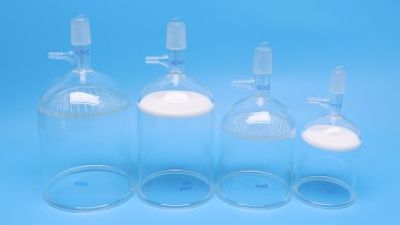
Borosilicate Glass Büchner Filter Funnels: Efficient Filtration Solutions for Laboratory Applications
Borosilicate glass Büchner filter funnels provide an efficient and dependable solution for laboratory filtration applications. Designed for use with vacuum filtration systems, these funnels support the rapid separation of solids from liquids while maintaining excellent chemical resistance and thermal stability. Their smooth glass surface is easy to clean, helping reduce cross-contamination and supporting consistent results in research, quality control, educational, and industrial laboratories.
Sourced from a trusted China supplier and factory, these filter funnels are manufactured with carefully selected borosilicate glass and precise workmanship. The durable construction withstands repeated laboratory use, while the transparent design allows users to observe filtration progress clearly. Available in a range of capacities and configurations, they can meet diverse operational requirements, from routine sample preparation to larger-volume processing. Reliable production standards, strict quality inspection, and direct factory supply help deliver practical value for laboratories seeking long-lasting filtration equipment and stable performance.
Conclusion
A Lab Measuring Cylinder With Round Base is a graduated vessel designed for measuring and transferring liquids in laboratory work. Its circular supporting base distributes weight more evenly than a narrow or flat-bottomed design, helping the cylinder remain upright and reducing the risk of tipping during use. These cylinders are commonly made from durable glass or chemical-resistant plastic, with each material offering different advantages in visibility, strength, and resistance to temperature or chemical exposure.
For accurate measurement, place the cylinder on a level surface and read the liquid at eye level, using the bottom of the meniscus for most transparent liquids. Compared with flat-base cylinders, the round-base design generally provides greater stability, while flat-base models may be easier to store in compact spaces. When selecting a cylinder, consider the required volume range, graduation precision, material, height, base strength, and compatibility with the laboratory task. Choosing the right size and design improves safety, accuracy, and efficiency.