
0102030405
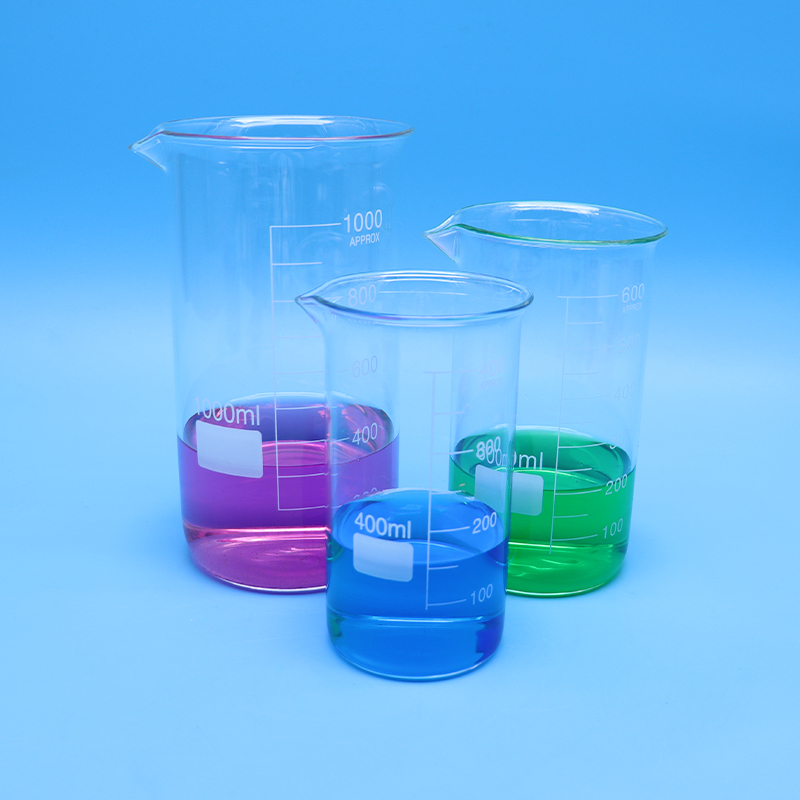
Borosilicate Glass Beaker 3.3 with Graduation & Spout - Reliable Supplier & Factory in China
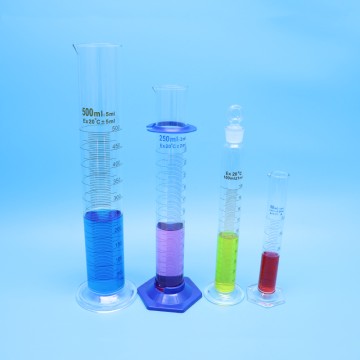
Glass Measuring Cylinder
High borosilicate glass
Stable base
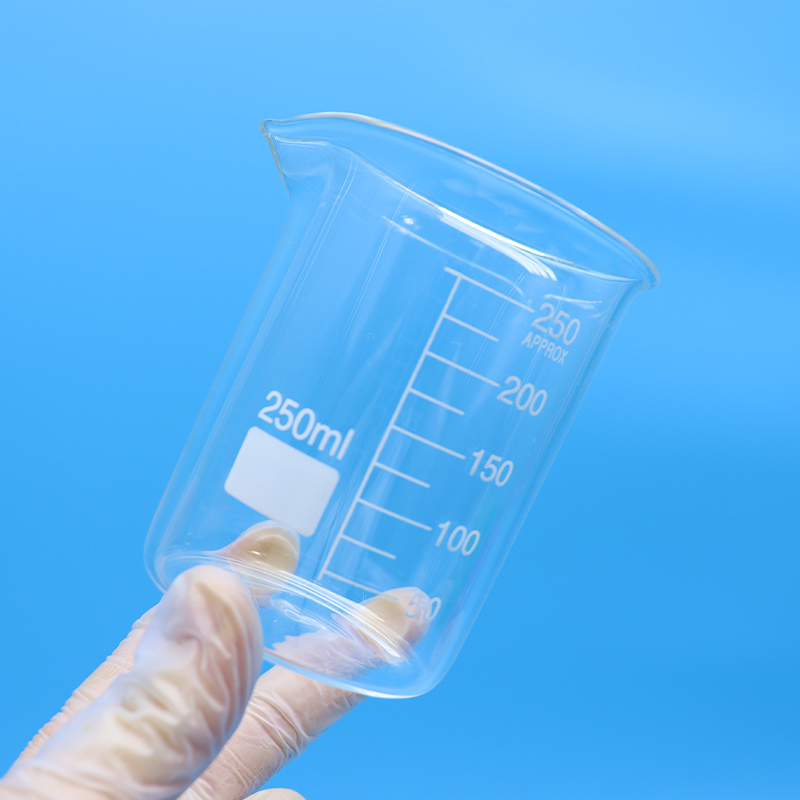
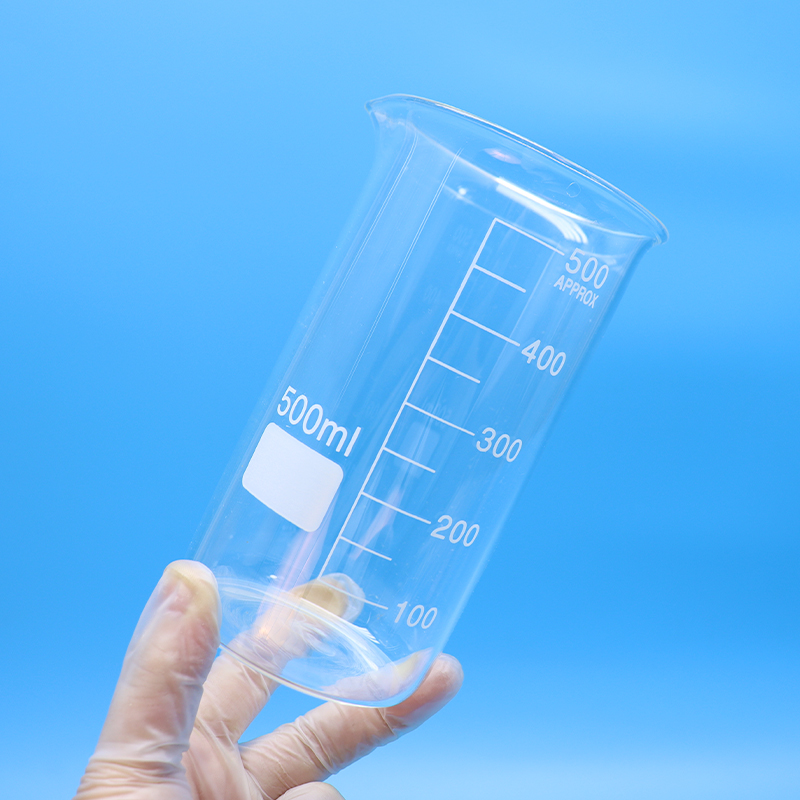
Clear scale
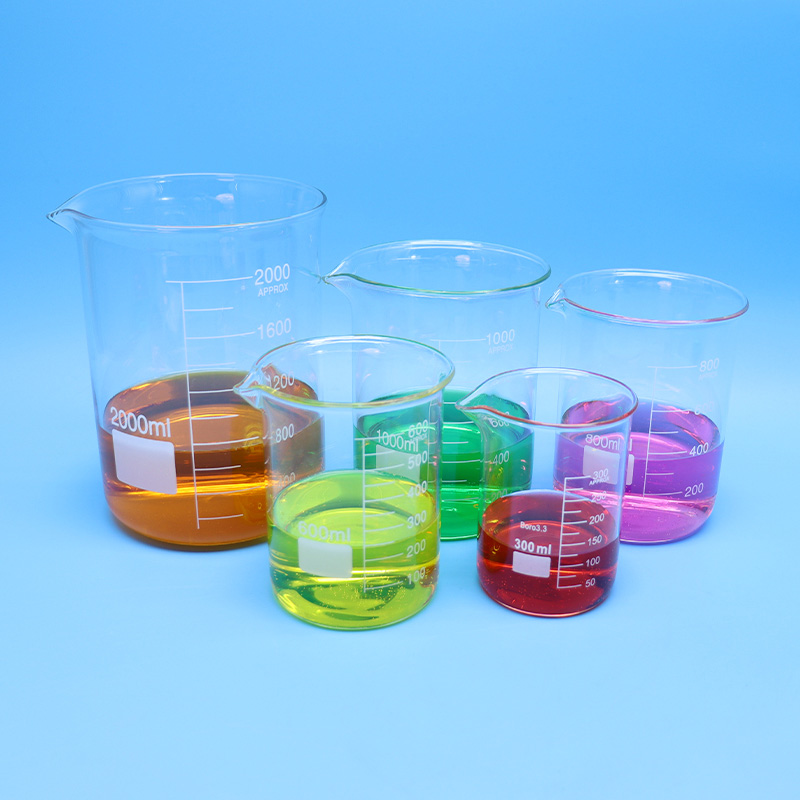
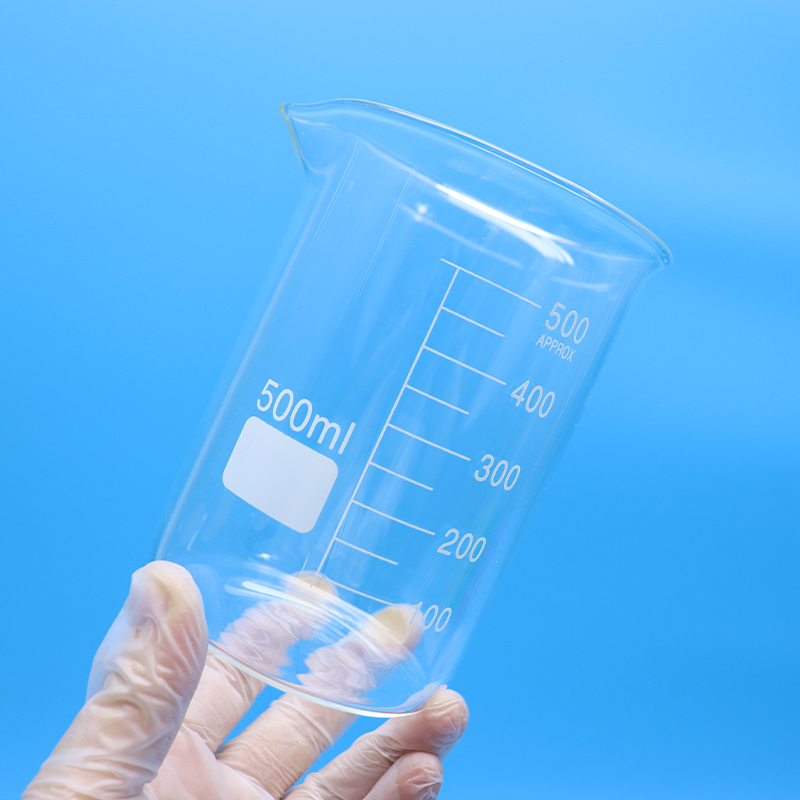
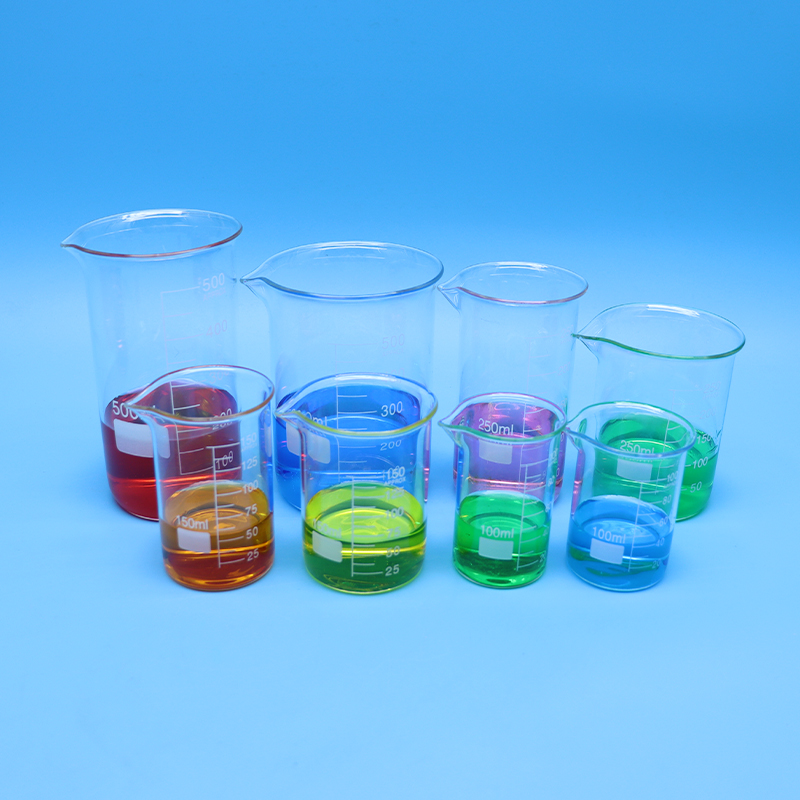
Beaker Low Form
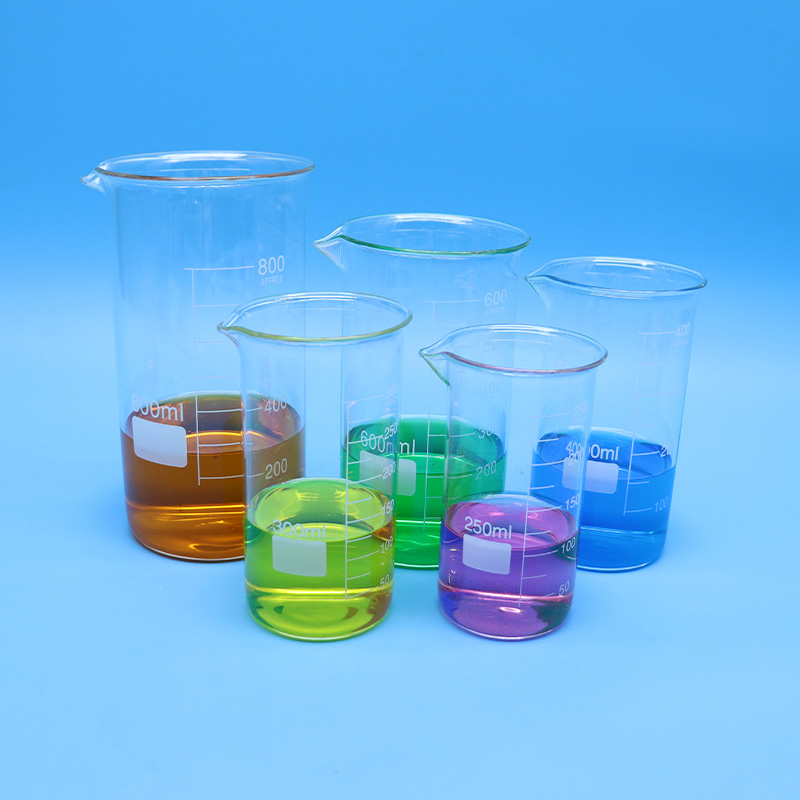
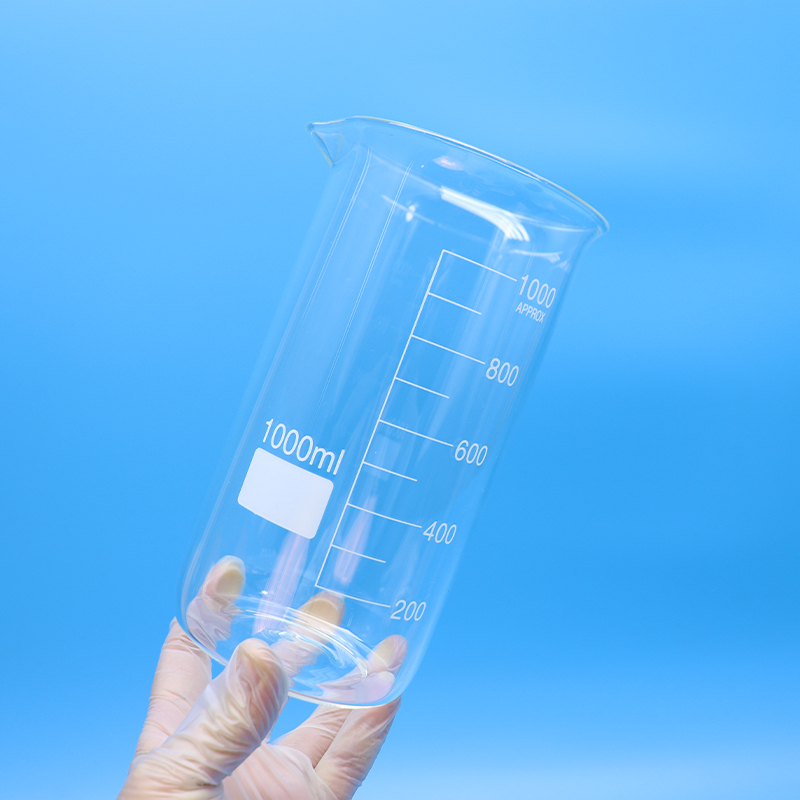
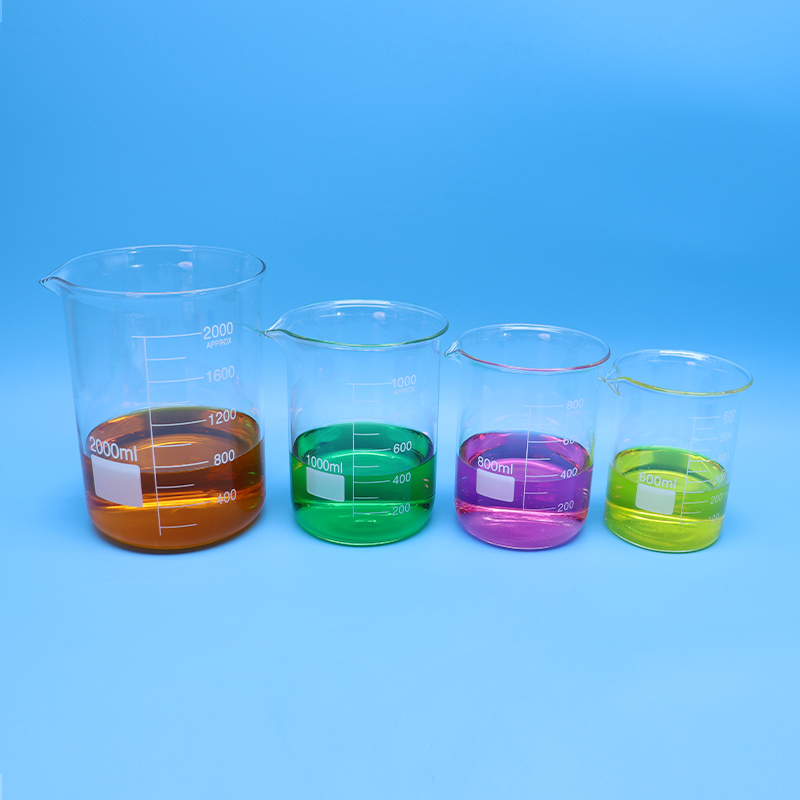
Beaker High Form
Product Name: Boro 3.3 Glass Beaker
Product Type: 5–2000ml
Product Material: High borosilicate glass
Product Introduction: High borosilicate glass has a very low coefficient of thermal expansion, about one-third that of ordinary glass. It can withstand high temperatures of 200 ℃ temperature difference, low expansion rate, high strength, high chemical stability. The laboratory sterilization temperature standard is 121°C/134°C, and the bottle cap can withstand up to 140°C high temperature.
It can serve as a material reactor, determine combustion products, be used to dissolve and crystallize a substance, hold solutions for evaporation, concentration, or heating, and also be used to hold corrosive solid chemicals for weighing.
Product Show
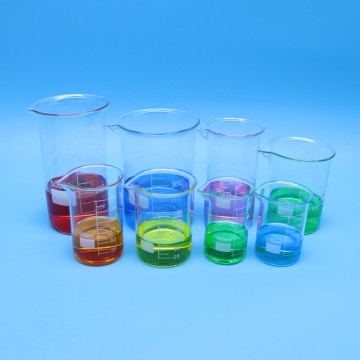
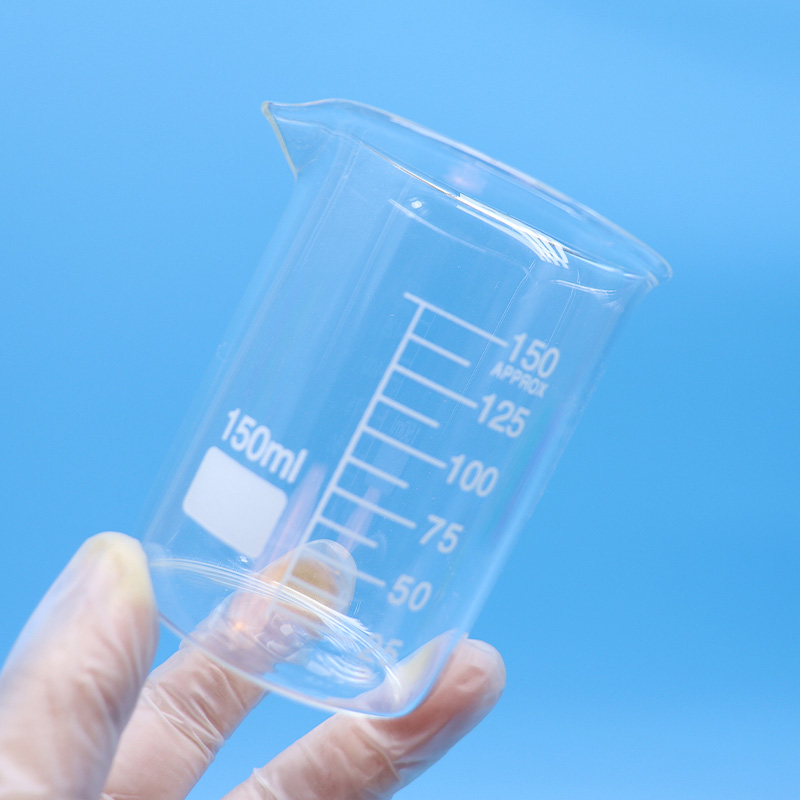
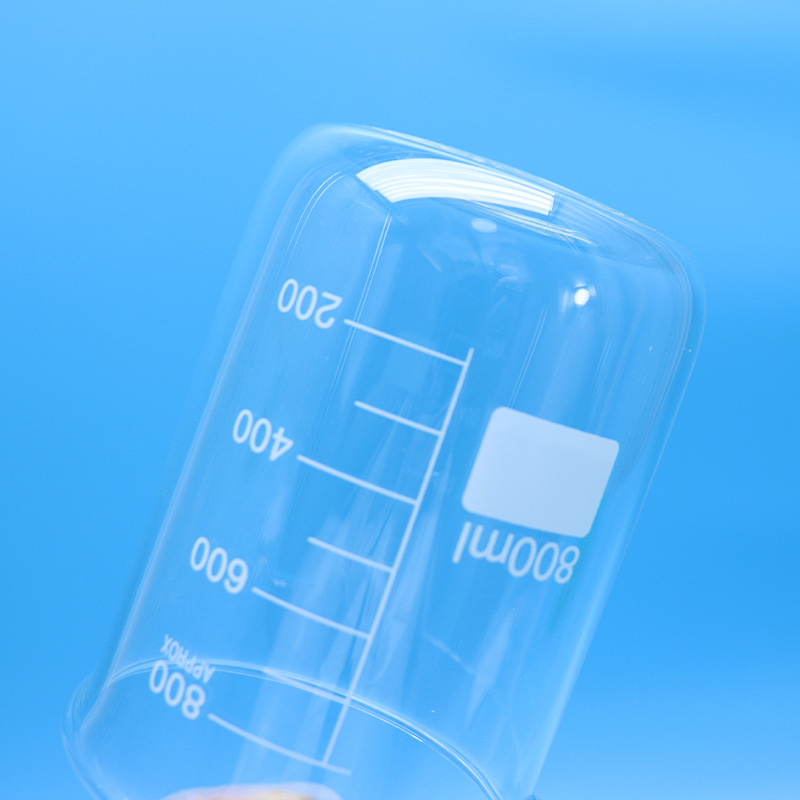
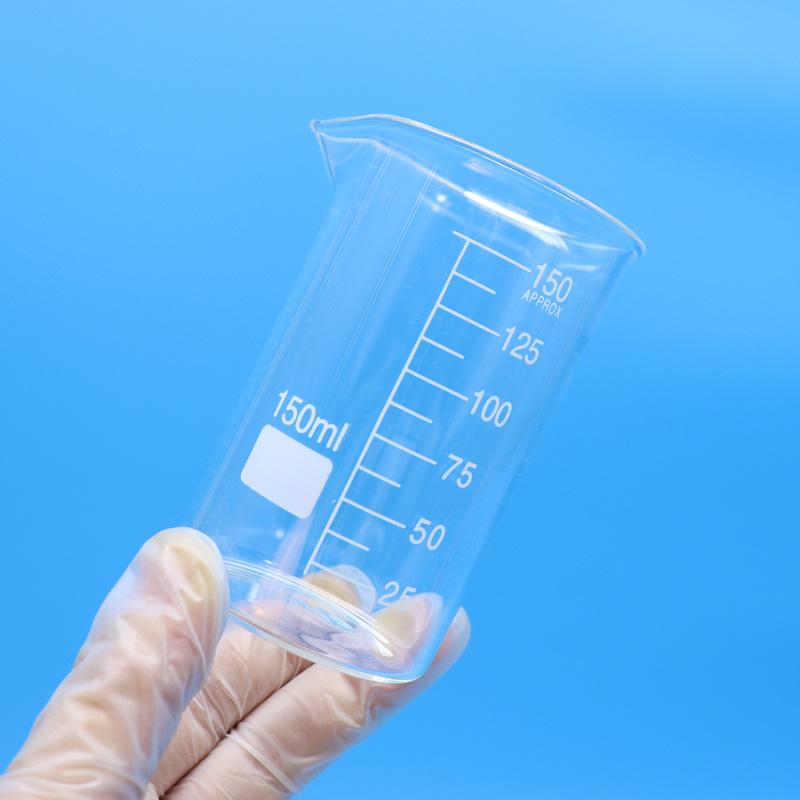
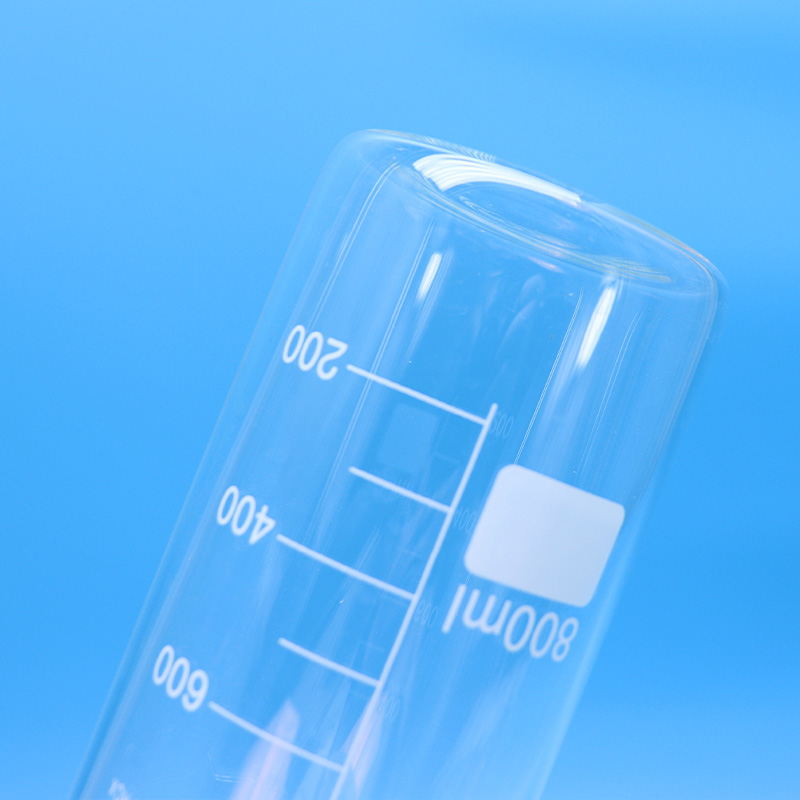
Clear markings, high transparency.
The bottom of the cup is flat, heats evenly, and is not easily shattered due to rapid heating.
Uniform wall thickness, no air bubbles.
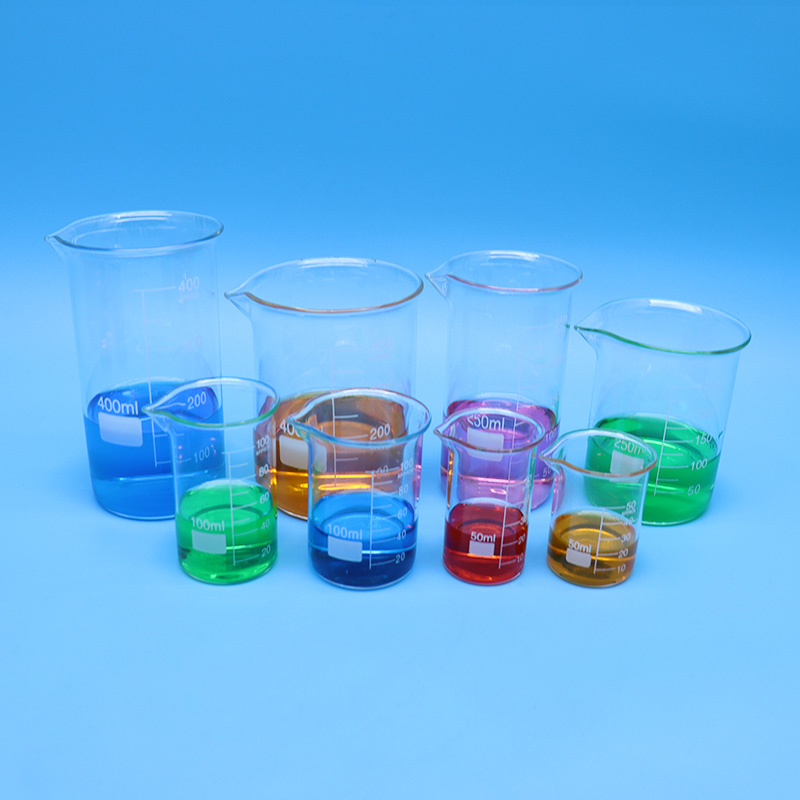
Beaker Low Form Show
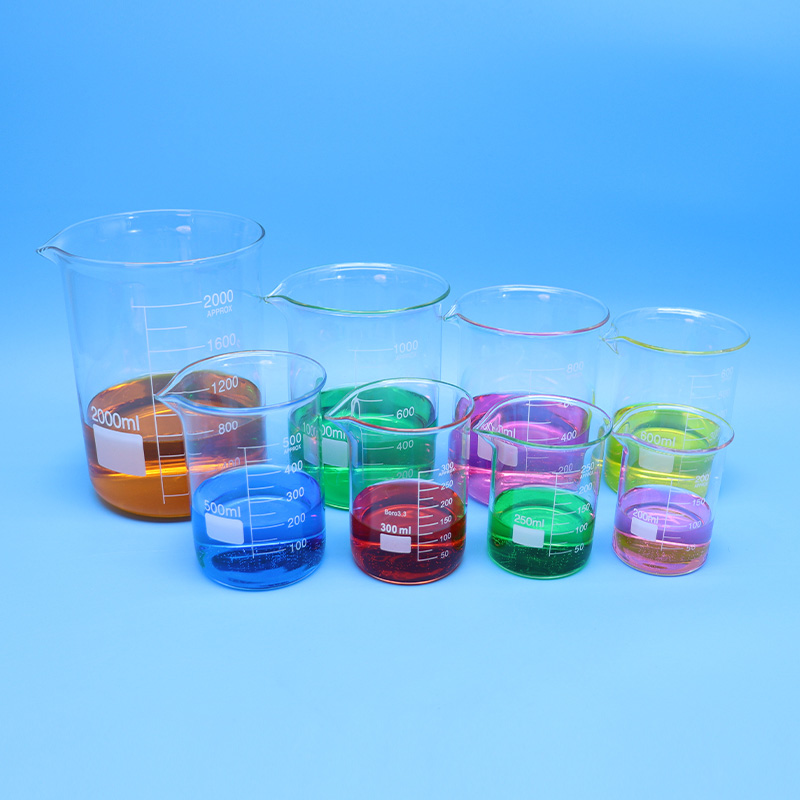
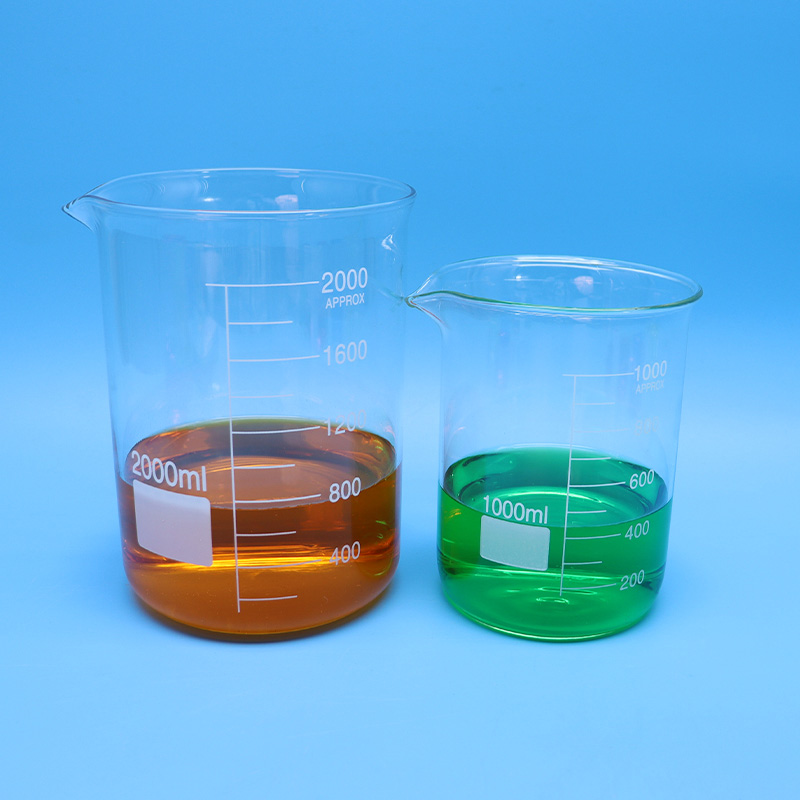
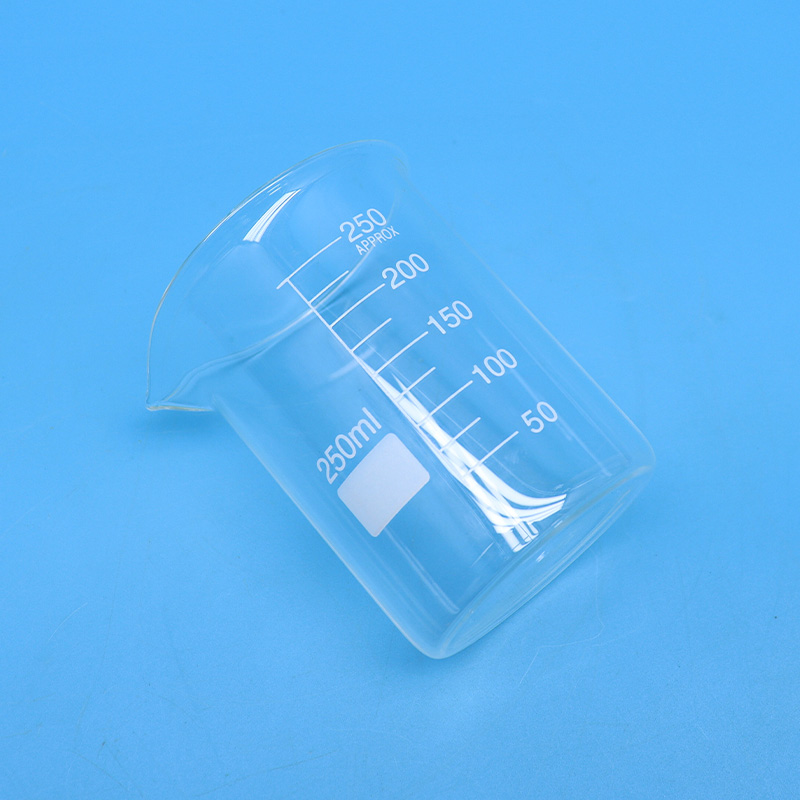
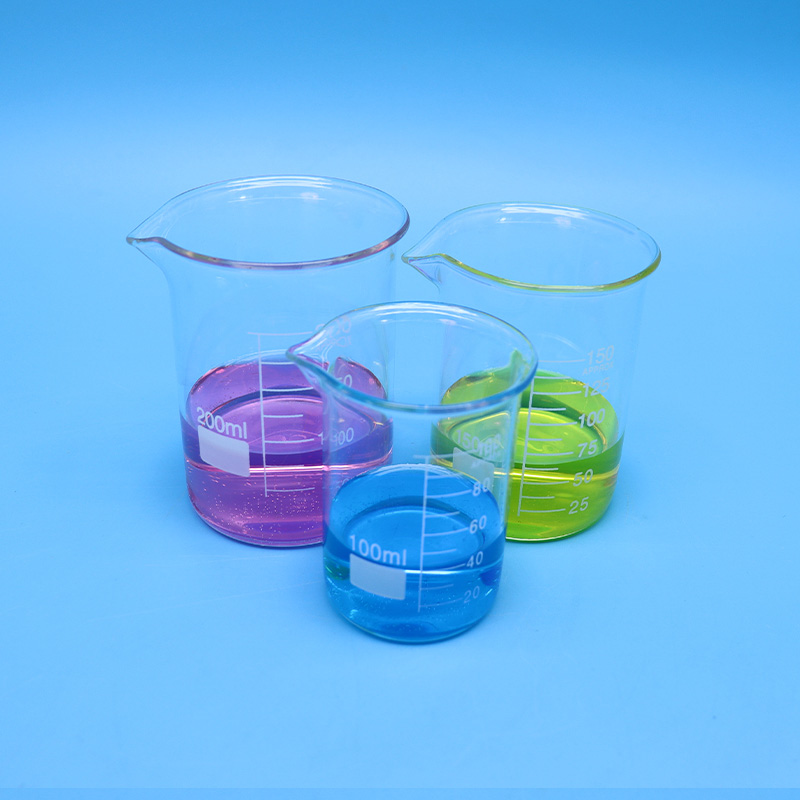
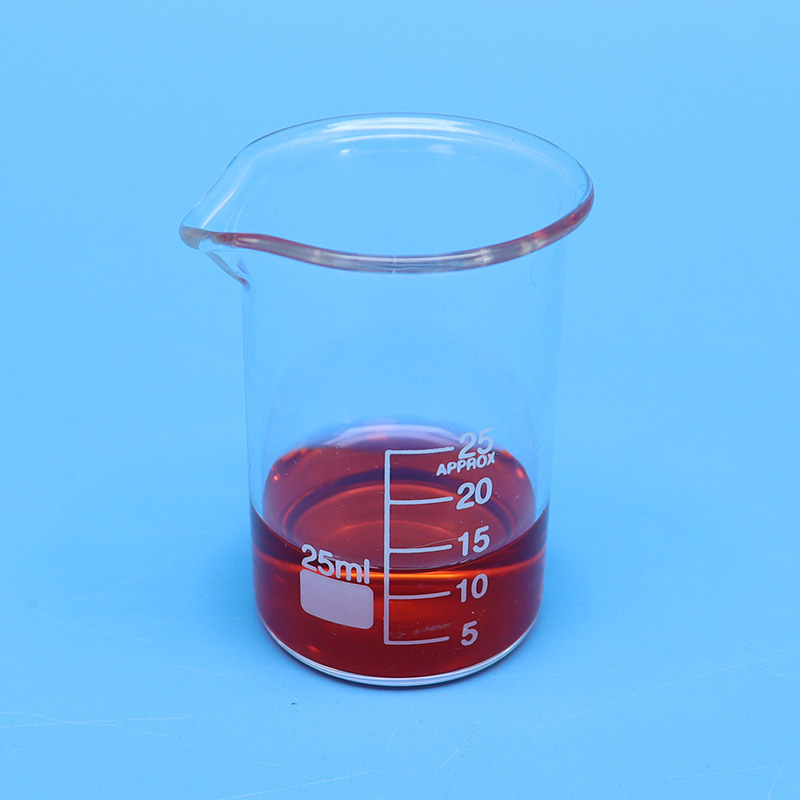
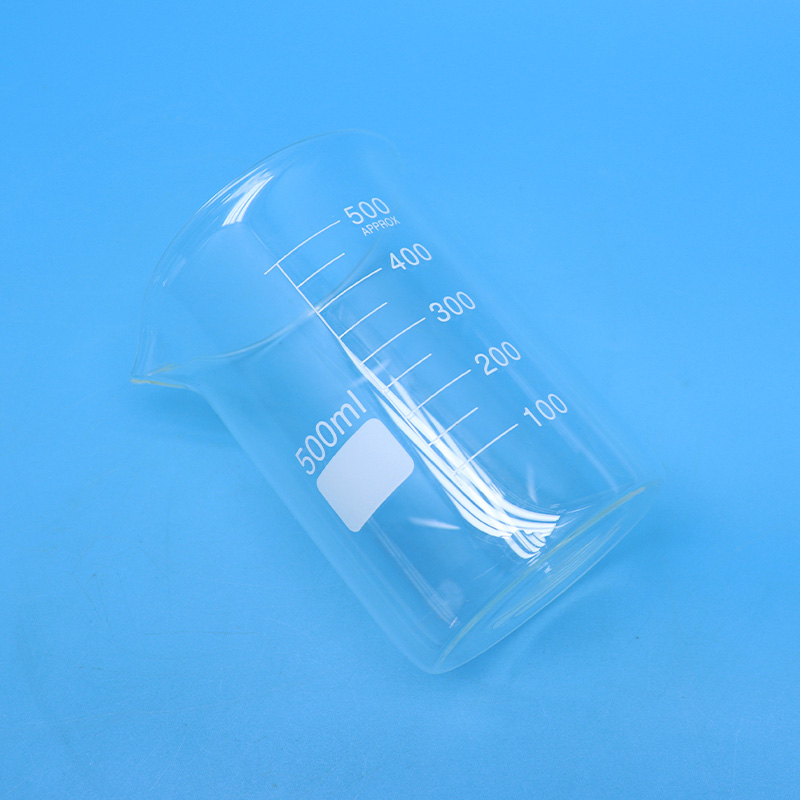
Beaker High Form Show
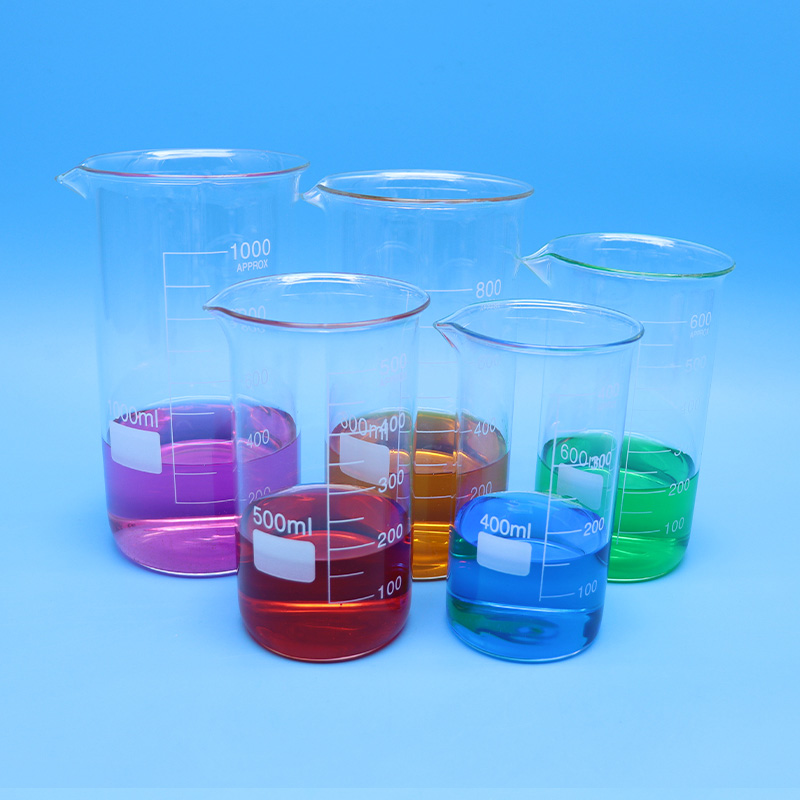
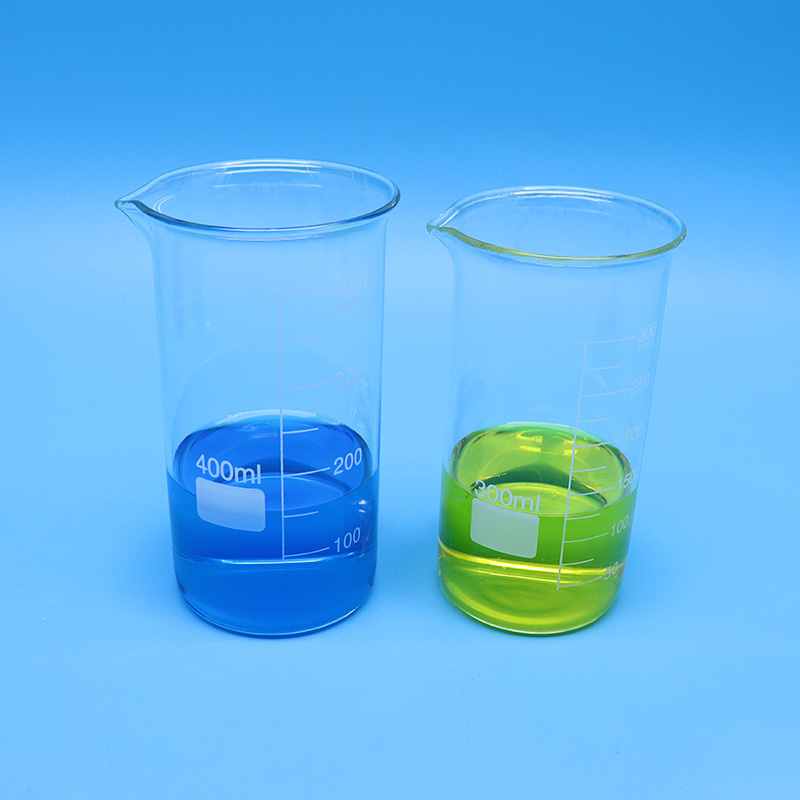
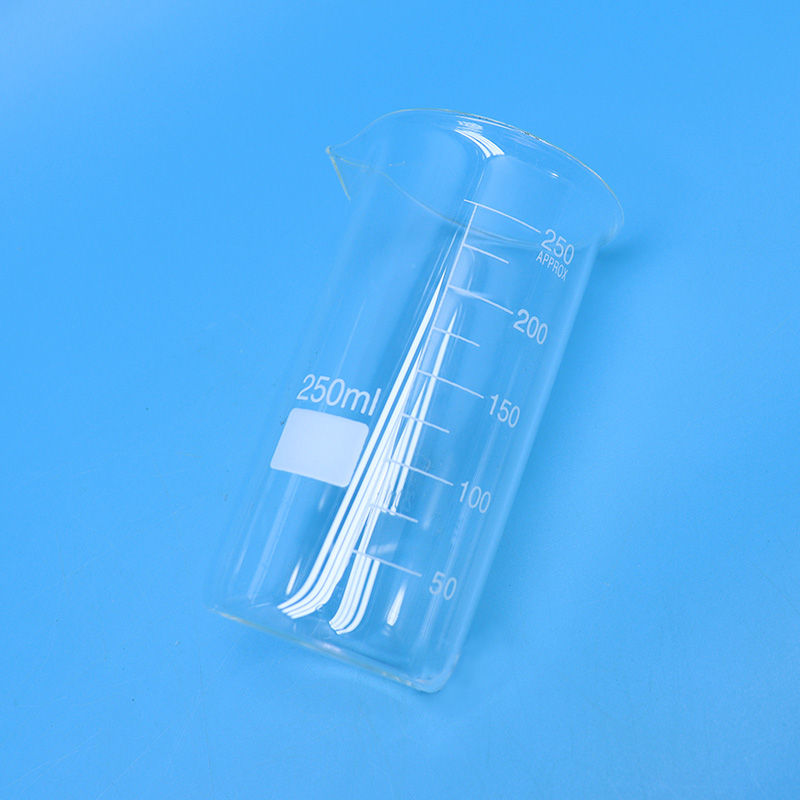
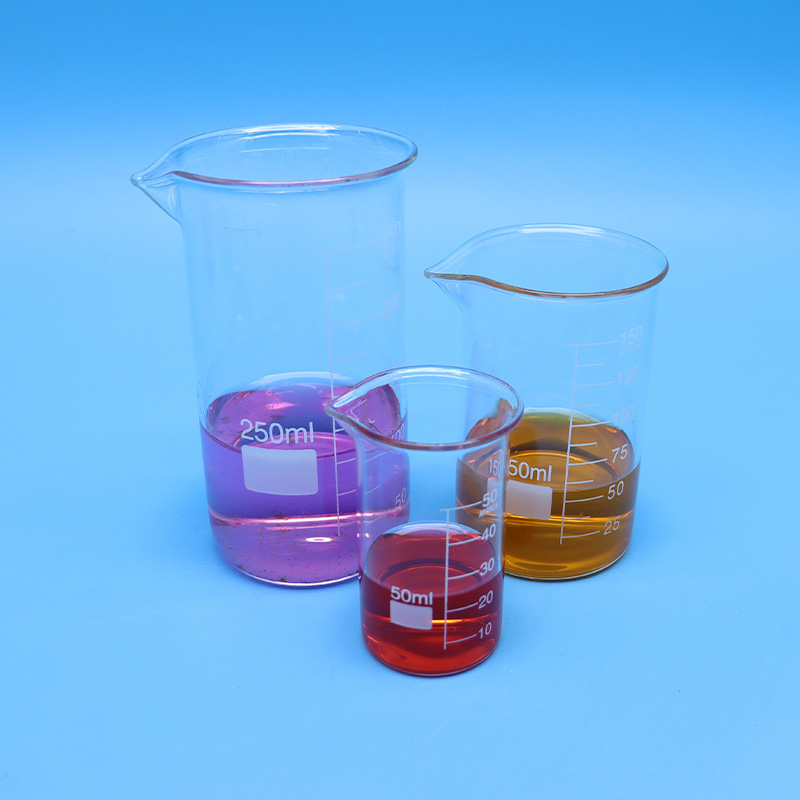
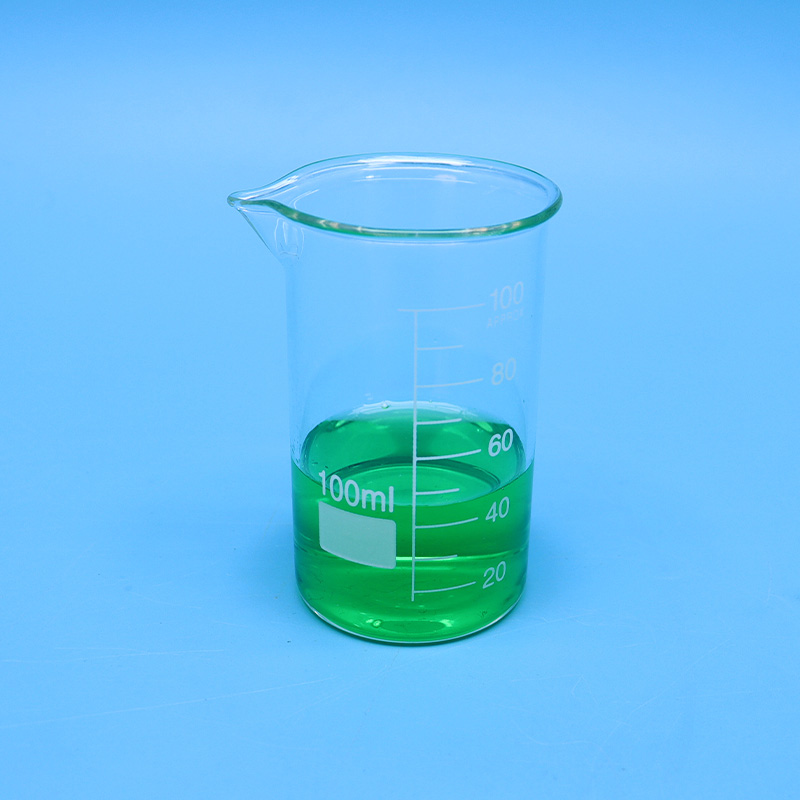
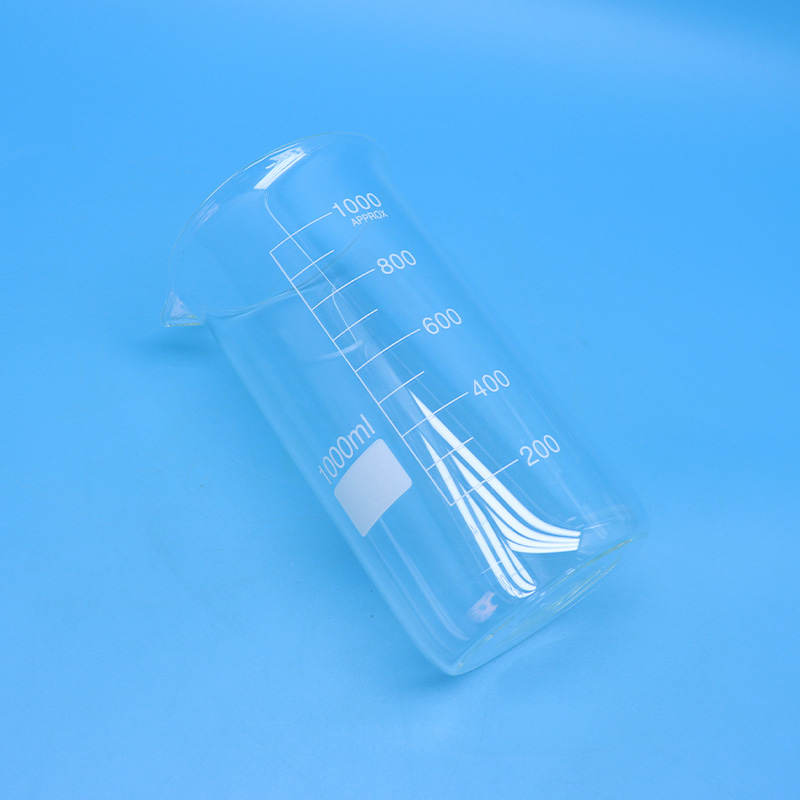
Product Details Show
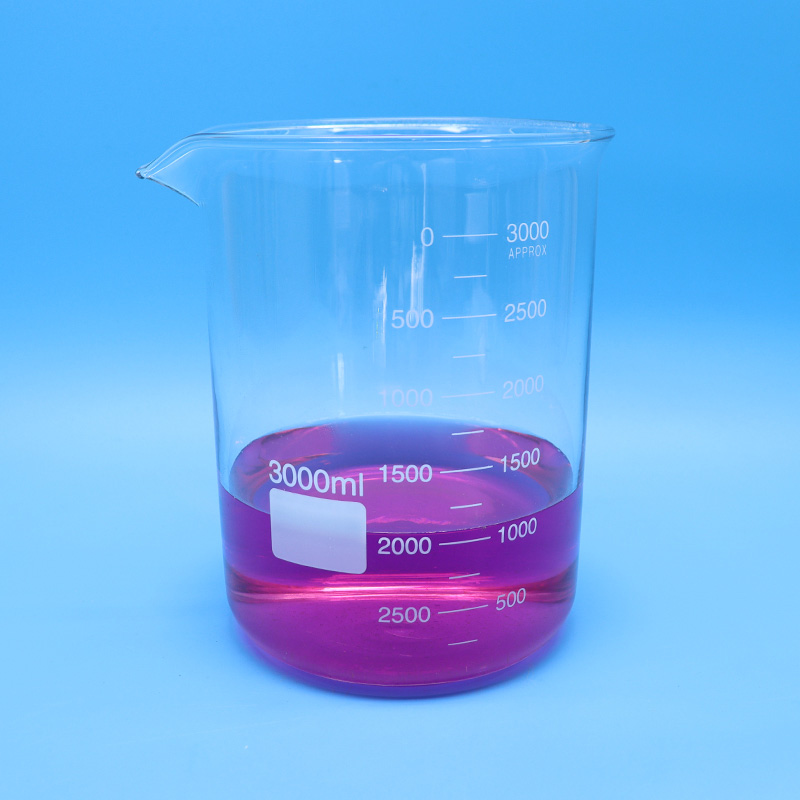
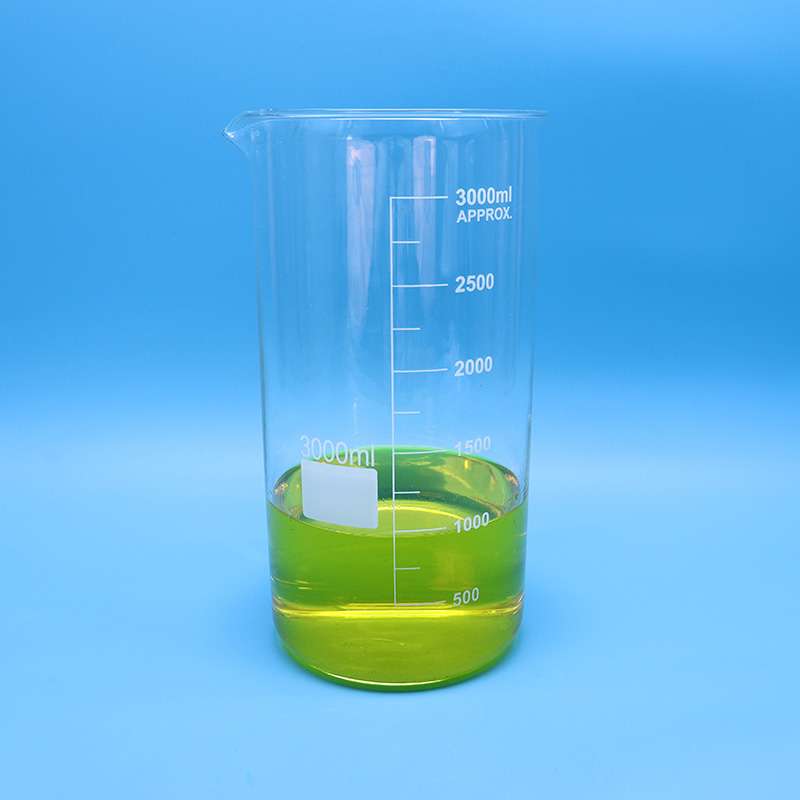
Size Show
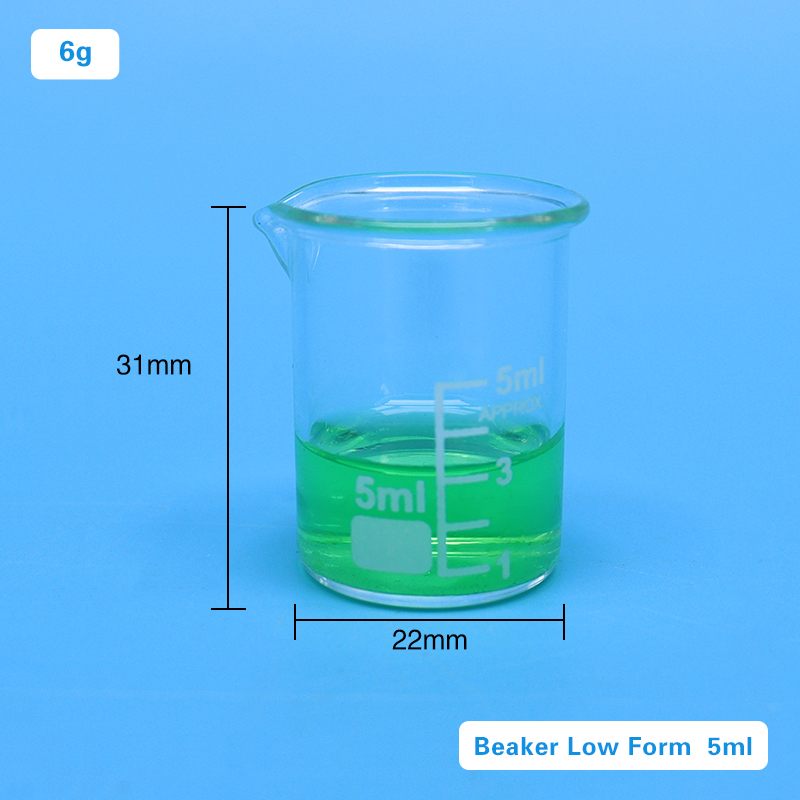
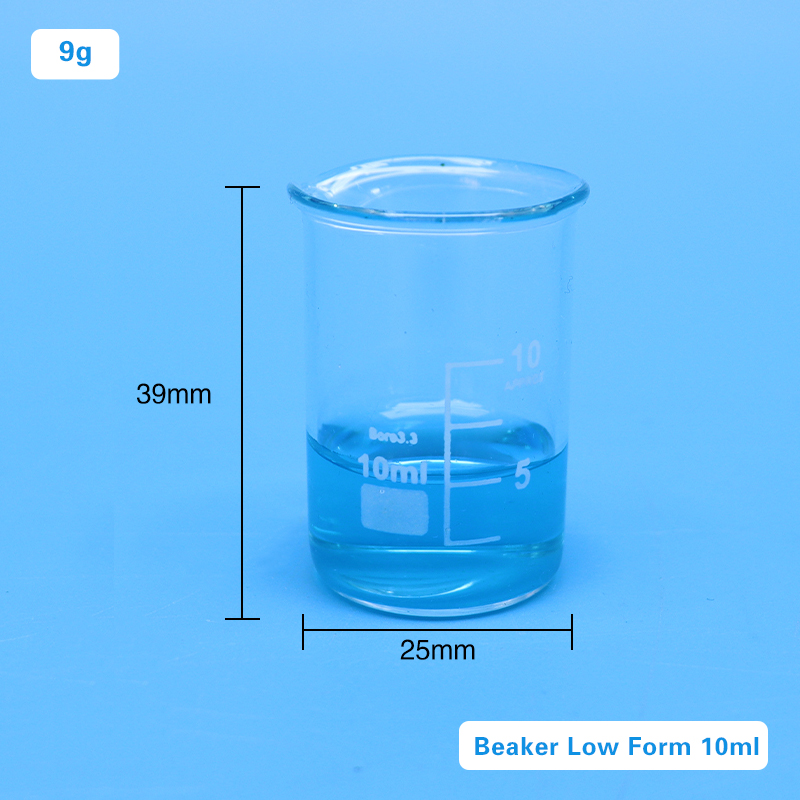
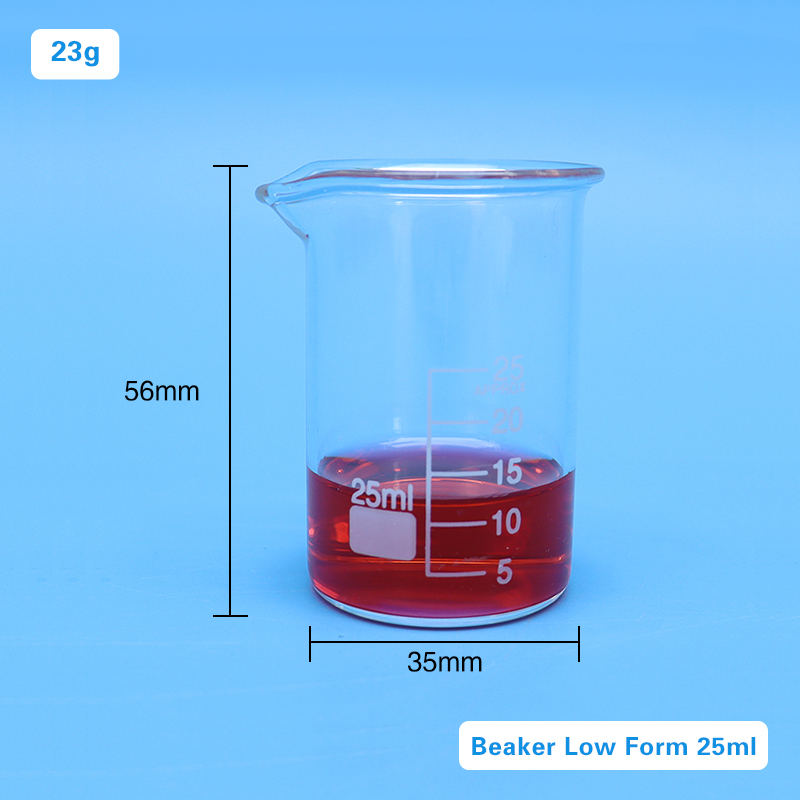
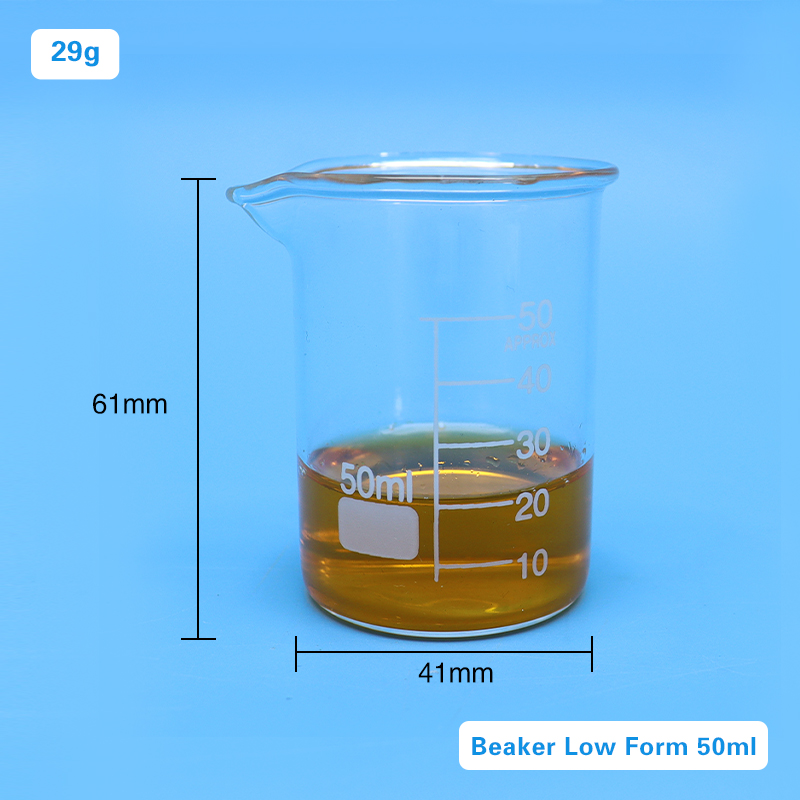
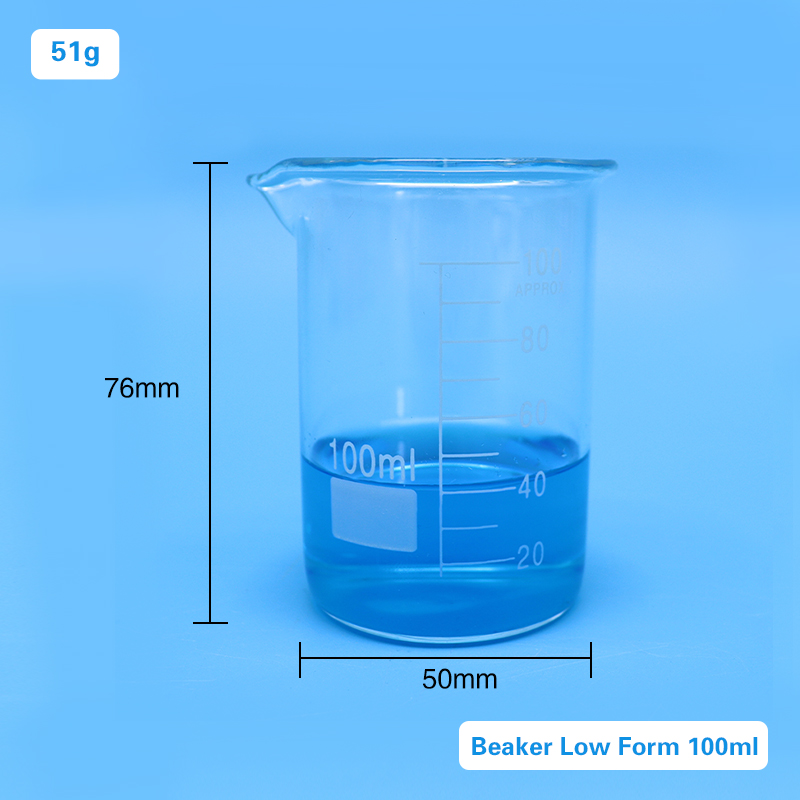
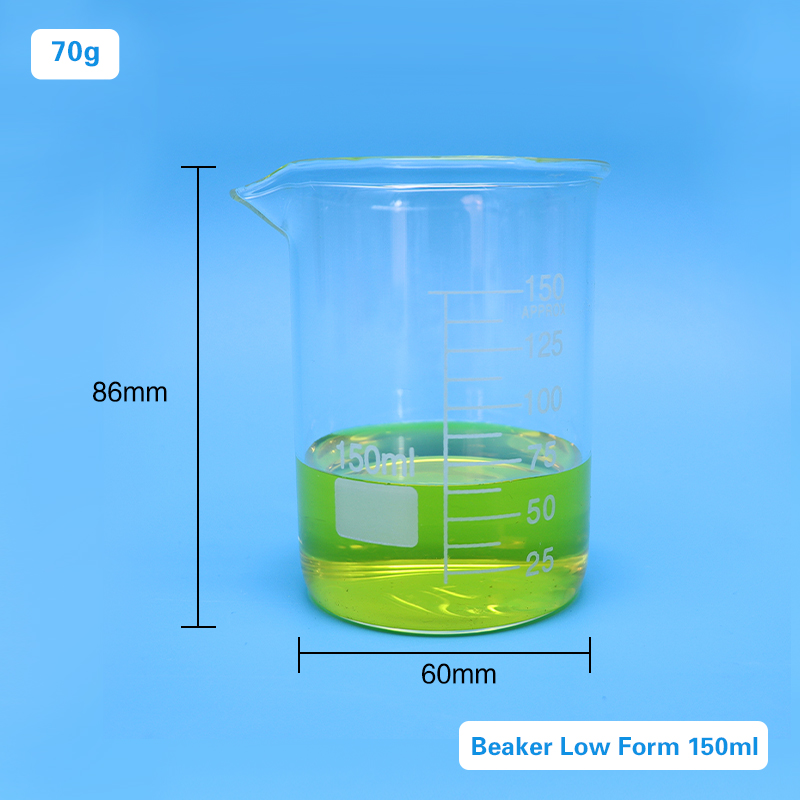
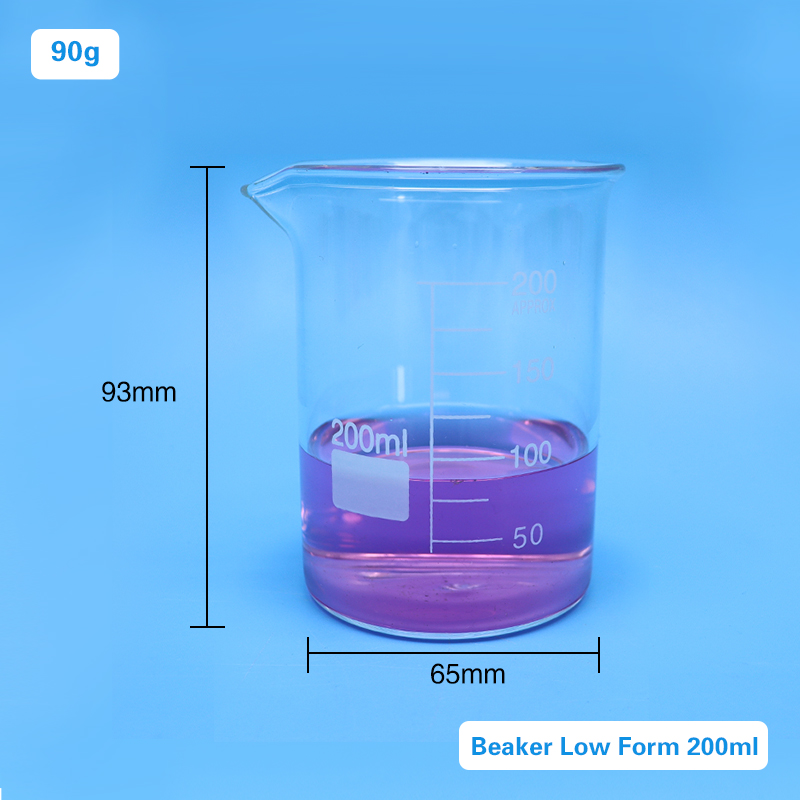
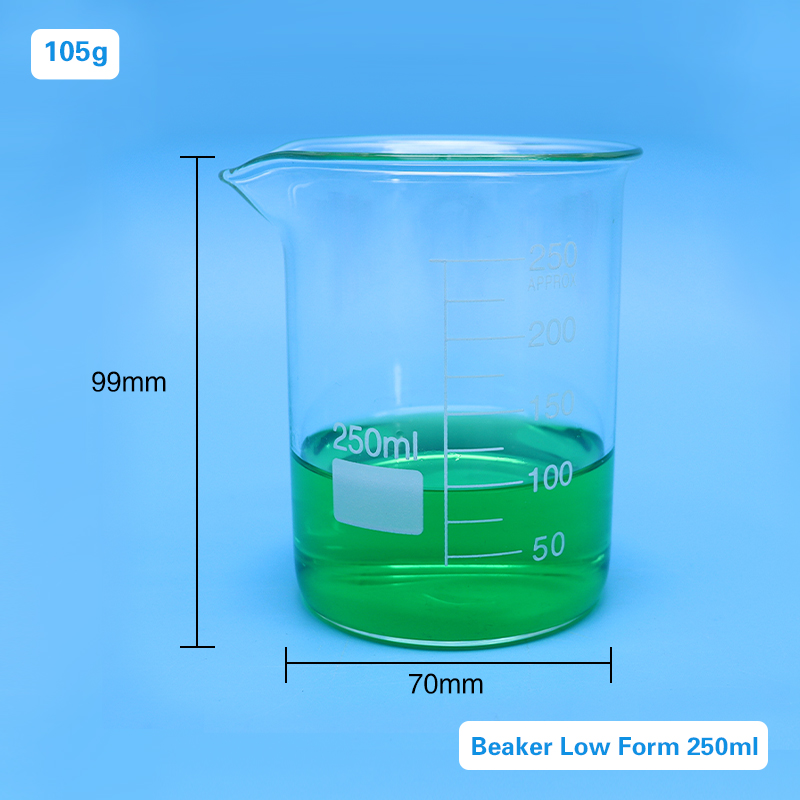
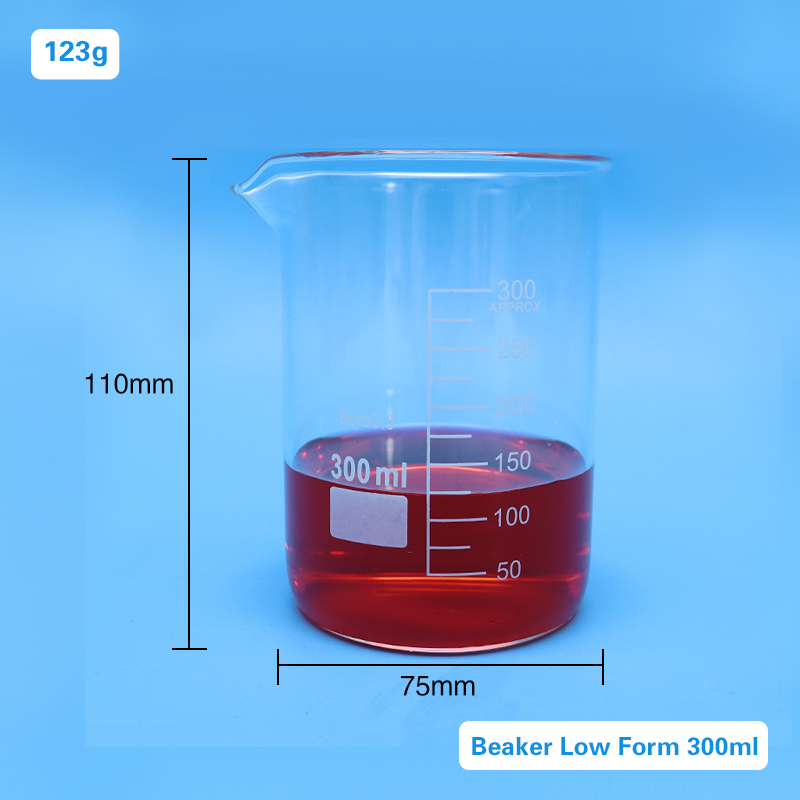
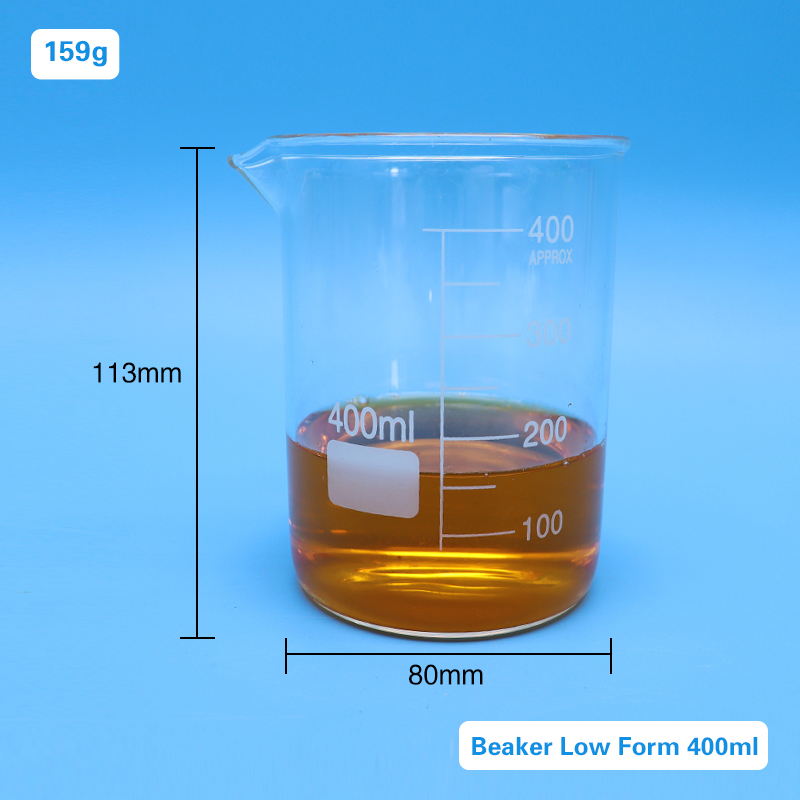
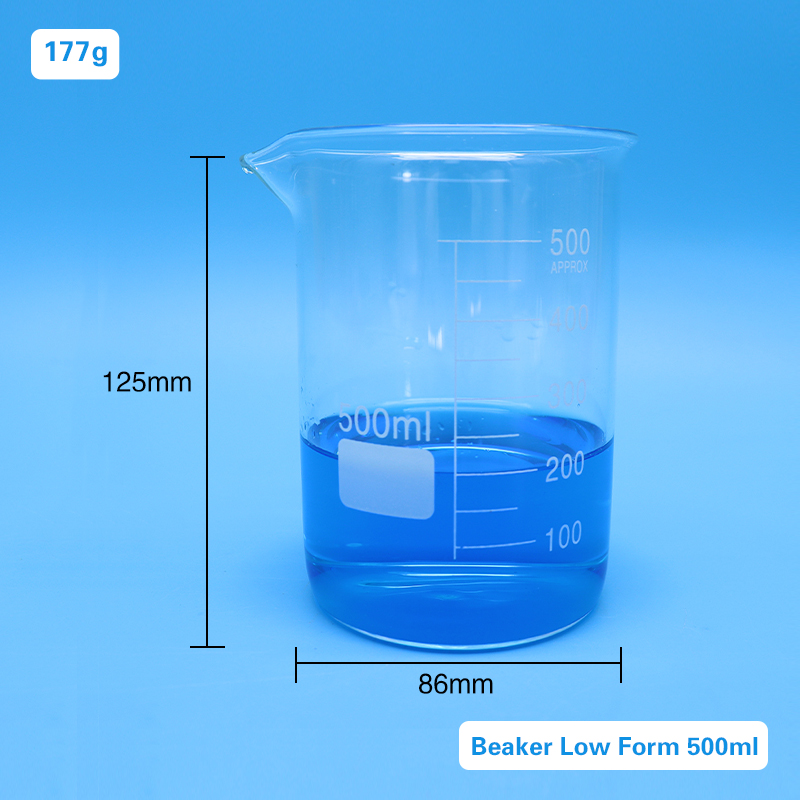
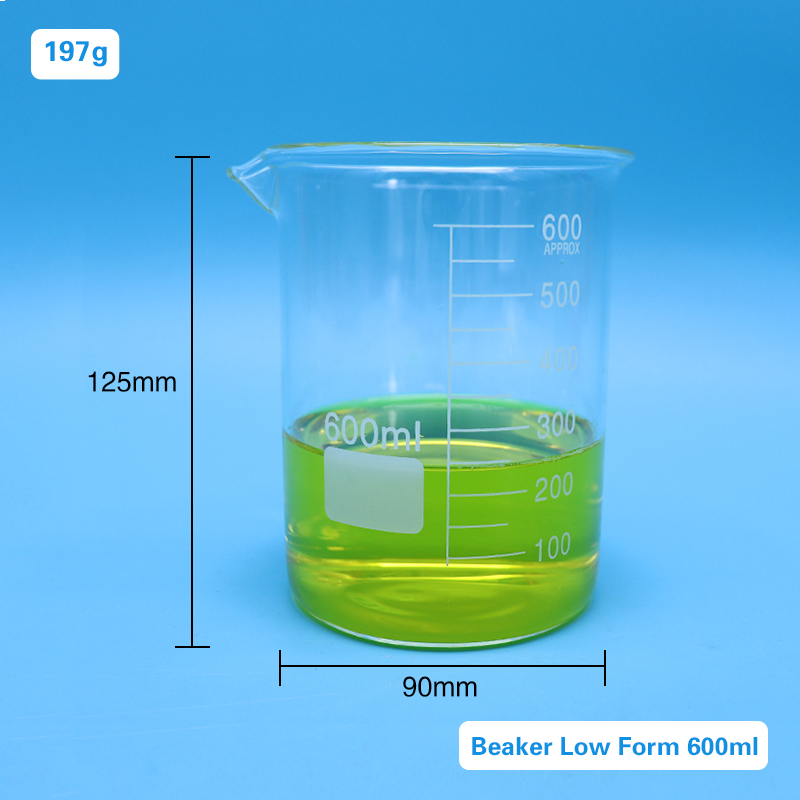
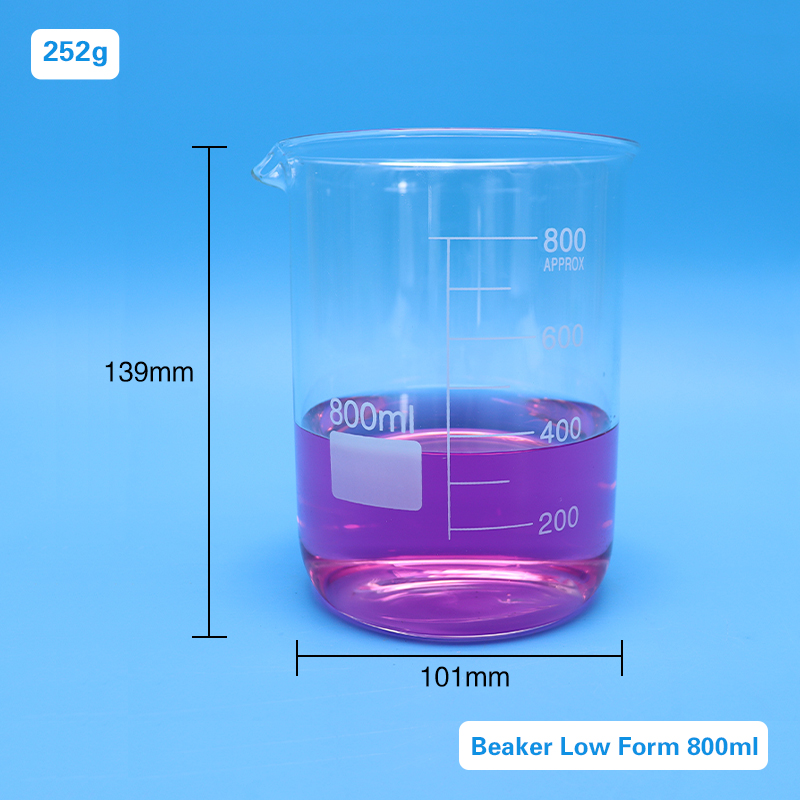
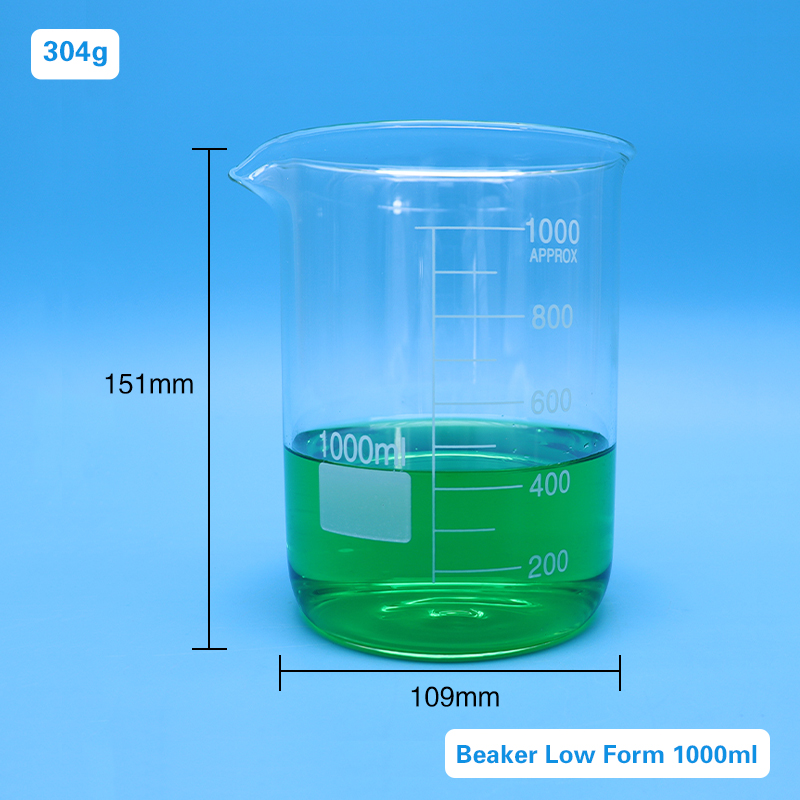
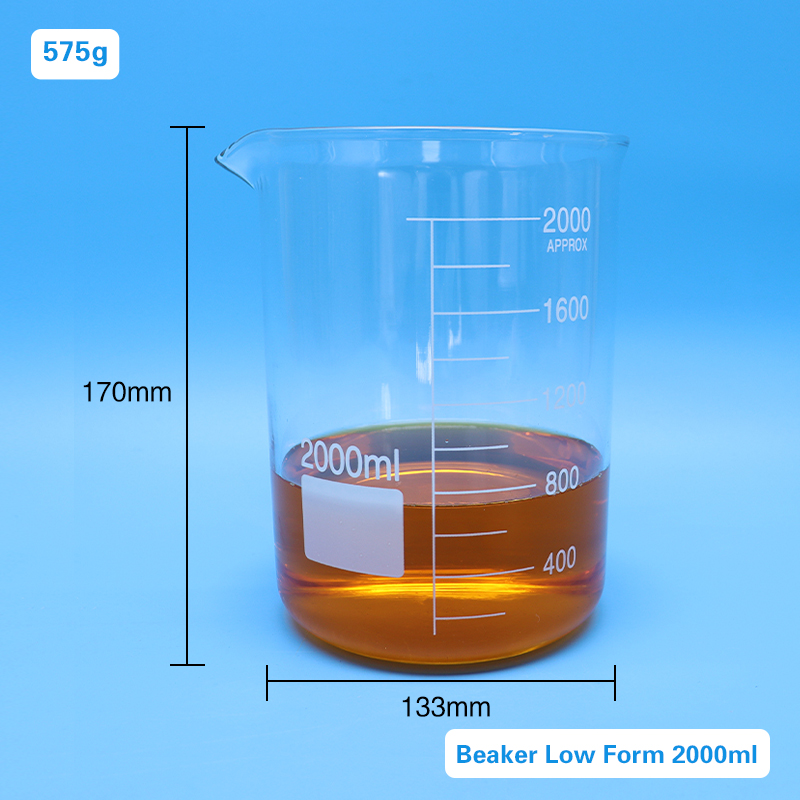
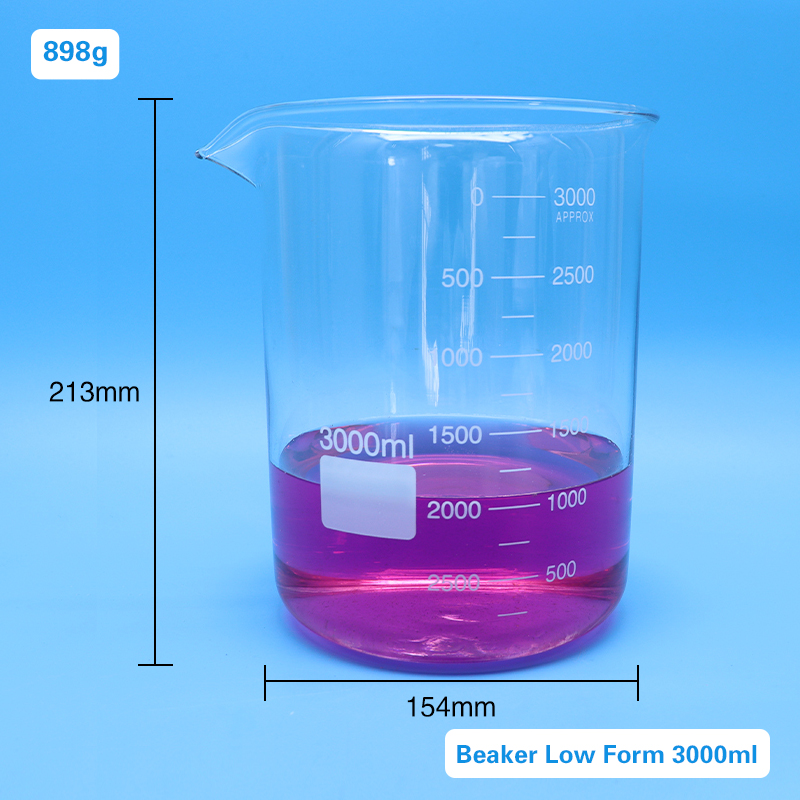
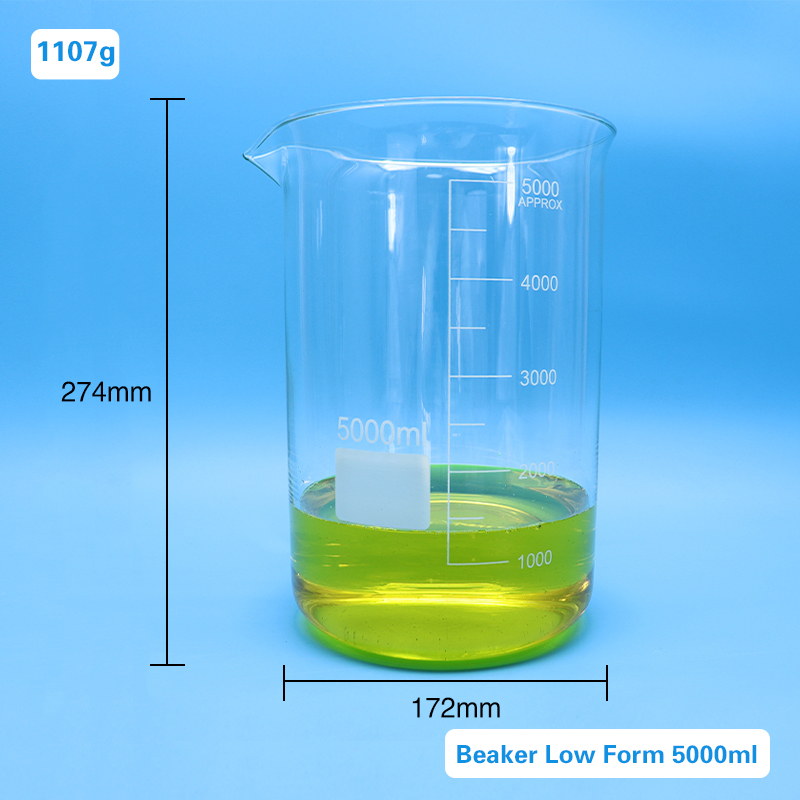
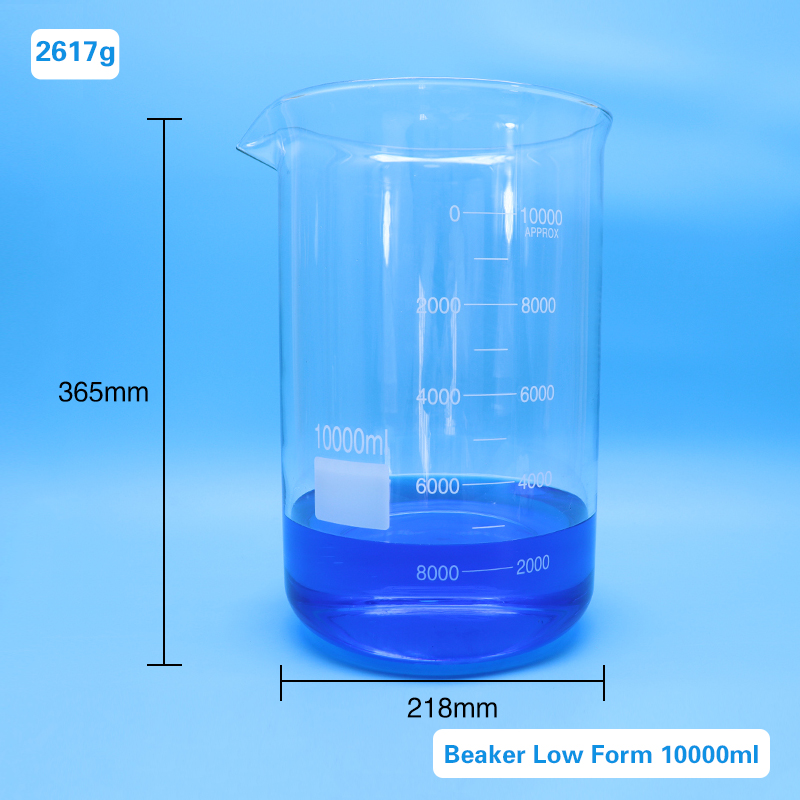
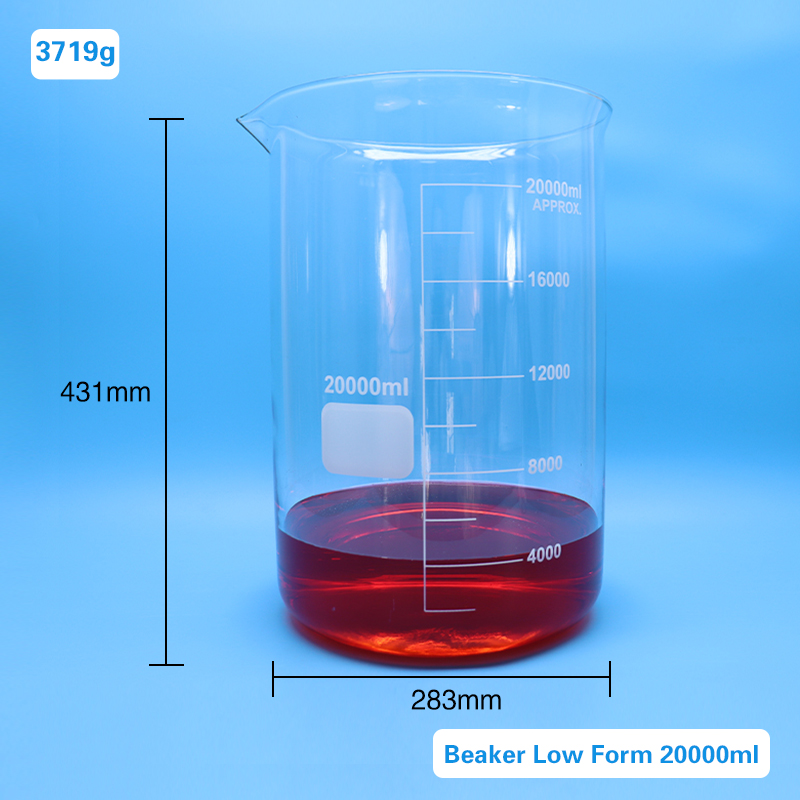
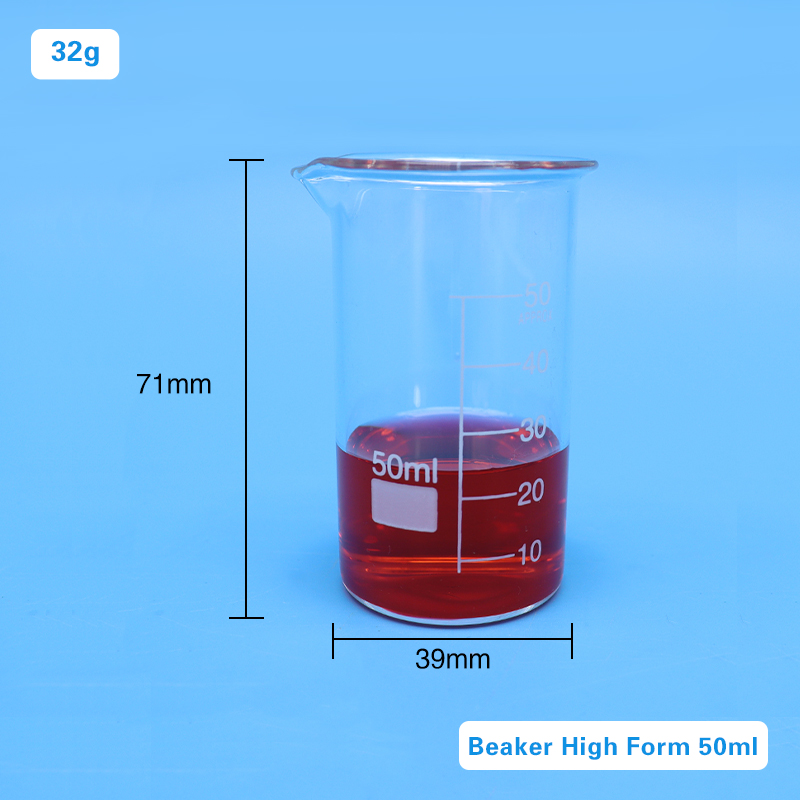
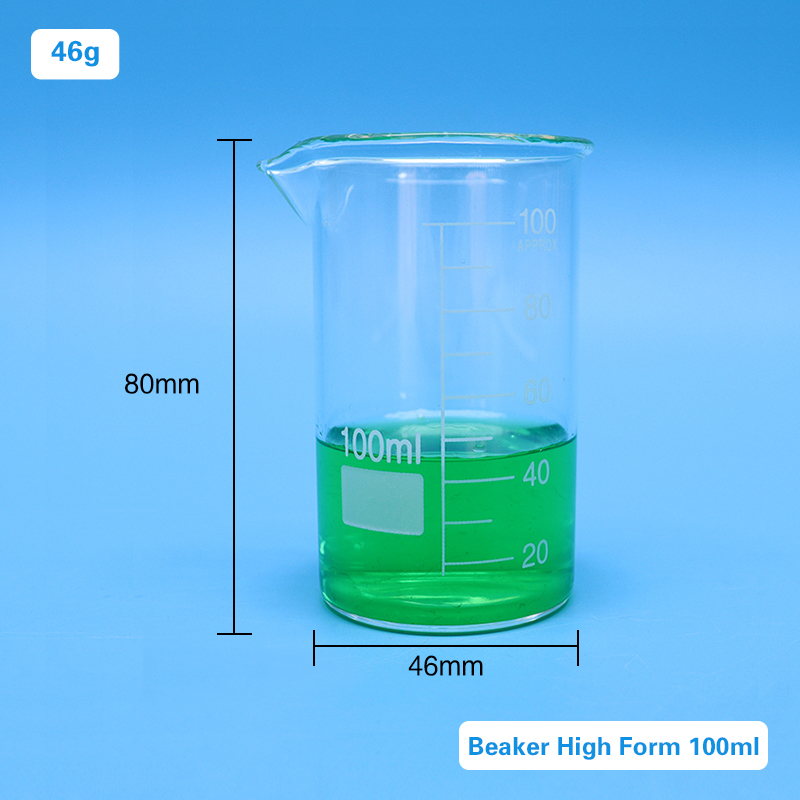
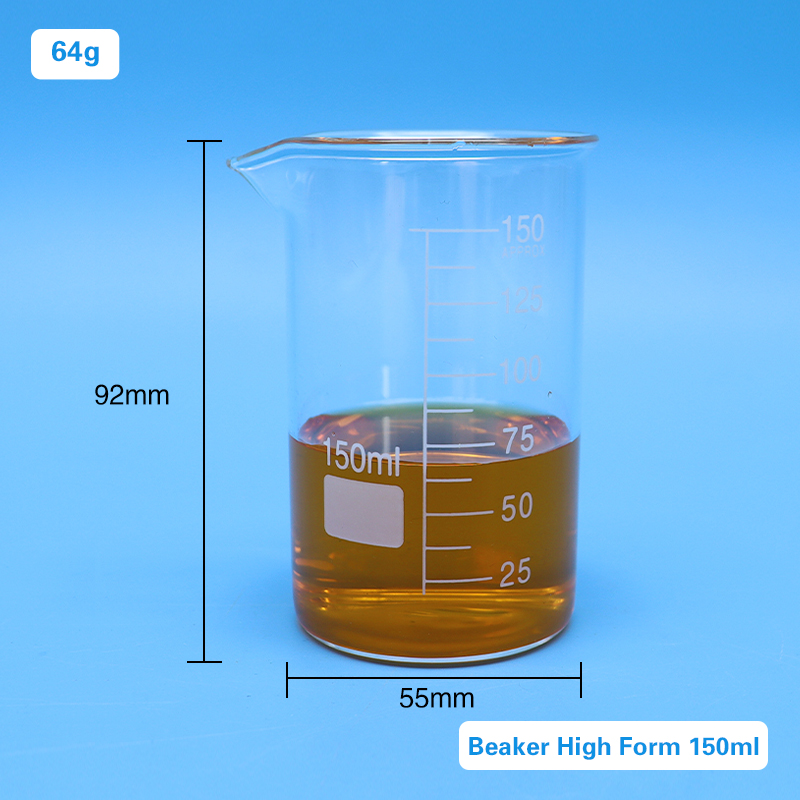
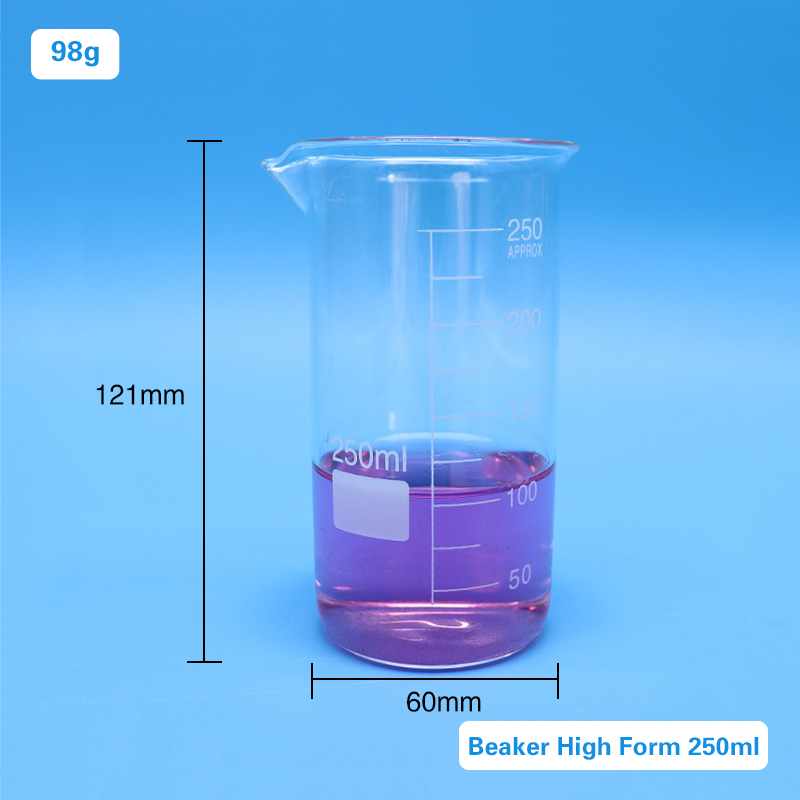
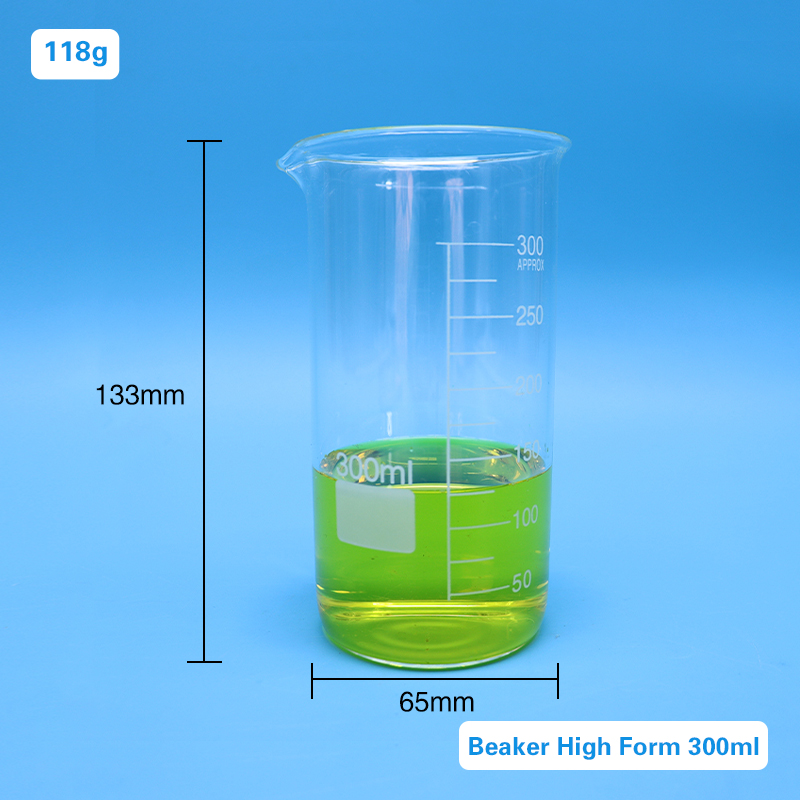
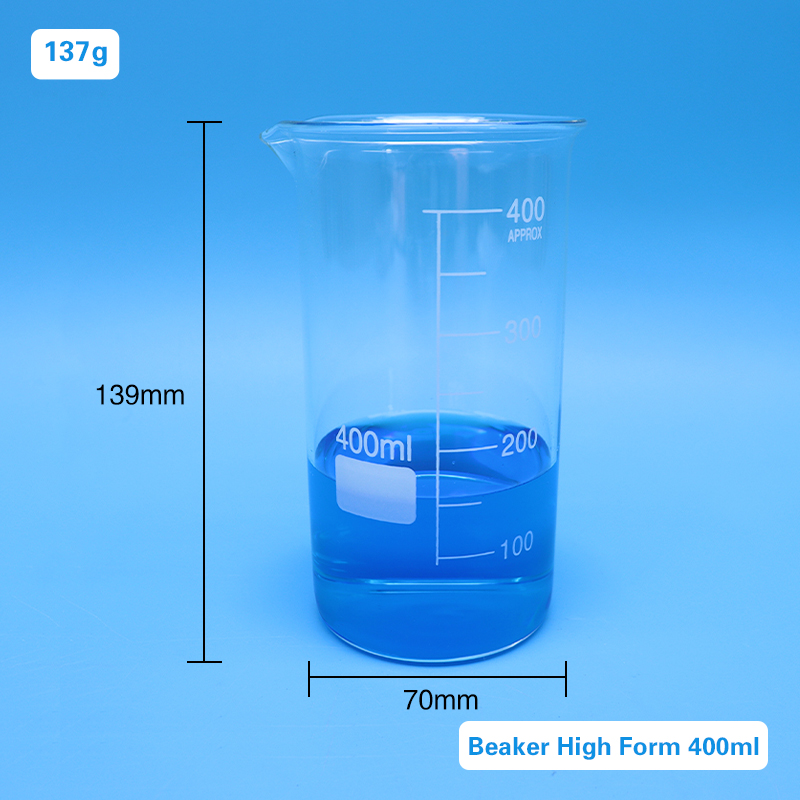
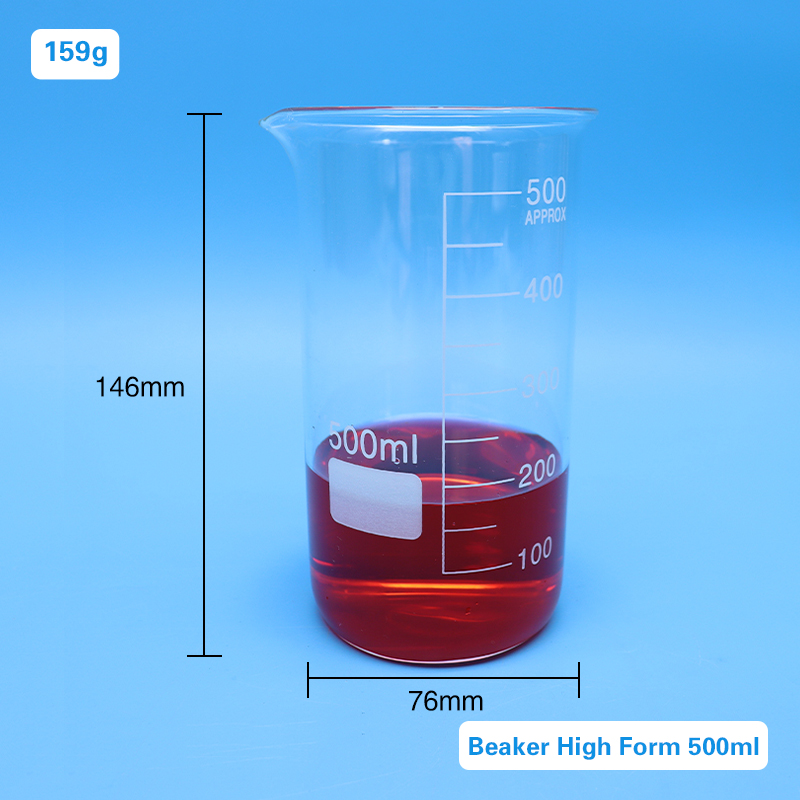
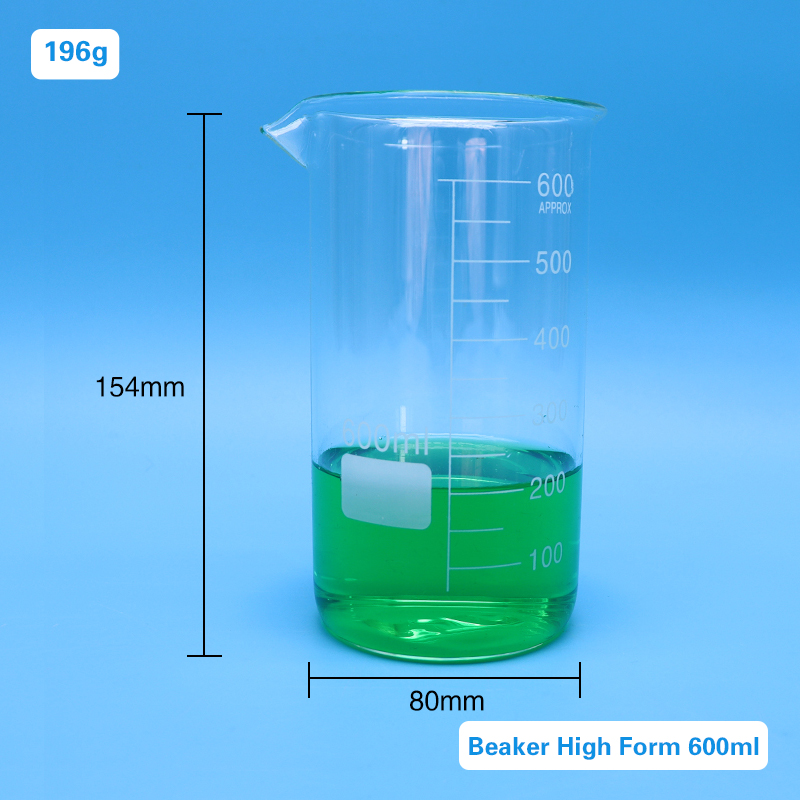
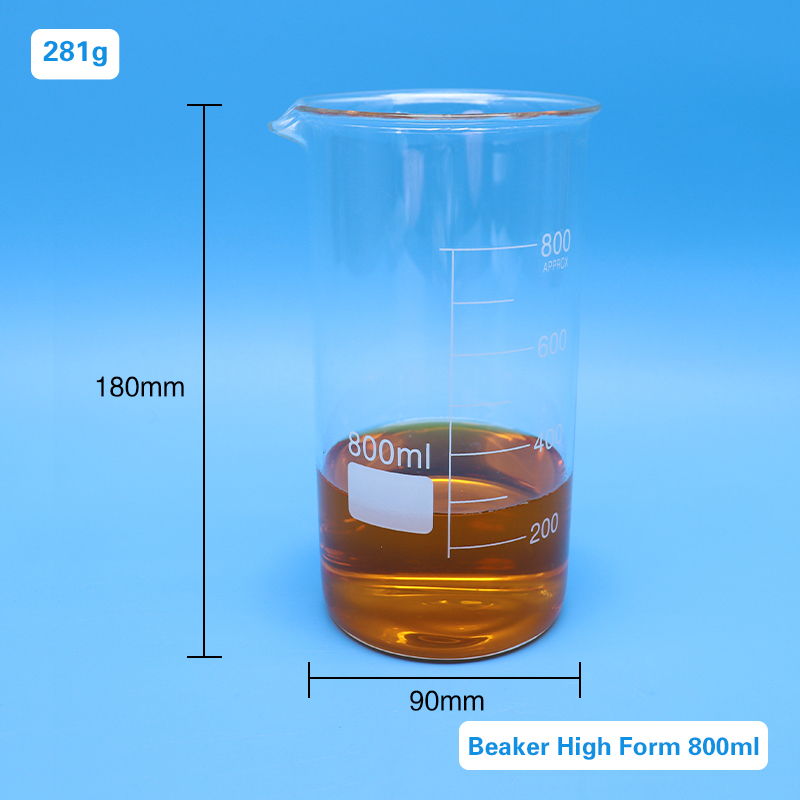
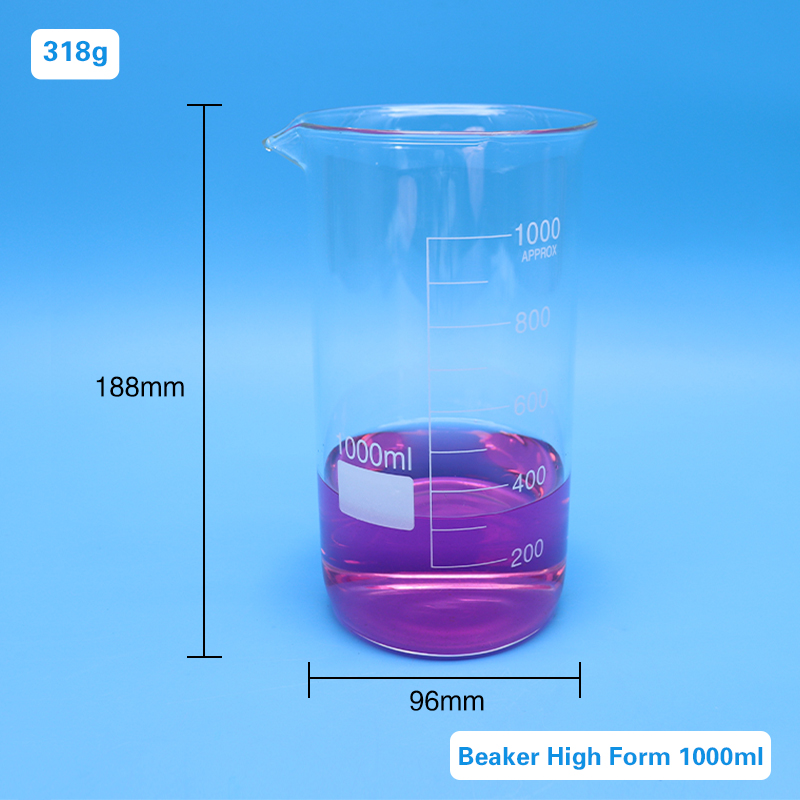
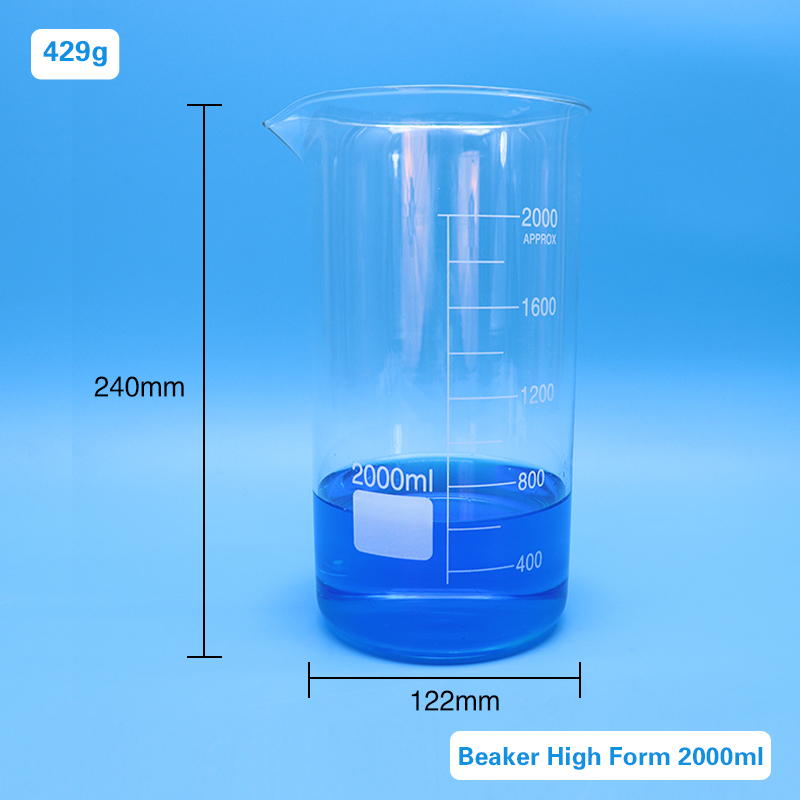
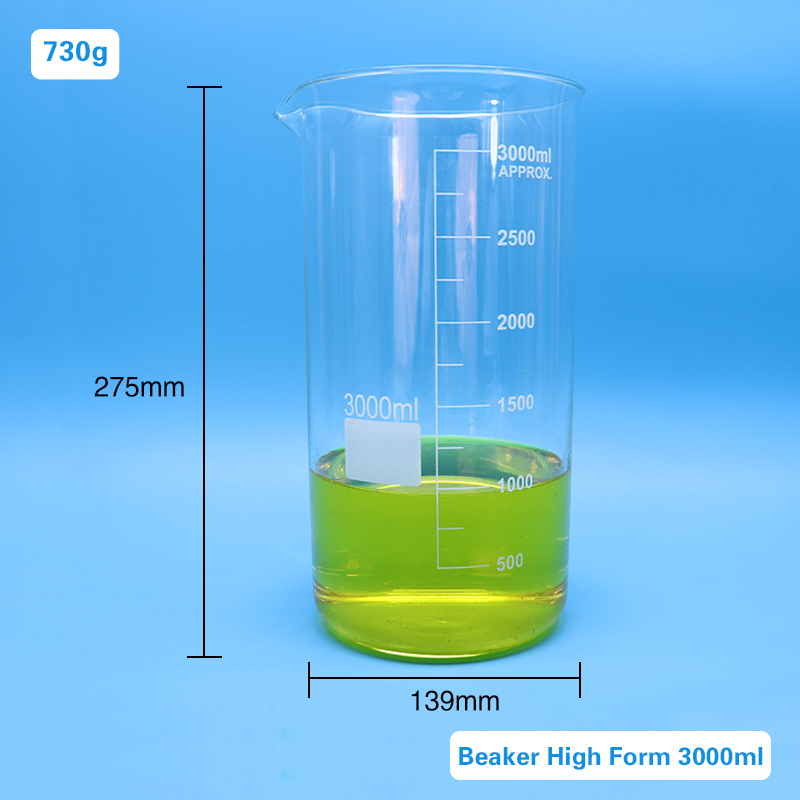
Boro 3.3 Glass Beaker Specs
| Description | Picture | Spec (ml) |
Outer Diameter (mm) |
Height (mm) |
Weight(g) |
|---|---|---|---|---|---|
| Beaker Low Form |
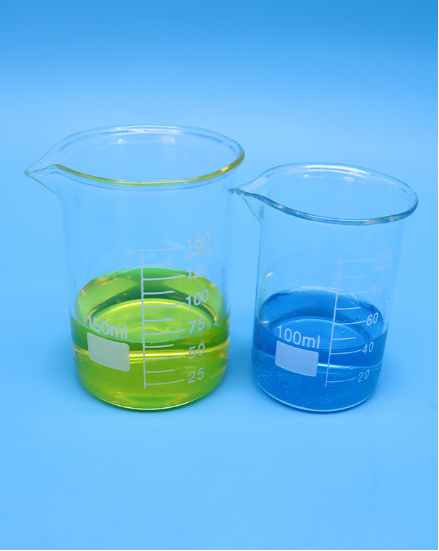
|
5 | 22 | 31 | 6 |
| 10 | 25 | 39 | 9 | ||
| 25 | 35 | 56 | 23 | ||
| 50 | 41 | 61 | 29 | ||
| 100 | 50 | 76 | 51 | ||
| 150 | 60 | 86 | 70 | ||
| 200 | 65 | 93 | 90 | ||
| 250 | 70 | 99 | 105 | ||
| 300 | 75 | 110 | 123 | ||
| 400 | 80 | 113 | 159 | ||
| 500 | 86 | 125 | 177 | ||
| 600 | 90 | 125 | 197 | ||
| 800 | 101 | 139 | 252 | ||
| 1000 | 109 | 151 | 304 | ||
| 2000 | 133 | 170 | 575 | ||
| 3000 | 154 | 213 | 898 | ||
| 5000 | 172 | 274 | 1107 | ||
| 10000 | 218 | 365 | 2617 | ||
| 20000 | 283 | 431 | 3719 | ||
| Beaker High Form |
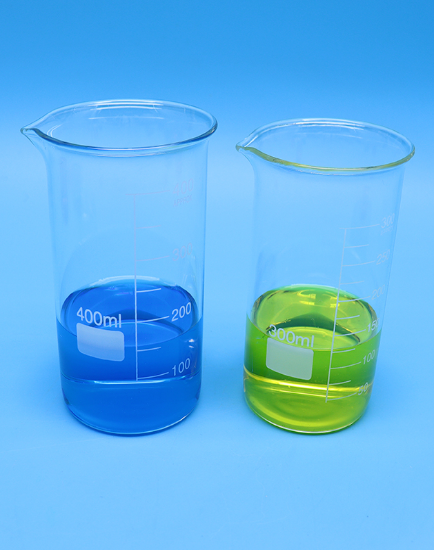
|
50 | 39 | 71 | 32 |
| 100 | 46 | 80 | 46 | ||
| 150 | 55 | 92 | 64 | ||
| 250 | 60 | 121 | 98 | ||
| 300 | 65 | 133 | 118 | ||
| 400 | 70 | 139 | 137 | ||
| 500 | 76 | 146 | 159 | ||
| 600 | 80 | 154 | 196 | ||
| 800 | 90 | 180 | 281 | ||
| 1000 | 96 | 188 | 318 | ||
| 2000 | 122 | 240 | 429 | ||
| 3000 | 139 | 275 | 730 |
Precautions For Use
- 1. Do not inject more than half of its capacity; too much can easily cause splashing.
- 2. When heating a beaker, place a wire gauze underneath to distribute the heat evenly.
- 3. Do not use products that are corroded, cracked, chipped, or scratched.
- 4. When heating, the outside of the beaker must be wiped dry.
Frequently Asked Questions (FAQ)
What makes Boro 3.3 glass ideal for laboratory beakers and cylinders?
Boro 3.3 (High Borosilicate) glass has an extremely low coefficient of thermal expansion, making it highly resistant to thermal shock. It can safely withstand sudden temperature changes up to 200°C and features exceptional chemical stability against acids, halogens, and organic substances.
What is the difference between Low Form and High Form beakers?
Low Form beakers (Griffin style) are wider and have a height roughly 1.4 times their diameter, making them ideal for general mixing, heating, and decanting. High Form beakers (Berzelius style) are taller, with a height roughly twice their diameter, which helps reduce splashing during titrations or when heating liquids.
Can these glass beakers and cylinders be autoclaved?
Yes, Boro 3.3 glass products support standard laboratory sterilization. They can easily withstand autoclaving temperatures of 121°C or 134°C.
Why must I use a wire gauze when heating a glass beaker?
Using a wire gauze distributes heat evenly across the bottom of the beaker. Direct contact with a flame can cause localized hot spots, leading to thermal stress and potential breakage, even in heat-resistant borosilicate glass.
Are the graduated scales on beakers accurate enough for precise chemical measurements?
Beaker markings are approximate and intended for reference only. For highly accurate liquid volume measurements, you should use a calibrated Glass Measuring Cylinder or a volumetric pipette.